Zitat
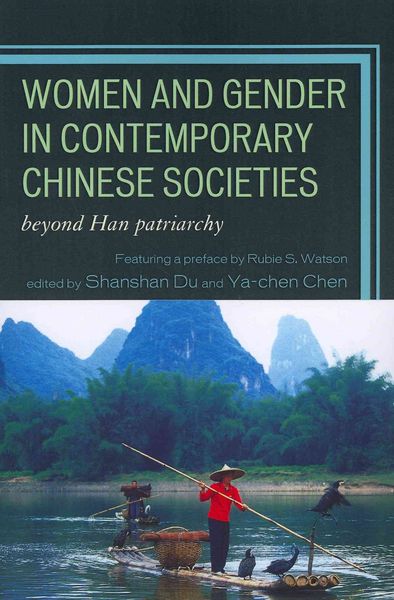
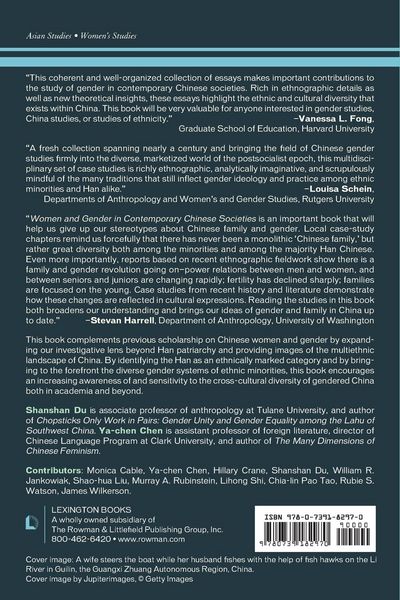
This book covers a wide array of topics concerning developments of gender relations, ethnicity, and religious and family life in the reform era (post 1979). With 5 of 11 chapters devoted to national minorities living in southwestern China, this book underscores the recent orientation among anthropologists and historians to 'ethnicize' the concepts of 'Chinese' and 'Chinese women.' Case studies and interviews provide insights into the complex mechanics of the ongoing negotiation and reinvention of gender-related beliefs, practices, and expressions of national minorities and the Han majority. Summing Up: Recommended. CHOICE This coherent and well-organized collection of essays makes important contributions to the study of gender in contemporary Chinese societies. Rich in ethnographic details as well as new theoretical insights, these essays highlight the ethnic and cultural diversity that exists within China. This book will be very valuable for everyone interested in gender studies, China studies, or studies of ethnicity. -- Vanessa L. Fong, Harvard University A fresh collection spanning nearly a century and bringing the field of Chinese gender studies firmly into the diverse, marketized world of the post-socialist epoch, this multidisciplinary set of case studies is richly ethnographic, analytically imaginative and scrupulously mindful of the many traditions that still inflect gender ideology and practice among ethnic minorities and Han alike. -- Louisa Schein, anthropology and women's and gender studies, Rutgers University Women and Gender in Contemporary Chinese Societies is an important book, because it will help us give up our stereotypes about Chinese family and gender. Local case-study chapters remind us forcefully that there has never been a monolithic 'Chinese family,' but rather great diversity both among the minorities and among the majority Han Chinese. Even more importantly, reports based on recent ethnographic fieldwork show us that there is a family and gender revolution going on- power relations between men and women, between seniors and juniors are changing rapidly, fertility has declined sharply, families are focused on the young. And case studies from recent history and literature demonstrate how these changes are reflected in cultural expressions. Reading the studies in this book both broadens our understanding and brings our ideas of gender and family in China up to date. -- Stevan Harrell, University of Washington