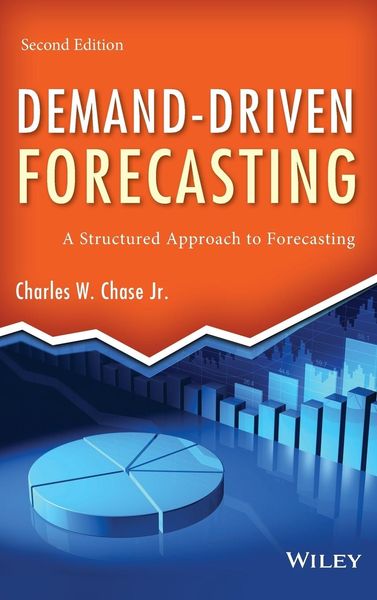
Demand-Driven Forecasting A Structured Approach to Forecasting
Aus der Reihe
SAS Institute Inc
88,99 €
inkl. gesetzl. MwSt.,
Lieferung nach Hause
Beschreibung
Produktdetails
Einband
Gebundene Ausgabe
Erscheinungsdatum
19.08.2013
Verlag
John Wiley & Sons IncSeitenzahl
384
Maße (L/B/H)
23,5/15,7/2,5 cm
Gewicht
710 g
Auflage
2nd edition
Sprache
Englisch
ISBN
978-1-118-66939-6
An updated new edition of the comprehensive guide to better business forecasting
Many companies still look at quantitative forecasting methods with suspicion, but a new awareness is emerging across many industries as more businesses and professionals recognize the value of integrating demand data (point-of-sale and syndicated scanner data) into the forecasting process. Demand-Driven Forecasting equips you with solutions that can sense, shape, and predict future demand using highly sophisticated methods and tools. From a review of the most basic forecasting methods to the most advanced and innovative techniques in use today, this guide explains demand-driven forecasting, offering a fundamental understanding of the quantitative methods used to sense, shape, and predict future demand within a structured process. Offering a complete overview of the latest business forecasting concepts and applications, this revised Second Edition of Demand-Driven Forecasting is the perfect guide for professionals who need to improve the accuracy of their sales forecasts.
* Completely updated to include the very latest concepts and methods in forecasting
* Includes real case studies and examples, actual data, and graphical displays and tables to illustrate how effective implementation works
* Ideal for CEOs, CFOs, CMOs, vice presidents of supply chain, vice presidents of demand forecasting and planning, directors of demand forecasting and planning, supply chain managers, demand planning managers, marketing analysts, forecasting analysts, financial managers, and any other professional who produces or contributes to forecasts
Accurate forecasting is vital to success in today's challenging business climate. Demand-Driven Forecasting offers proven and effective insight on making sure your forecasts are right on the money.
Many companies still look at quantitative forecasting methods with suspicion, but a new awareness is emerging across many industries as more businesses and professionals recognize the value of integrating demand data (point-of-sale and syndicated scanner data) into the forecasting process. Demand-Driven Forecasting equips you with solutions that can sense, shape, and predict future demand using highly sophisticated methods and tools. From a review of the most basic forecasting methods to the most advanced and innovative techniques in use today, this guide explains demand-driven forecasting, offering a fundamental understanding of the quantitative methods used to sense, shape, and predict future demand within a structured process. Offering a complete overview of the latest business forecasting concepts and applications, this revised Second Edition of Demand-Driven Forecasting is the perfect guide for professionals who need to improve the accuracy of their sales forecasts.
* Completely updated to include the very latest concepts and methods in forecasting
* Includes real case studies and examples, actual data, and graphical displays and tables to illustrate how effective implementation works
* Ideal for CEOs, CFOs, CMOs, vice presidents of supply chain, vice presidents of demand forecasting and planning, directors of demand forecasting and planning, supply chain managers, demand planning managers, marketing analysts, forecasting analysts, financial managers, and any other professional who produces or contributes to forecasts
Accurate forecasting is vital to success in today's challenging business climate. Demand-Driven Forecasting offers proven and effective insight on making sure your forecasts are right on the money.
Kundinnen und Kunden meinen
Verfassen Sie die erste Bewertung zu diesem Artikel
Helfen Sie anderen Kund*innen durch Ihre Meinung
Kurze Frage zu unserer Seite
Vielen Dank für dein Feedback
Wir nutzen dein Feedback, um unsere Produktseiten zu verbessern. Bitte habe Verständnis, dass wir dir keine Rückmeldung geben können. Falls du Kontakt mit uns aufnehmen möchtest, kannst du dich aber gerne an unseren Kund*innenservice wenden.
zum Kundenservice