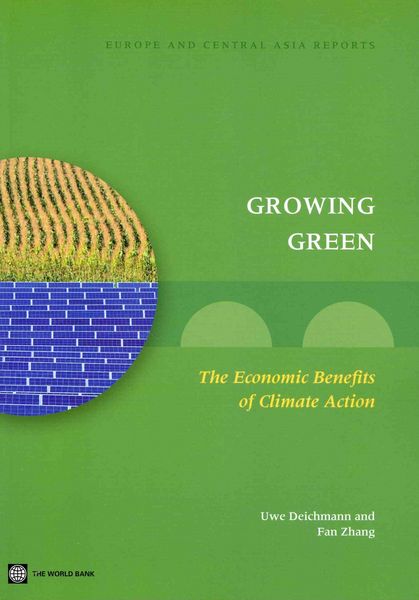
Growing Green The Economic Benefits of Climate Action
-
- Englisch ausgewählt
41,99 €
inkl. gesetzl. MwSt.,
Lieferung nach Hause
Beschreibung
Produktdetails
Einband
Taschenbuch
Erscheinungsdatum
12.04.2013
Verlag
World Bank PublicationsSeitenzahl
422
Maße (L/B/H)
25,4/17,8/2,2 cm
Gewicht
729 g
Sprache
Englisch
ISBN
978-0-8213-9791-6
Pollution from fossil fuels and degraded natural lands are raising the earth’s temperature. The evidence of the causes of global warming is clear, as are its consequences. The economic impacts of climate change are already apparent and they threaten development gains. Extreme weather events have brought severe droughts to Central Asia, heat waves and forest fires to Russia, and floods to Southeastern Europe. Unchecked emissions will come at rising economic cost and increasing risk to individuals. There is a clear case for all of the world's economies to move to a low-carbon growth path.
Yet, climate action has been inadequate, especially in Eastern Europe and Central Asia (ECA). With prospects of a global climate agreement uncertain, Growing Green: The Economic Benefits of Climate Action identifies the actions that governments in the region can take to reduce the carbon footprints of their economies. It shows that many of these actions will more than pay for themselves - and quite quickly when indirect benefits such as better health and increased competitiveness are considered.
To realise these benefits, policy makers in ECA need to quickly move on three sets of priorities: use energy much more efficiently, gradually move to cleaner energy sources, and increase carbon capture in soils and forests. This will require transformations in power generation, industrial production, mobility, city living, and in farming and forestry. Policy makers are justifiably worried that climate action may jeopardise economic performance and strain the budgets of poorer families. The report shows how well-designed growth and social policies can make climate action growth-enhancing while protecting the living standards of less-well-off households.
The ECA Region has been a bystander on climate action, and sluggish in realising the benefits of the economic and technological innovations available to combat climate change. This book aims to help ECA become a leader in confronting this challenge. In doing so, it shows how countries in the region can make climate action-along with economic growth and social inclusion - the third pillar of their development strategies.
Noch keine Bewertungen vorhanden
Verfassen Sie die erste Bewertung zu diesem Artikel
Helfen Sie anderen Kundinnen und Kunden durch Ihre Meinung.
Kurze Frage zu unserer Seite
Vielen Dank für dein Feedback
Wir nutzen dein Feedback, um unsere Produktseiten zu verbessern. Bitte habe Verständnis, dass wir dir keine Rückmeldung geben können. Falls du Kontakt mit uns aufnehmen möchtest, kannst du dich aber gerne an unseren Kund*innenservice wenden.
zum Kundenservice