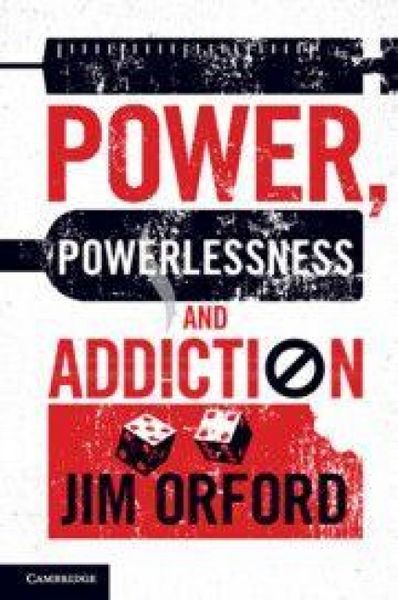
• Produktbild: Power, Powerlessness and Addiction
  • Produktbild: Power, Powerlessness and Addiction

Power, Powerlessness and Addiction

37,99 €

inkl. gesetzl. MwSt., Versandkostenfrei


Beschreibung

Produktdetails

Einband

Taschenbuch

Erscheinungsdatum

11.07.2013

Abbildungen

Worked examples or Exercises

Verlag

Cambridge University Press

Seitenzahl

278

Maße (L/B/H)

22,6/14,9/1,5 cm

Gewicht

468 g

Sprache

Englisch

ISBN

978-1-107-61009-5

Beschreibung

Rezension

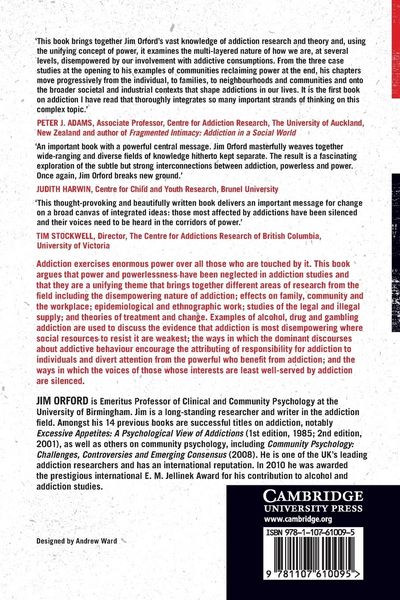
'This book brings together Jim Orford's vast knowledge of addiction research and theory and, using the unifying concept of power, it examines the multi-layered nature of how we are, at several levels, disempowered by our involvement with addictive consumptions. From the three case studies at the opening to his examples of communities reclaiming power at the end, his chapters move progressively from the individual, to families, to neighbourhoods and communities and onto the broader societal and industrial contexts that shape addictions in our lives. It is the first book on addiction I have read that thoroughly integrates so many important strands of thinking on this complex topic.' Peter J. Adams, Centre for Addiction Research, University of Auckland, and author of Fragmented Intimacy: Addiction in a Social World

Produktdetails

Einband

Taschenbuch

Erscheinungsdatum

11.07.2013

Abbildungen

Worked examples or Exercises

Verlag

Cambridge University Press

Seitenzahl

278

Maße (L/B/H)

22,6/14,9/1,5 cm

Gewicht

468 g

Sprache

Englisch

ISBN

978-1-107-61009-5

Herstelleradresse

Libri GmbH
Europaallee 1
36244 Bad Hersfeld
DE

Email: gpsr@libri.de

Noch keine Bewertungen vorhanden

Verfassen Sie die erste Bewertung zu diesem Artikel

Helfen Sie anderen Kundinnen und Kunden durch Ihre Meinung.

Kundinnen und Kunden meinen

Bewertungen (0)

Die Leseprobe wird geladen.
  • Produktbild: Power, Powerlessness and Addiction
  • Produktbild: Power, Powerlessness and Addiction
  • 1. Powerful connections: three examples of addiction; 2. How addiction erodes free agency; 3. Addiction subordinates the interests of family members and friends; 4. Inequality in the power to resist addiction; 5. Power and powerlessness in the addiction supply industries; 6. Reasserting control and power in the process of change and treatment; 7. Facing up to the power of addiction and those who benefit from it.