Gutscheinbedingungen

**Gültig bis 10.06.2026 / Gültig für gebrauchte Bücher / Mindestbestellwert 20,00 € / Einzelne Artikel können ausgeschlossen sein / Online auf www.bücher.de.de / Nicht kombinierbar mit anderen Gutscheinen oder Preisaktionen / Nur einmal pro Einkauf einlösbar / Gutschein wird auf max. 500€ Bestellwert angerechnet / Keine Barauszahlung / Nicht gültig für Versandkosten und Services

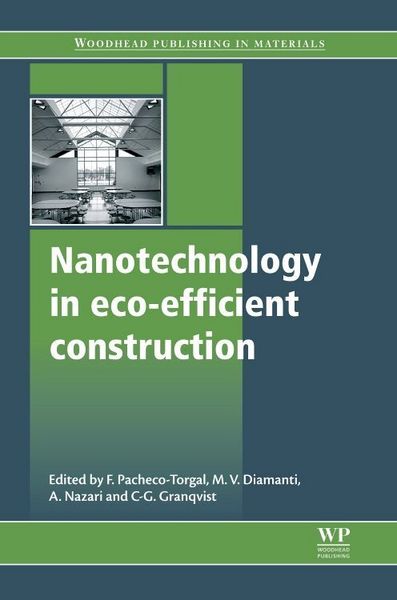
Produktbild: Nanotechnology in Eco-Efficient Construction
- 32%

Nanotechnology in Eco-Efficient Construction Materials, Processes and Applications

32% sparen

154,99 € UVP 230,50 €

inkl. gesetzl. MwSt., Versandkostenfrei

Lieferung nach Hause

Beschreibung

Produktdetails

Einband

Gebundene Ausgabe

Erscheinungsdatum

04.04.2013

Herausgeber

Pacheco-Torgal Fernando + weitere

Verlag

Elsevier Science & Technology

Seitenzahl

458

Maße (L/B/H)

23,7/16,3/2,7 cm

Gewicht

820 g

Sprache

Englisch

ISBN

978-0-85709-544-2

Beschreibung

Rezension

"The book's focus on eco-construction, its depth of coverage, and style of writing by various contributing authors makes it understandable by readers at various levels. Researchers, educators, captains of industry, and policy makers would find the book interesting and useful." --MaterialsViews.com, April 8, 2014

Produktdetails

Einband

Gebundene Ausgabe

Erscheinungsdatum

04.04.2013

Herausgeber

Verlag

Elsevier Science & Technology

Seitenzahl

458

Maße (L/B/H)

23,7/16,3/2,7 cm

Gewicht

820 g

Sprache

Englisch

ISBN

978-0-85709-544-2

EU-Ansprechpartner

Zeitfracht Medien GmbH
Ferdinand-Jühlke-Straße 7
99095 Erfurt
DE
[email protected]

Herstelleradresse

Elsevier Science & Technology
125 London Wall
EC2Y 5AS London
GB
[email protected]

Kundinnen und Kunden meinen

0 Bewertungen

Informationen zu Bewertungen

Zur Abgabe einer Bewertung ist eine Anmeldung im Konto notwendig. Die Authentizität der Bewertungen wird von uns nicht überprüft. Wir behalten uns vor, Bewertungstexte, die unseren Richtlinien widersprechen, entsprechend zu kürzen oder zu löschen.

Die Bewertungen sind nach Format, Anzahl Sterne und Datum sortiert.

Verfassen Sie die erste Bewertung zu diesem Artikel

Helfen Sie anderen Kund*innen durch Ihre Meinung

Kundinnen und Kunden meinen

0 Bewertungen filtern

Die Leseprobe wird geladen.
  • Produktbild: Nanotechnology in Eco-Efficient Construction
  • Contributor contact details

    Chapter 1: Introduction to nanotechnology in eco-efficient construction

    Abstract:

    1.1 Introduction

    1.2 The need for nanotechnology in the construction sector

    1.3 Outline of the book

    Part I: Infrastructural applications

    Chapter 2: Nanoscience and nanoengineering of cement-based materials

    Abstract:

    2.1 Introduction

    2.2 Nanoscience of cement-based materials

    2.3 Nanoengineering of cement-based materials

    2.4 Conclusion

    Chapter 3: Nanoparticles for high performance concrete (HPC)

    Abstract:

    3.1 Introduction

    3.2 Concrete with nanoparticles

    3.3 The problem of efficient nanoparticle dispersion

    3.4 Conclusions

    Chapter 4: Self-sensing concrete with nanomaterials

    Abstract:

    4.1 Introduction

    4.2 Studying conductive admixtures in concrete

    4.3 Influence of conductive admixtures on the mechanical properties of concrete

    4.4 Influence of conductive admixtures on the electrical properties of concrete beams

    4.5 Strain and damage in concrete beams (self-diagnosing of damage)

    4.6 Diphasic electrical conductive materials

    4.7 Conclusions

    Chapter 5: The use of nanotechnology to improve the bulk and surface properties of steel for structural applications

    Abstract:

    5.1 Introduction

    5.2 Research relating to nanocomposite steel

    5.3 Properties of nanocomposite steel

    5.4 Future trends

    Chapter 6: Nanoclay-modified asphalt mixtures for eco-efficient construction

    Abstract:

    6.1 Introduction

    6.2 Research on nanoclay-modified asphalt mixtures

    6.3 Material and methods

    6.4 Rheological tests and results

    6.5 Mechanical testing of asphalt mixtures

    6.6 Conclusion

    6.7 Future trends

    Chapter 7: Safety issues relating to nanomaterials for construction applications

    Abstract:

    7.1 Introduction to nanotoxicity

    7.2 Potential nano-hazards of manufactured nanomaterials (MNMs) utilized in construction

    7.3 Lifecycle of nano-enabled structures

    7.4 Toxicity profiling for nanomaterials

    7.5 Future trends and conclusions

    Part II: Applications for building energy efficiency

    Chapter 8: Thin films and nanostructured coatings for eco-efficient buildings

    Abstract:

    8.1 Introduction

    8.2 Major thin film technologies and some illustrative examples

    8.3 Large-scale manufacturing

    8.4 Conclusion and future trends

    Chapter 9: High performance thermal insulation materials for buildings

    Abstract:

    9.1 Introduction

    9.2 Heat transfer in thermal insulators

    9.3 State-of-the-art insulators

    9.4 Applications

    9.5 Future trends

    Chapter 10: Silica nanogel for energy-efficient windows

    Abstract:

    10.1 Introduction

    10.2 Aerogels for windows

    10.3 Current applications of aerogels in buildings

    10.4 Performance of nanogel windows

    10.5 Future trends

    Chapter 11: Switchable glazing technology for eco-efficient construction

    Abstract:

    11.1 Introduction

    11.2 Electrochromics: materials and devices

    11.3 Thermochromics: materials and devices

    11.4 Future trends in electrochromic and thermochromic glazing

    Chapter 12: Third generation photovoltaic (PV) cells for eco-efficient buildings and other applications

    Abstract:

    12.1 Introduction

    12.2 History of photovoltaic (PV) cells

    12.3 Functions of a photovoltaic (PV) cell

    12.4 Overview of photovoltaic (PV) technology: first, second and third generation cells

    12.5 The use of nanotechnology in photovoltaic (PV) technology

    12.6 Future trends

    Part III: Photocatalytic applications

    Chapter 13: Concrete, mortar and plaster using titanium dioxide nanoparticles: applications in pollution control, self-cleaning and photo sterilization

    Abstract:

    13.1 Introduction

    13.2 Principles of heterogeneous photocatalysis

    13.3 Applications of semiconductor photocatalysis

    13.4 TiO2 in cement-based materials

    13.5 Efficiency of TiO2 in the built environment

    13.6 Pilot projects and field tests

    13.7 Existing patents and standards relating to photocatalytic cementitious materials

    Chapter 14: Self-cleaning tiles and glasses for eco-efficient buildings

    Abstract:

    14.1 Introduction

    14.2 Important production parameters

    14.3 Mechanism of self-cleaning glasses and tiles

    14.4 Future trends

    Chapter 15: Nanotechnology in manufacturing paints for eco-efficient buildings

    Abstract:

    15.1 Introduction

    15.2 Application of photocatalytic paints in an outdoor environment

    15.3 Application of photocatalytic paints in an indoor environment

    15.4 Potential formation of by-products

    15.5 Future trends

    Chapter 16: Nanotechnology for domestic water purification

    Abstract:

    16.1 Introduction

    16.2 Nanomaterials and water purification

    16.3 The need for nanomaterials in water purification

    16.4 Types, properties and uses of nanomaterials in water purification

    16.5 Synthesis of nanomaterials

    16.6 Nanotechnology: health, safety and environment

    16.7 Domestic water purification: challenges to bring about an integrated system

    16.7.2 Challenges with development of integrated nano-based systems for water purification

    Index