• Produktbild: Help Your Kids with English, Ages 10-16 (Key Stages 3-4)
  • Produktbild: Help Your Kids with English, Ages 10-16 (Key Stages 3-4)

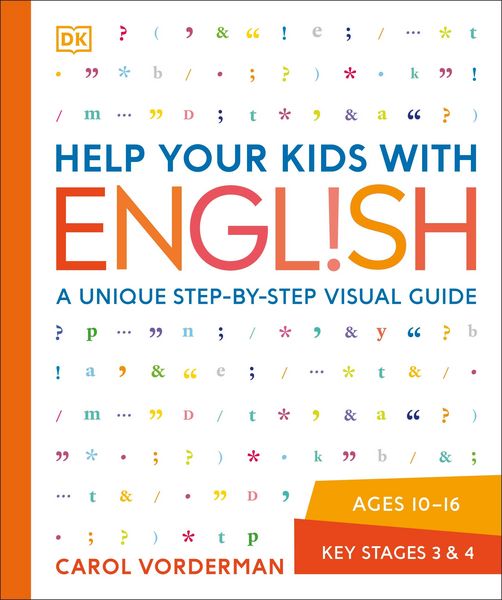
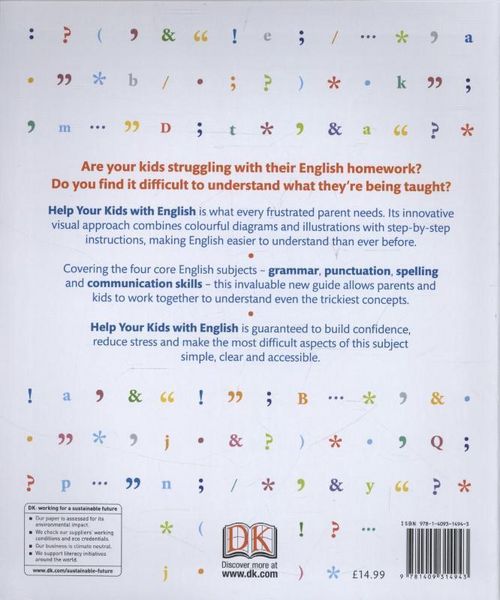
Help Your Kids with English, Ages 10-16 (Key Stages 3-4) A Unique Step-by-Step Visual Guide, Revision and Reference

Aus der Reihe DK Help Your Kids With

20,99 €

inkl. gesetzl. MwSt., Versandkostenfrei

Lieferung nach Hause

Beschreibung

Produktdetails

ISBN

978-1-4093-1494-3

Erscheinungsdatum

03.06.2013

Einband

Taschenbuch

Verlag

Dorling Kindersley UK

Seitenzahl

256

Maße (L/B/H)

23,8/19,7/2 cm

Gewicht

815 g

Sprache

Englisch

Beschreibung

Rezension

The queen of numbers has turned her attention to words. Combining colourful diagrams and illustrations with step-by-step instructions, this makes English easier to fathom. Natasha Harding The Sun 20130829

Produktdetails

ISBN

978-1-4093-1494-3

Erscheinungsdatum

03.06.2013

Einband

Taschenbuch

Verlag

Dorling Kindersley UK

Seitenzahl

256

Maße (L/B/H)

23,8/19,7/2 cm

Gewicht

815 g

Sprache

Englisch

Herstelleradresse

Libri GmbH
Europaallee 1
36244 Bad Hersfeld
DE

Email: gpsr@libri.de

Noch keine Bewertungen vorhanden

Verfassen Sie die erste Bewertung zu diesem Artikel

Helfen Sie anderen Kundinnen und Kunden durch Ihre Meinung.

Kundinnen und Kunden meinen

Bewertungen (0)

Weitere Artikel findest du in

  • Produktbild: Help Your Kids with English, Ages 10-16 (Key Stages 3-4)
  • Produktbild: Help Your Kids with English, Ages 10-16 (Key Stages 3-4)

    • 1: Foreword

    • 2: Why learn the rules?

    • 3: Spoken and written language

    • 4: English around the world

    • 5: Grammar


        • 1: The purpose of grammar


      • 2: Parts of speech

      • 3: Nouns

      • 4: Plurals

      • 5: Adjectives

      • 6: Comparatives and superlatives

      • 7: Articles

      • 8: Determiners

      • 9: Pronouns

      • 10: Number and gender

      • 11: Verbs

      • 12: Adverbs

      • 13: Simple tenses

      • 14: Perfect and continuous tenses

      • 15: Participles

      • 16: Auxiliary verbs

      • 17: Irregular verbs

      • 18: Verb agreement

      • 19: Voices and moods

      • 20: Phrasal verbs

      • 21: Conjunctions

      • 22: Prepositions

      • 23: Interjections

      • 24: Phrases

      • 25: Clauses

      • 26: Sentences

      • 27: Compound sentences

      • 28: Complex sentences

      • 29: Using clauses correctly

      • 30: Managing modifiers

      • 31: Commonly misused words

      • 32: Negatives

      • 33: Relative clauses

      • 34: Idioms, analogies and figures of speech

      • 35: Colloquialisms and slang

      • 36: Direct and indirect speech

      • 6: Punctuation


        • 1: What is punctuation?

        • 2: Full stops and ellipses

        • 3: Commas

        • 4: Other uses of commas

        • 5: Semi-colons

        • 6: Colons

        • 7: Apostrophes

        • 8: Hyphens

        • 9: Inverted commas

        • 10: Question marks

        • 11: Exclamation marks

        • 12: Brackets and dashes

        • 13: Bullet points

        • 14: Numbers, dates and time

        • 15: Other punctuation

        • 16: Italics


      • 7: Spelling


        • 1: Why learn to spell?

        • 2: Alphabetical order

        • 3: Vowel sounds

        • 4: Consonant sounds

        • 5: Syllables

        • 6: Morphemes

        • 7: Understanding English irregularities

        • 8: Roots

        • 9: Prefixes and suffixes

        • 10: Hard and soft letter sounds

        • 11: Words ending in -e or -y

        • 12: Words ending in -tion, -sion or -ssion

        • 13: Words ending in -able or -ible

        • 14: Words ending in -le, -el, -al or -ol

        • 15: Single and double consonant words

        • 16: The "i before e except after c" rule

        • 17: Capital letters

        • 18: Silent letters

        • 19: Compound words

        • 20: Irregular word spellings

        • 21: Homonyms, homophones and homographs

        • 22: Confusing words

        • 23: Other confusing words

        • 24: Abbreviations

        • 25: British and American spellings

        • 26: More British and American spellings


      • 8: Communication skills


        • 1: Effective communication

        • 2: Picking the right words

        • 3: Making sentences interesting

        • 4: Planning and research

        • 5: Paragraphing

        • 6: Genre, purpose and audience

        • 7: Reading and commenting on texts

        • 8: Layout and presentational features

        • 9: Writing to inform

        • 10: Newspaper articles

        • 11: Letters and e-mails

        • 12: Writing to influence

        • 13: Writing to explain or advise

        • 14: Writing to analyse or review

        • 15: Writing to describe

        • 16: Writing from personal experience

        • 17: Writing a narrative

        • 18: Writing for the Web

        • 19: Writing a script

        • 20: Re-creations

        • 21: Checking and editing

        • 22: The spoken word

        • 23: Debates and role plays

        • 24: Writing a speech

        • 25: Presentation skills


      • 8: Reference


        • 1: Reference - Grammar

        • 2: Reference - Punctuation

        • 3: Reference - Spelling

        • 4: Reference - Communication skills

        • 5: Glossary

        • 6: Index

        • 7: Acknowledgements