
• Produktbild: Produced Water 2
  • Produktbild: Produced Water 2
Band 52

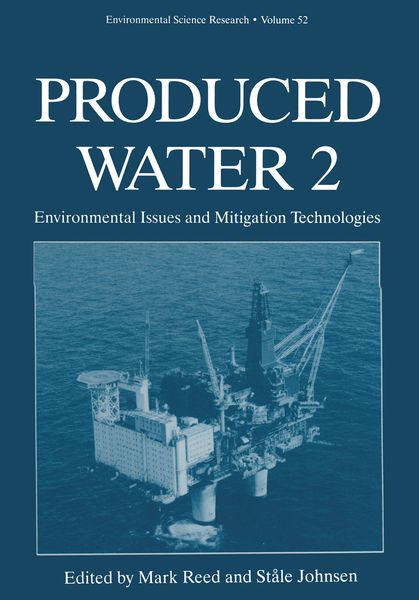
Produced Water 2 Environmental Issues and Mitigation Technologies

97,99 €

inkl. gesetzl. MwSt., Versandkostenfrei

Lieferung nach Hause

Beschreibung

Produktdetails

Einband

Taschenbuch

Erscheinungsdatum

17.09.2011

Herausgeber

Mark Reed + weitere

Verlag

Springer Us

Seitenzahl

549

Maße (L/B/H)

24,4/17/3 cm

Gewicht

941 g

Auflage

Softcover reprint of the original 1st ed. 1996

Sprache

Englisch

ISBN

978-1-4613-8025-2

Beschreibung

Produktdetails

Einband

Taschenbuch

Erscheinungsdatum

17.09.2011

Herausgeber

Verlag

Springer Us

Seitenzahl

549

Maße (L/B/H)

24,4/17/3 cm

Gewicht

941 g

Auflage

Softcover reprint of the original 1st ed. 1996

Sprache

Englisch

ISBN

978-1-4613-8025-2

Herstelleradresse

Springer-Verlag GmbH
Tiergartenstr. 17
69121 Heidelberg
DE

Email: ProductSafety@springernature.com

Kundinnen und Kunden meinen

0 Bewertungen

Informationen zu Bewertungen

Zur Abgabe einer Bewertung ist eine Anmeldung im Konto notwendig. Die Authentizität der Bewertungen wird von uns nicht überprüft. Wir behalten uns vor, Bewertungstexte, die unseren Richtlinien widersprechen, entsprechend zu kürzen oder zu löschen.

Die Bewertungen sind nach Format, Anzahl Sterne und Datum sortiert.

Verfassen Sie die erste Bewertung zu diesem Artikel

Helfen Sie anderen Kund*innen durch Ihre Meinung

Kundinnen und Kunden meinen

0 Bewertungen filtern

  • Produktbild: Produced Water 2
  • Produktbild: Produced Water 2
  • Section I. Legislative and Management Issues.- 1. Session Summary.- 2. Regulation of Produced Water on the Norwegian Continental Shelf.- 3. Discharges of Produced Water to the North Sea: Effects in the Water Column.- 4. Regulation of Produced Water by the U.S. Environmental Protection Agency.- Section II. Chemistry and Toxicity Issues.- 5. Session Summary.- 6. Estimating the Acute Toxicity of Produced Waters to Marine Organisms Using Predictive Toxicity Models.- 7. A Comparison between the Toxicity of Produced Oil and Gas Condensate Using a New Sediment Bioassay for Deposited Oil.- 8. Produced Water Composition, Toxicity, and Fate: A Review of Recent BP North Sea Studies.- 9. Field Evaluation of Toxic Effects and Dispersion of Produced Water Discharges from North Sea Oil Platforms: Implications for Monitoring Acute Impacts in the Environment.- 10. Sub-Lethal Effects of Oil-Produced Water on the Early Life Stages of Turbot.- 11. Exposure of Cod Larvae (Gadus morhua L) to Phenols in Produced Water during the Critical Period of First Feeding.- Section III. Environmental Effects.- 12. Session Summary.- 13. Ecotoxicological Risk of Produced Water Discharged from Oil Production Platforms in the Statfjord and Gullfaks Field.- 14. The N-Octanol/Water Partition Coefficient: A Critical Parameter in Environmental Risk Assessment of Offshore E&P Chemicals.- 15. Effects of the Water Soluble Fraction of Crude Oil on Marine Fish Larvae and Crustaceans.- 16. Aromatic Hydrocarbons in Produced Water: Bioaccumulation and Trophic Transfer in Marine Food Webs.- 17. Delineation of Benthic Impact and Recovery at Two Produced Water Discharge Sites in Inshore Louisiana.- 18. The Effects of Produced Water on Hydrocarbon Levels and on P4501A Monooxygenase Activity in Fish Larvae in the Northern North Sea.- Section IV. Dispersion Models.- 19. Session Summary.- 20. Dispersion Modeling Perspectives on the Environmental Fate of Produced Water Discharges.- 21. Development and Appraisal of a Particle Tracking Model for the Dispersion of Produced Water Discharged from an Oil Production Platform in the North Sea.- 22. A Buoyant Jet/Plume Model for Subsea Releases.- 23. An Intercomparison between Field Measurements and Three Different Calculation Models for Estimates of Dilution Factors.- Section V. Environmental Modelling.- 24. Session Summary.- 25. Environmental Effects of Discharge and Reinjection of Produced Water.- 26. The Role of the Supplier of Production Chemicals in Managing the Environmental Impact of Produced Water in Offshore Oil and Gas Production.- 27. An Introduction to the CHARM Model.- 28. The Charm Model Used in Environmental Risk Management of Produced Water on Ula.- 29. PROVANN: A Model System for Assessing Potential Chronic Effects of Produced Water.- Section VI. U.S. DOE: Gulf of Mexico Studies.- 30. Session Summary.- 31. U.S. Department of Energy Sponsored Study — Environmental and Economic Assessment of Discharges from Gulf of Mexico Region Oil and Gas Operations: An Overview.- 32. Assessing the Potential for Enhanced Bioaccumulation of Heavy Metals from Produced Water Discharges to the Gulf of Mexico.- 33. An Ecological Risk Assessment for Polycyclic Aromatic Hydrocarbons in Produced Water Discharges to the Western Gulf of Mexico.- 34. Naturally Occurring Radioactive Materials Associated with Offshore Produced Water Discharges in the Gulf of Mexico.- 35. Distribution of Finfish Caught Near Oilfield Structures along Coastal Louisiana and Texas.- 36. Risk Assessment for Produced Water Discharges to Open Bays in Louisiana.- Section VII.Technology for Mitigation.- 37. Session Summary.- 38. Air Stripping Combined with FID Detection for Oil-in-Water Analysis.- 39. Dissolved Component Removal from Oilfield Waters.- 40. Report on the Start-up of a Unique Hydrocyclone-Based System for Treating Produced Water.- 41. Produced Water Reinjection (PWRI): Experiences from the Ula Field.- 42. Down Hole Separation (DHS) Technology.- 43. Evaluation of NF/UF Membrane Treatment in De-Oiling Produced Water in-Situ at a Heavy-Oil Production Facility in Western Canada.- 44. Agip and the Environment: Disposal of Produced Water from Gas Fields Exploitation in the Adriatic Sea.- 45. Biological Treatment Process for Removing Petroleum Hydrocarbons from Oilfield Produced Waters.- 46. Pretreatment of Oil Field and Mine Waste Waters for Reverse Osmosis.- 47. Comparison of Injectivity Prediction Models to Estimate Ula Field Injector Performance for Produced Water Reinjection.