Gutscheinbedingungen

**Gültig vom 07.09.2026 bis 09.09.2026 | Gültig für nicht preisgebundene fremdsprachige Bücher | Einzelne Artikel können ausgeschlossen sein | Online auf www.bücher.de einlösbar | Click & Collect nur mit Online-Zahlung (Paypal/Kreditkarte) vorab | Nicht kombinierbar mit anderen Gutscheinen oder Preisaktionen | Nur einmal pro Einkauf einlösbar | Gutschein wird auf max. 500€ Bestellwert angerechnet | Keine Barauszahlung | Nicht gültig für Versandkosten und Services

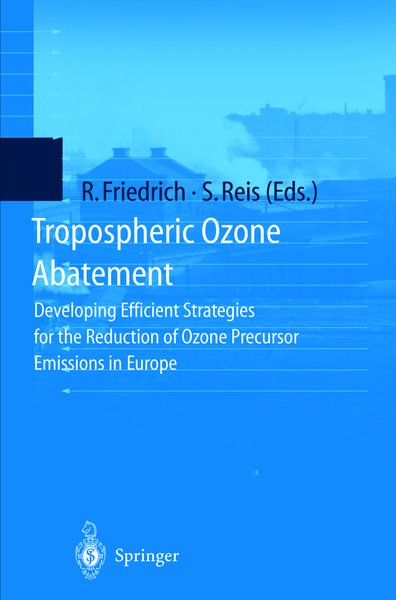
Produktbild: Tropospheric Ozone Abatement

Tropospheric Ozone Abatement Developing Efficient Strategies for the Reduction of Ozone Precursor Emissions in Europe

97,99 €

inkl. gesetzl. MwSt., Versandkostenfrei


Beschreibung

Produktdetails

Einband

Taschenbuch

Erscheinungsdatum

18.09.2011

Abbildungen

XIV, 237 p. 16 illus. in color.

Herausgeber

Rainer Friedrich + weitere

Verlag

Springer Berlin

Seitenzahl

237

Maße (L/B/H)

23,5/15,5/1,5 cm

Gewicht

411 g

Auflage

Softcover reprint of the original 1st edition 2000

Sprache

Englisch

ISBN

978-3-642-64091-9

Beschreibung

Produktdetails

Einband

Taschenbuch

Erscheinungsdatum

18.09.2011

Abbildungen

XIV, 237 p. 16 illus. in color.

Herausgeber

Verlag

Springer Berlin

Seitenzahl

237

Maße (L/B/H)

23,5/15,5/1,5 cm

Gewicht

411 g

Auflage

Softcover reprint of the original 1st edition 2000

Sprache

Englisch

ISBN

978-3-642-64091-9

Herstelleradresse

Springer-Verlag GmbH
Tiergartenstr. 17
69121 Heidelberg
DE

Email: ProductSafety@springernature.com

Noch keine Bewertungen vorhanden

Verfassen Sie die erste Bewertung zu diesem Artikel

Helfen Sie anderen Kundinnen und Kunden durch Ihre Meinung.

Kundinnen und Kunden meinen

Bewertungen (0)

  • Produktbild: Tropospheric Ozone Abatement
  • 1 Introduction.- 2 Tropospheric Ozone.- 2.1 Tropospheric Chemistry and Ozone Precursor Substances.- 2.2 Impacts on Health and Vegetation.- 2.3 Air Quality Legislation, Thresholds and Standards.- 2.4 Tropospheric Ozone — a Local or Regional Problem?.- 2.5 References.- 3 Emissions of Ozone Precursors.- 3.1 Source Sector Analysis.- 3.2 Country analysis.- 3.3 References.- 4 Emission Abatement Measures.- 4.1 Introduction.- 4.2 Road Transport Sector.- 4.3 Energy Sector.- 4.4 Solvent Use Sector.- 4.5 Conclusions.- 4.6 References.- Acknowledgement.- 5 Scenarios of Future Development.- 5.1 Methodology for Emission Projection.- 5.2 Driving Forces of Emission Development.- 5.3 Political and Legislative Framework.- 5.4 Detailed Sectoral Projection.- 5.5 Trend Scenario Emissions.- 5.6 References.- 6 Regional Modeling of Tropospheric Ozone.- 6.1 Introduction.- 6.2 The Models.- 6.3 Emission Input to Models.- 6.4 Statistics Used.- 6.5 Model Calculations: 1990 Base and 2010 Trend Case.- 6.6 Model Calculations: Sector-by-Sector Emission Scenarios.- 6.7 Country-to-Country Calculations.- 6.8 Summary and Conclusions.- 6.9 References.- 7 Optimising Regional Ozone Reduction Strategies.- 7.1 Introduction.- 7.2 The OMEGA Model.- 7.3 OMEGA Model Results.- 7.4 Evaluation of Optimisation Results.- 7.5 Modelled Exceedance Statistics of Ozone Thresholds.- 7.6 Summary and Conclusions.- 7.7 References.- Acknowledgements.- 8 Tropospheric Ozone and Urban Air Quality.- 8.1 Introduction.- 8.2 Ambient Ozone Concentrations in Selected Mesoscale Areas.- 8.3 Conclusions.- 8.4 References.- 9 Efficiency, Equity and Burden-Sharing.- 9.1 Introduction.- 9.2 Efficiency.- 9.3 Equity and Burden-Sharing.- 9.4 Discussion.- 9.5 References.- 9.6 Appendix.- 10 Macroeconomic Impacts of Abatement Strategies.- 10.1Objective.- 10.2 Model Description.- 10.3 Model Calculations.- 10.4 Effects on Import and Export.- 10.5 Summary and Outlook.- 10.6 References.- 11 Summary and Conclusions.