KI-Beratung Beta

Gutscheinbedingungen

**Gültig vom 23.11. bis 30.11.2026 | Gültig für nicht preisgebundene fremdsprachige Bücher | Einzelne Artikel können ausgeschlossen sein | Online auf www.bücher.de einlösbar | Click & Collect nur mit Online-Zahlung (Paypal/Kreditkarte) vorab | Nicht kombinierbar mit anderen Gutscheinen oder Preisaktionen | Nur einmal pro Einkauf einlösbar | Gutschein wird auf max. 500€ Bestellwert angerechnet | Keine Barauszahlung | Nicht gültig für Versandkosten und Services

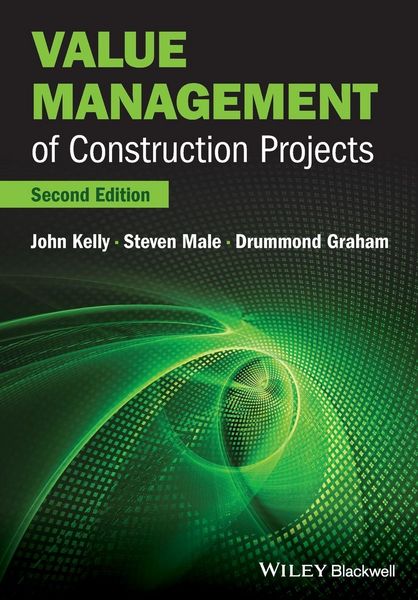
Produktbild: Value Management of Construction Projects

Value Management of Construction Projects

101,99 €

inkl. gesetzl. MwSt., Versandkostenfrei


Beschreibung

VALUE MANAGEMENT OF CONSTRUCTION PROJECTS Second Edition

Value Management is a philosophy, set of principles and structured management methodology for improving organisational decision-making and value-for-money. It is well-established in the international construction industry and has been endorsed...

Beschreibung

VALUE MANAGEMENT OF CONSTRUCTION PROJECTS
Second Edition

Value Management is a philosophy, set of principles and structured management methodology for improving organisational decision-making and value-for-money. It is well-established in the international construction industry and has been endorsed as good practice in a range of UK government sponsored reports.

The authors have addressed the practical opportunities and difficulties of Value Management by synthesising background, international developments, and benchmarking with their own extensive consultancy and action research experience in Value Management to provide a comprehensive package of theory and practice. Covering methods and practices, frameworks of value and the future of value management, this thoroughly updated second edition extends the integrated value philosophy, methodology and tool kit to describe the application of Value Management to service delivery, asset management and programmes, in addition to projects, products and processes. In particular, the new edition responds to:

  • A range of recent UK industry and government publications; and most notably BS EN 16271:2012 - Value management: Functional expression of the need and functional performance specification; the imminent update of BS EN 12973:2000 Value Management; BS EN 1325 Value Management - Vocabulary, Terms and Definitions; the changes to "Value for Europe" governing the training and certification of Value Management in European Union countries; the UK Government's Management of Value (MoV) initiative, and other leading reports, international guidance and relevant standards.
  • Changes in Value Management practice, particularly in programmes and projects.
  • Developments in the theory of value, principally value for money measures, whole life value option appraisal, and benefits realisation.
  • Initiatives in asset management covering the management of physical infrastructure, for example the suite of three standards under the generic title of BS ISO 55000: 2014 Asset Management, and its predecessor BSI PAS55 2008 Asset Management: Specification for the Optimized Management of Physical Assets.

It contains a dedicated chapter of exemplar case studies which demonstrate the new areas of theory and practice, and an extensive set of tools and techniques of use in Value Management practice.

Public and private construction clients and construction professionals such as cost consultants, quantity surveyors, architects, asset managers, engineers, and project managers will all find Value Management of Construction Projects essential reading. It will also be of interest to researchers and students on construction related courses - particularly those at final year undergraduate and at Masters level.

Produktdetails

Einband

Taschenbuch

Erscheinungsdatum

10.11.2014

Verlag John Wiley & Sons Inc
Seitenzahl

576

Produktdetails

Einband

Taschenbuch

Erscheinungsdatum

10.11.2014

Verlag John Wiley & Sons Inc
Seitenzahl

576

Maße (L/B/H)

24,4/16,9/2,5 cm

Gewicht

968 g

Auflage

2nd Revised edition

Sprache

Englisch

ISBN

978-1-118-35123-9

Herstelleradresse

Libri GmbH
Europaallee 1
36244 Bad Hersfeld
DE

Email: gpsr@libri.de

Noch keine Bewertungen vorhanden

Verfassen Sie die erste Bewertung zu diesem Artikel

Helfen Sie anderen Kundinnen und Kunden durch Ihre Meinung.

Kundinnen und Kunden meinen

Bewertungen (0)

Die Leseprobe wird geladen.
  • Produktbild: Value Management of Construction Projects
  • Preface xi

    Glossary xiii

    Part 1 Introduction and Evolution of Value Management 1

    1 Introduction 3

    1.1 The aims and objectives of the book 3

    1.2 Developments in UK construction 6

    1.3 Developments in value management 9

    1.4 The structure of the second edition 12

    References 13

    2 Evolution of Value Engineering and Value Management 15

    2.1 Introduction 15

    2.2 Historical background 16

    2.3 Definitions, terminology and practice - Phase 1: 1947 to 1963 17

    2.4 Definitions, terminology and practice - Phase 2: 1963 to 1989 19

    2.5 Definitions, terminology and practice - Phase 3: 1989 to 2014 20

    2.6 The Project, Portfolio or Programme of projects 23

    2.7 The 1998 international benchmarking study of VM and VE 24

    2.8 Standards and procurement guidance 32

    2.9 International research into value management 40

    2.10 Implications for value management and value studies 42

    2.11 Conclusions 46

    References 47

    Part 2 The Anatomy of a Value Study 51

    3 Value Study Styles 55

    3.1 Introduction 55

    3.2 The inception of a project 56

    3.3 The specification and procurement of a value study 57

    3.4 Value studies within the project management process 59

    3.5 The three generic phases of a value study 59

    3.6 Study styles, processes and deliverables 61

    3.7 Project development tracks 61

    3.8 Value study type 1: Strategic briefing (project planning and business definition) 63

    3.9 Value study type 2: Project briefing (the technical specification) 66

    3.10 Value study type 3: Concept design (the technical solution) 70

    3.11 Value study: Charette 73

    3.12 Value studies 4 and 5: value engineering 75

    3.13 Other study styles 79

    3.14 Case study 84

    3.15 Conclusion 95

    References 96

    4 Function Analysis 97

    4.1 Introduction 97

    4.2 Discussion of function as a concept 98

    4.3 Strategic function analysis - Information discovery and synthesis 102

    4.4 Strategies, programmes and projects 109

    4.5 Strategic function analysis - Function diagramming 110

    4.6 Project function analysis - Function diagramming 114

    4.7 Function space diagramming 124

    4.8 Elemental cost planning and elemental cost control 128

    4.9 Element function analysis 130

    4.10 Managing element clusters 133

    4.11 Evaluating function 133

    4.12 Conclusion 138

    References 138

    5 Managing Value Study Teams 139

    5.1 Introduction 139

    5.2 The Value Study Leader 140

    5.3 Groups, teams and team dynamics 148

    5.4 Implications for team management in value studies 154

    5.5 Value workshop management skills 166

    5.6 Conclusions and lessons from practice 169

    References 171

    6 Innovation, Implementation and Benefits Realisation 173

    6.1 Introduction 173

    6.2 Innovation 174

    6.3 Evaluation and development 186

    6.4 Implementation 187

    6.5 Benefits realisation 188

    6.6 Conclusion 189

    References 189

    7 Case Studies 191

    7.1 Case studies 191

    7.2 Case study 1 - Headquarters for a financial institution 193

    7.3 Case study 2 - Replacement of silo storage and process plant in food manufacturing facility 197

    7.4 Case study 3 - Rail infrastructure programme 200

    7.5 Case study 4 - Magistrates Court project 205

    7.6 Case study 5 - College campus library project 209

    7.7 Case study 6 - Material production facility expansion project 215

    7.8 Case study 7 - Social housing project 219

    7.9 Case study 8 - Crown Court project 223

    7.10 Project level: An overview of case studies 1 to 8 226

    7.11 Case study 9 - Organisational change 226

    7.12 The lessons learnt from the studi