• Produktbild: Shakespeare's English
  • Produktbild: Shakespeare's English

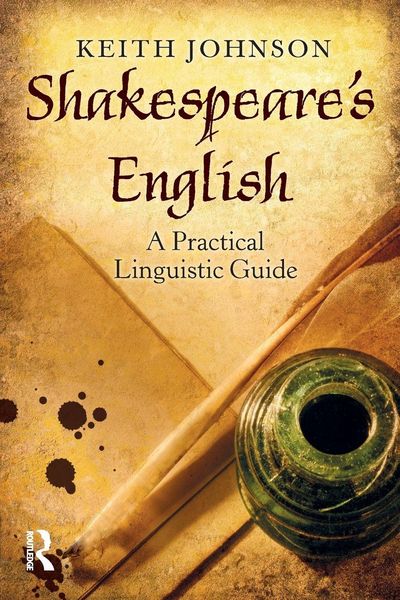
Shakespeare's English A Practical Linguistic Guide

69,99 €

inkl. gesetzl. MwSt., Versandkostenfrei

Lieferung nach Hause

Beschreibung

Produktdetails

Einband

Taschenbuch

Erscheinungsdatum

28.03.2013

Verlag

Routledge

Seitenzahl

338

Maße (L/B/H)

23,4/15,6/1,8 cm

Gewicht

515 g

Sprache

Englisch

ISBN

978-1-4082-7735-5

Beschreibung

Produktdetails

Einband

Taschenbuch

Erscheinungsdatum

28.03.2013

Verlag

Routledge

Seitenzahl

338

Maße (L/B/H)

23,4/15,6/1,8 cm

Gewicht

515 g

Sprache

Englisch

ISBN

978-1-4082-7735-5

Herstelleradresse

Libri GmbH
Europaallee 1
36244 Bad Hersfeld
DE

Email: gpsr@libri.de

Noch keine Bewertungen vorhanden

Verfassen Sie die erste Bewertung zu diesem Artikel

Helfen Sie anderen Kundinnen und Kunden durch Ihre Meinung.

Kundinnen und Kunden meinen

Bewertungen (0)

Die Leseprobe wird geladen.
  • Produktbild: Shakespeare's English
  • Produktbild: Shakespeare's English
  • Author’s acknowledgements

    Publisher’s acknowledgements

    Chronology of Shakespeare’s works

    Phonetic symbols used

    1. Why, What, and How

    1.1. Shakespeare’s language? Why study it?

    1.2 What is Shakespeare’s language like? An initial look

    1.3 How hard is Shakespeare’s English?

    1.4 Something about this book and how to use it

    1.5 Shakespeare’s English? Which Shakespeare?

    Whose English?

    2. Inventing Words: The ‘great feast of languages’

    2.1 Admiring Shakespeare’s vocabulary

    2.2 The Renaissance and words

    2.3 Shakespeare’s word coining

    2.4 Shakespeare and the spirit of the age

    3. Using Words: The fatal Cleopatras

    3.1 Playing with words

    3.2 ‘Kitchen diction’

    3.3 ‘Never-broken chain of imagery’

    3.4 Words then and now: historical false friends

    3.5 Register, and other levels of variation

    3.6 Fine volleys of words

    4 Grammar: Inside the bonnet

    4.1 Grammar and cars

    4.2 Expressing grammatical information

    4.3 Shakespeare as ‘half-way house’

    4.4 Shakespeare: an initial look inside the bonnet

    4.5 The noun phrase

    4.6 The verb phrase

    4.7 Towards today

    5. Pragmatics: Shakespeare as a foreign language

    5.1 What pragmatics is

    5.2 Working out pragmatic meaning: exclamations

    5.3 How to be polite in Shakespeare

    5.4 A speech act: directives

    5.5 Thou and you (and ye)

    5.6 Implicature

    5.7 The need for pragmatic awareness

    6. Rhetoric: ‘Sweet and honeyed sentences’

    6.1 Complicated sentences

    6.2 Compound and complex sentences

    6.3 The history of rhetoric in a nutshell

    6.4 Some Renaissance styles

    6.5 Rhetorical devices

    6.6 Energy and growth

    7. Verse and Prose: Iambic pentameters all the time?

    7.1 Blank verse

    7.2 Verse and prose

    7.3 Blank, rhyme and prose: the mix

    8. Shakespeare on the Page: ‘Wryting englysh treu’

    8.1 Taste and fancy

    8.2 Spelling

    8.3 Punctuation

    8.4 A look at the First Folio

    8.5 Variation and standardisation

    9. Sounds: The ‘tongue’s sweet melody’

    9.1 How different . . . and why bother?

    9.2 A first look (or listen)

    9.3 Looking at some consonants

    9.4 Some vowels and diphthongs

    9.5 Some EModE pronunciation ‘practice drills’

    9.6 Shakespearean pronunciation: how do we know?

    9.7 More on puns and homophones

    9.8 Stress

    9.9 Pronunciation and comprehension

    10. Our revels now are ended

    10.1 Language points in one passage

    10.2 After the revels

    Glossary

    References

    Index