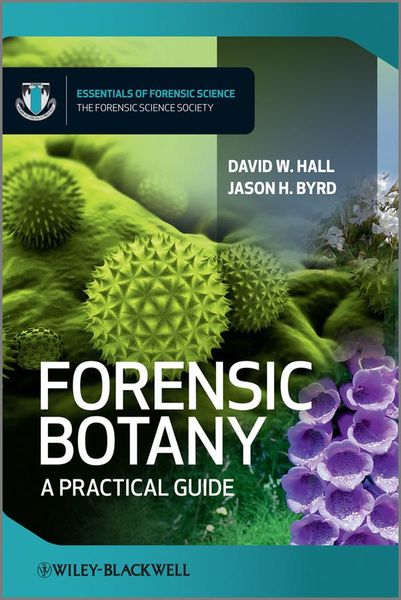
Forensic Botany A Practical Guide
-
- Hardcover ausgewählt
- Taschenbuch
- eBook
-
Sprache:Englisch
171,99 €
inkl. gesetzl. MwSt.,
Beschreibung
Produktdetails
Einband
Gebundene Ausgabe
Erscheinungsdatum
01.06.2012
Verlag
John Wiley & SonsSeitenzahl
216
Maße (L/B/H)
25,3/17,5/1,8 cm
Gewicht
530 g
Auflage
1. Auflage
Sprache
Englisch
ISBN
978-0-470-66409-4
Forensic Botany: A Practical Guide is an accessible introduction to the way in which botanical evidence is identified, collected and analysed in criminal cases. Increasingly this form of evidence is becoming more important in forensic investigation and yet there are few trained botanists able to assist in such cases. This book is intended to show how useful simple collection methods and standard plant analysis can be in the course of such investigations and is written in a clear and accessible manner to enhance understanding of the subject for the non-specialist.
Clearly structured throughout, this book combines well known collection techniques in a field oriented format that can be used for casework. Collection of evidence differs from formal plant collection in that most professional plant collectors are gathering entire plants or significant portions of a plant for permanent storage and reference. Evidence frequently consists of fragments, sometimes exceedingly tiny. Exemplars (examples of reference plants) are collections of plants made in the manner a botanist would collect them. These collections are necessary to link or exclude evidence to or from a scene. Various methods that allow easy collection, transportation, and preservation of evidence are detailed throughout the book.
This book is written for those who have no formal background working with plants. It can be used as a practical guide for students taking forensic science courses, law enforcement training, legal courses, and as a template for plant collection at any scene where plants occur and where rules or laws are involved. Veterinarians, various environmental agencies, anthropologists, and archeologists are examples of disciplines that are more recently in need of plant evidence. Veterinarians are becoming more active in pursuing cases of animals that have been abused or are victims of illegal killing. Anthropologists and archeologists are often called to help with body recovery in outdoor environments. Environmental agencies are increasingly forced to adopt rules for resource protection, are in need of a guide for procedures for plant evidence collection and application.
The format of the book is designed to present the reader with all the information needed to conduct a botanical analysis of a crime scene; to highlight the forensic significance of the botanical evidence that may be present; how to collect that evidence in the correct manner and preserve and store that evidence appropriately- also shows how to conduct a laboratory analysis of the plants.
Noch keine Bewertungen vorhanden
Verfassen Sie die erste Bewertung zu diesem Artikel
Helfen Sie anderen Kundinnen und Kunden durch Ihre Meinung.
Kurze Frage zu unserer Seite
Vielen Dank für dein Feedback
Wir nutzen dein Feedback, um unsere Produktseiten zu verbessern. Bitte habe Verständnis, dass wir dir keine Rückmeldung geben können. Falls du Kontakt mit uns aufnehmen möchtest, kannst du dich aber gerne an unseren Kund*innenservice wenden.
zum Kundenservice