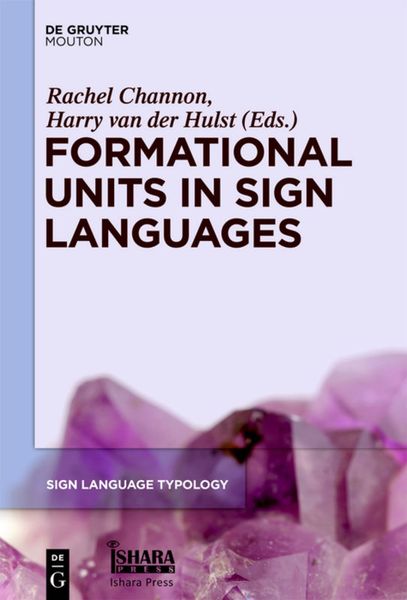
Formational Units in Sign Languages
164,99 €
UVP
189,95 €
inkl. gesetzl. MwSt.,
Beschreibung
Produktdetails
Einband
Gebundene Ausgabe
Erscheinungsdatum
17.10.2011
Herausgeber
Rachel Channon + weitereVerlag
De Gruyter OldenbourgSeitenzahl
346
Maße (L/B/H)
23,6/16/2,5 cm
Gewicht
668 g
Auflage
1
Sprache
Englisch
ISBN
978-1-61451-067-3
Sign languages and spoken languages have an equal capacity to communicate our thoughts. Beyond this, however, while there are many similarities, there are also fascinating differences, caused primarily by the reaction of the human mind to different modalities, but also by some important social differences. The articulators are more visible and use larger muscles with consequent greater effort. It is difficult to visually attend to both a sign and an object at the same time. Iconicity is more systematic and more available in signs. The body, especially the face, plays a much larger role in sign. Sign languages are more frequently born anew as small groups of deaf people come together in villages or schools. Sign languages often borrow from the written form of the surrounding spoken language, producing fingerspelling alphabets, character signs, and related signs. This book examines the effects of these and other differences using observation, experimentation and theory. The languages examined include Asian, Middle Eastern, European and American sign languages, and language situations include home signers and small village signers, children, gesturers, adult signers, and non-native signers.
Noch keine Bewertungen vorhanden
Verfassen Sie die erste Bewertung zu diesem Artikel
Helfen Sie anderen Kundinnen und Kunden durch Ihre Meinung.
Kurze Frage zu unserer Seite
Vielen Dank für dein Feedback
Wir nutzen dein Feedback, um unsere Produktseiten zu verbessern. Bitte habe Verständnis, dass wir dir keine Rückmeldung geben können. Falls du Kontakt mit uns aufnehmen möchtest, kannst du dich aber gerne an unseren Kund*innenservice wenden.
zum Kundenservice