Beschreibung
Produktdetails
Einband
Gebundene Ausgabe
Erscheinungsdatum
16.01.2012
Verlag
St. Augustine's PressSeitenzahl
248
Maße (L/B/H)
23,4/15/2,5 cm
Gewicht
517 g
Sprache
Englisch
ISBN
978-1-58731-363-9
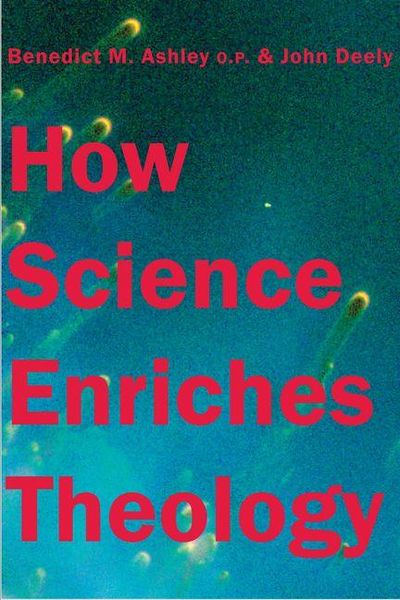
In a time when the relation of theology to science is in question, due in part to the unwitting fideism of religious fundamentalists and, conversely, as a result of the equally fundamentalist diatribes of the so-called "New Atheists," How Science Enriches Theology provides a much-needed demonstration of the possibility and necessity for dialogue and integration between the two perspectives or fields of inquiry. Far from being in the unhappy throes of divorce, theology and science must renew their common commitment to the use of reason! This work is written by two formidable thinkers who have each written extensively on the foundations of natural science and related issues - including the inherently evolutionary nature and development of the cosmos. Now they team up to show the fruitful impact of science on theology as a use of reason in the service of Christian faith.
In its philosophical or 'cenoscopic' foundations, science can support the truths of monotheistic faith and provide a corrective to both materialist and spiritualist forms of monism. Meanwhile, with the advance of science in the modern sense, the special sciences as 'ideoscopic, ' we can see not only the traces of God's existence, but of the Trinitarian nature of God, the Divine Persons of the Godhead, as proposed in Christian faith.
Make no mistake, the authors are sure to uphold the indemonstrability of Christian-specific doctrines, such as the Trinity and the Incarnation; but, with Augustine and Aquinas, they affirm that creation is rife with traces of the divine. The validity of theology does not reduce to the deliverances of the modern sciences, but the latter can undoubtedly aid the person of faith in the "evolution" of his or her theological understanding and embrace of faith as beyond - but not contrary to - reason properly exercised. For example, the immensity and depth of our universe, as indicated alike by relativity theory and quantum theory, along with the biological, chemical, and physical diversity and dynamic stability contained within the universe's vast limits, enrich our understanding of God the Father. Our universe's order, uniqueness, and intelligibility suggest how we may better understand the Divine Logos, Jesus Christ. While further the evolution, freedom, and plenitude of the cosmos reveal the character of God the Holy Spirit.
In How Science Enriches Theology, Ashley and Deely present a veritably "theosemiotic picture" of the universe, and one which avoids the naïve reductionisms of mind to matter, culture to society, biology to physics, and cenoscopic to ideoscopic science. But not only do the authors of this stellar book explore the diverse riches of creation's many nooks and crannies; they do not balk at concluding with the speculative but inevitable question, Where is creation headed?, while also providing a tentative answer to how we might reconcile the inevitable consequences of the Second Law of Thermodynamics with the Book of Revelation's eschatological promise of a New Heavens and a New Earth.
Noch keine Bewertungen vorhanden
Verfassen Sie die erste Bewertung zu diesem Artikel
Helfen Sie anderen Kundinnen und Kunden durch Ihre Meinung.
Kurze Frage zu unserer Seite
Vielen Dank für dein Feedback
Wir nutzen dein Feedback, um unsere Produktseiten zu verbessern. Bitte habe Verständnis, dass wir dir keine Rückmeldung geben können. Falls du Kontakt mit uns aufnehmen möchtest, kannst du dich aber gerne an unseren Kund*innenservice wenden.
zum Kundenservice