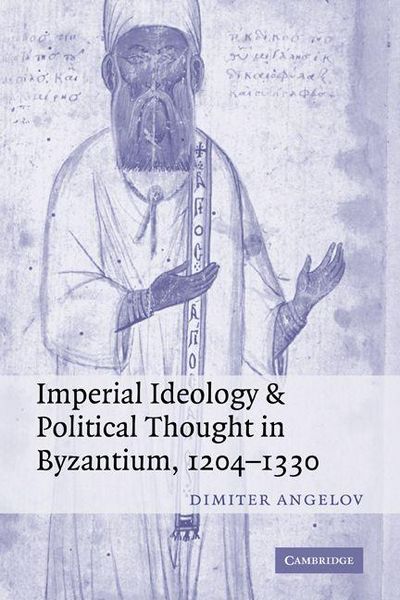
Imperial Ideology and Political Thought in Byzantium, 1204 1330
-
- Hardcover
- Taschenbuch ausgewählt
-
Sprache:Englisch
86,99 €
inkl. gesetzl. MwSt.,
Lieferung nach Hause
Beschreibung
Produktdetails
Einband
Taschenbuch
Erscheinungsdatum
15.03.2011
Verlag
Cambridge AcademicSeitenzahl
474
Maße (L/B/H)
22,9/15,2/2,5 cm
Gewicht
630 g
Sprache
Englisch
ISBN
978-0-521-29438-6
This study is the first to systematically investigate Byzantine imperial ideology, court rhetoric and political thought after the Latin conquest of Constantinople in 1204 - in the Nicaean state (1204-61) and during the early period of the restored empire of the Palaiologoi. The book explores Byzantine political imagination at a time of crisis when the Empire ceased to be a first-rate power in the Mediterranean. It investigates the correspondence and fissures between official political rhetoric, on the one hand, and the political ideas of lay thinkers and churchmen, on the other. Through the analysis of a wide body of sources, a picture of Byzantine political thought emerges which differs significantly from the traditional one. The period saw refreshing developments in court rhetoric and political thought, some with interesting parallels in the medieval and Renaissance West, which arose in response to the new historical realities.
Kundinnen und Kunden meinen
Verfassen Sie die erste Bewertung zu diesem Artikel
Helfen Sie anderen Kund*innen durch Ihre Meinung
Kurze Frage zu unserer Seite
Vielen Dank für dein Feedback
Wir nutzen dein Feedback, um unsere Produktseiten zu verbessern. Bitte habe Verständnis, dass wir dir keine Rückmeldung geben können. Falls du Kontakt mit uns aufnehmen möchtest, kannst du dich aber gerne an unseren Kund*innenservice wenden.
zum Kundenservice