Gutscheinbedingungen

**Gültig vom 20.07.2026 bis 22.07.2026 | Gültig für nicht preisgebundene fremdsprachige Bücher | Einzelne Artikel können ausgeschlossen sein | Nicht kombinierbar mit anderen Gutscheinen oder Preisaktionen | Nur einmal pro Einkauf einlösbar | Gutschein wird auf max. 500€ Bestellwert angerechnet | Keine Barauszahlung | Nicht gültig für Versandkosten und Services

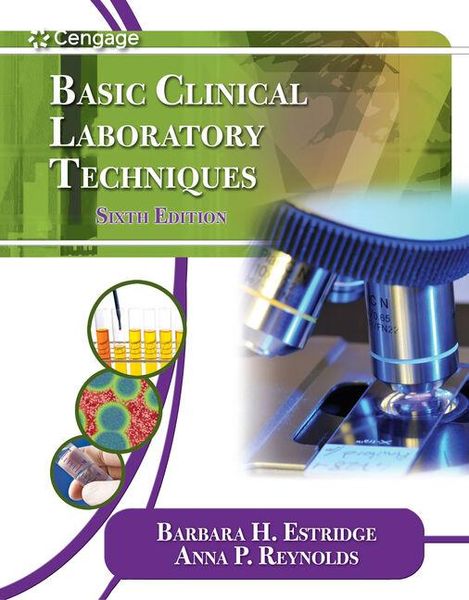
Produktbild: Basic Clinical Laboratory Techniques

Basic Clinical Laboratory Techniques

226,99 €

inkl. gesetzl. MwSt., Versandkostenfrei

Lieferung nach Hause

Beschreibung

Produktdetails

Einband

Taschenbuch

Erscheinungsdatum

17.11.2011

Verlag

Cengage Learning

Seitenzahl

816

Maße (L/B/H)

27,4/21,7/3,8 cm

Gewicht

1970 g

Auflage

6th edition

Sprache

Englisch

ISBN

978-1-111-13836-3

Beschreibung

Produktdetails

Einband

Taschenbuch

Erscheinungsdatum

17.11.2011

Verlag

Cengage Learning

Seitenzahl

816

Maße (L/B/H)

27,4/21,7/3,8 cm

Gewicht

1970 g

Auflage

6th edition

Sprache

Englisch

ISBN

978-1-111-13836-3

Herstelleradresse

Libri GmbH
Europaallee 1
36244 Bad Hersfeld
DE

Email: gpsr@libri.de

Noch keine Bewertungen vorhanden

Verfassen Sie die erste Bewertung zu diesem Artikel

Helfen Sie anderen Kundinnen und Kunden durch Ihre Meinung.

Kundinnen und Kunden meinen

Bewertungen (0)

  • Produktbild: Basic Clinical Laboratory Techniques
  • List of Figures and Tables. Preface. How to Use This Book. Unit I: INTRODUCTION TO THE CLINICAL LABORATORY. The Clinical Laboratory. The Clinical Laboratory Professional. Medical Terminology. Laboratory Safety: Physical and Chemical Hazards. Laboratory Safety: Biological Hazards. General Laboratory Equipment. The Metric System. Preparing Laboratory Reagents. Quality Assessment. The Microscope. Capillary Puncture. Routine Venipuncture. Unit II: BASIC HEMATOLOGY. Introduction to Hematology. Hemoglobin. Microhematocrit. The Hemacytometer. Manual RBC and WBC Counts. Platelet Count. Preparing and Staining a Blood Smear. Normal Blood Cell Morphology. White Blood Cell Differential Count. Principles of Automated Hematology. Abnormalities in Peripheral Blood Cell Morphology. Reticulocyte Count. Erythrocyte Sedimentation Rate. Unit III: BASIC HEMOSTASIS. Principles of Hemostasis. Disorders of Hemostasis. Coagulation Testing Methods. Prothrombin Time. Activated Partial Thromboplastin Time. D-Dimer. Unit IV: BASIC IMMUNOLOGY AND IMMUNOHEMATOLOGY. Introduction to Immunology. Infectious Mononucleosis Tests. Test for Rheumatoid Factors. Urine hCG Tests. Introduction to Immunohematology. ABO Grouping. Rh Typing. Unit V: URINALYSIS. Introduction to Urinalysis. Urine Collection and Processing. Physical Examination of Urine. Chemical Examination of Urine. Microscopic Examination of Urine Sediment. Unit VI: BASIC CLINICAL CHEMISTRY. Introduction to Clinical Chemistry. Principles of Chemistry Instrumentation. Chemistry Specimen Collection and Processing. Point-of-Care Testing. Blood Glucose and Hemoglobin A1c. Blood Cholesterol and Triglycerides. Electrolytes. Fecal Occult Blood. Unit VII: BASIC CLINICAL MICROBIOLOGY. Introduction to Clinical Microbiology. Microbiology Specimen Collection and Processing. Culture Techniques for Bacteriology. The Gram Stain. Tests for Group A Streptococcus. Urine Culture and Colony Count. Bacterial Identification and Antibiotic Susceptibility Testing. Tests for Sexually Transmitted Diseases. Infection Prevention in Health-Care Settings. Public Health Issue: Emerging Infectious Diseases. Public Health Issue: Biological Threats. Unit VIII: BASIC PARASITOLOGY. Introduction to Parasitology. Collecting and Processing of Specimens for Parasite Detection. Microscopic Methods of Detecting Intestinal Parasites. Preparing Smears for Blood Parasites. Glossary. Appendix A: Guide to Standard Precautions. Appendix B: Laboratory Reference Values. Appendix C: Abbreviations and Acronyms Commonly Used in Clinical Laboratories. Appendix D: Sources of Information: Health Care Accrediting and Credentialing Agencies, Professional Societies, Governmental Agencies. Index.