KI-Beratung Beta

Produktbild: Rome, Ostia, Pompeii

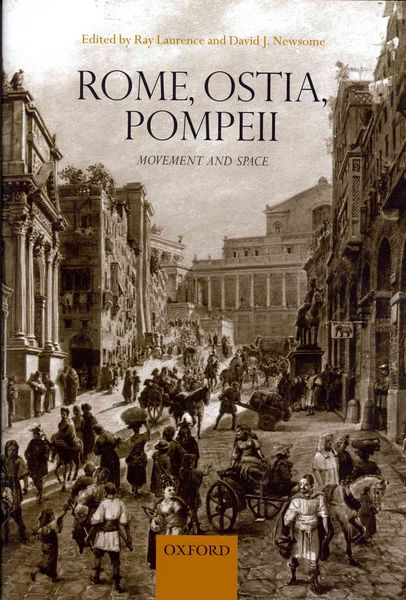
Rome, Ostia, Pompeii Movement and Space

162,99 €

inkl. gesetzl. MwSt., Versandkostenfrei


Beschreibung

Studies of the Roman city are currently shifting away from architecture towards a dynamic understanding of activities within the urban space. This volume focuses on the movement or flow of a Roman city's inhabitants and visitors, demonstrating how it contributes to our understanding of the way different...

Beschreibung

Studies of the Roman city are currently shifting away from architecture towards a dynamic understanding of activities within the urban space. This volume focuses on the movement or flow of a Roman city's inhabitants and visitors, demonstrating how it contributes to our understanding of the way different elements of society interacted in space.

Produktdetails

Einband

Gebundene Ausgabe

Erscheinungsdatum

01.02.2012

Abbildungen

77 illustrations and 11 tables.

Herausgeber David J. Newsome + weitere

Produktdetails

Einband

Gebundene Ausgabe

Erscheinungsdatum

01.02.2012

Abbildungen

77 illustrations and 11 tables.

Herausgeber
Verlag Oxford Academic
Seitenzahl

466

Maße (L/B/H)

24/16,1/2,9 cm

Gewicht

860 g

Sprache

Englisch

ISBN

978-0-19-958312-6

Herstelleradresse

Libri GmbH
Europaallee 1
36244 Bad Hersfeld
DE

Email: gpsr@libri.de

Noch keine Bewertungen vorhanden

Verfassen Sie die erste Bewertung zu diesem Artikel

Helfen Sie anderen Kundinnen und Kunden durch Ihre Meinung.

Kundinnen und Kunden meinen

Bewertungen (0)

  • Produktbild: Rome, Ostia, Pompeii
    • Dedication
    • Table of contents
    • Preface
    • Acknowledgments
    • Notes on Contributors
    • Introduction
    • Making Movement Meaningful
    • Part I: Articulating Movement and Space
    • 1: Diana Spencer: Movement and the Linguistic Turn: Reading Varro s de Lingua Latina
    • 2: Ray Laurence: Literature and the Spatial Turn: Movement and Space in Martial s Epigrams
    • 3: Akkelies van Nes: Measuring spatial visibility, adjacency, permeability and degrees of street life in Pompeii
    • 4: Eleanor Betts: Towards a Multisensory Experience of Movement in the City of Rome
    • Part II: Movement in the Roman city: infrastructure and organisation
    • 5: Jeremy Hartnett: The Power of Nuisances on the Roman Street
    • 6: Steven Ellis: Pes dexter: Superstition and the state in the shaping of shop-fronts and street activity in the Roman world
    • 7: Alan Kaiser: Cart Traffic Flow in Pompeii and Rome
    • 8: Eric E. Poehler: Where to Park? Carts, Stables and the Economics of Transport in Pompeii
    • 9: Hanna Stöger: The Spatial Organisation of the Movement Economy: The Analysis of Ostia s scholae
    • Part III: Movement and the Metropolis
    • 10: Claire Holleran: The Street Life of Ancient Rome
    • 11: Elizabeth Macaulay-Lewis: The City in Motion: Walking for transport and leisure in the city of Rome
    • 12: David J. Newsome: Movement and Fora in Rome (the Late Republic to the first century CE)
    • 13: Francesco Trifilò: Movement, gaming and the use of space in the forum
    • 14: Diane Favro: Construction Traffic in Imperial Rome: Building the Arch of Septimius Severus
    • 15: Simon Malmberg and Hans Bjur: Movement and urban development at two city gates in Rome: the Porta Esquilina and Porta Tiburtina
    • Endpiece
    • From Movement to Mobility: Future Directions
    • Bibliography