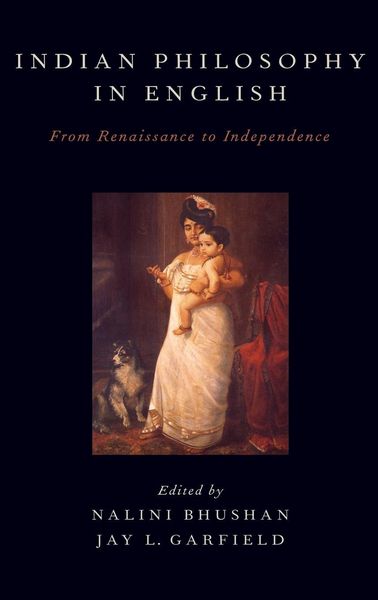
Indian Philosophy in English
-
- Hardcover ausgewählt
- Taschenbuch
- eBook
-
Sprache:Englisch
112,99 €
inkl. gesetzl. MwSt.,
Beschreibung
Produktdetails
Einband
Gebundene Ausgabe
Erscheinungsdatum
22.01.2013
Herausgeber
Bhushan Nalini + weitereVerlag
Oxford AcademicSeitenzahl
674
Maße (L/B/H)
24/16,1/4 cm
Gewicht
1165 g
Sprache
Englisch
ISBN
978-0-19-976926-1
This book publishes, for the first time in decades, and in many cases, for the first time in a readily accessible edition, English language philosophical literature written in India during the period of British rule. Bhushan's and Garfield's own essays on the work of this period contextualize the philosophical essays collected and connect them to broader intellectual, artistic and political movements in India. This volume yields a new understanding of cosmopolitan consciousness in a colonial context, of the intellectual agency of colonial academic communities, and of the roots of cross-cultural philosophy as it is practiced today. It transforms the canon of global philosophy, presenting for the first time a usable collection and a systematic study of Anglophone Indian philosophy.
Many historians of Indian philosophy see a radical disjuncture between traditional Indian philosophy and contemporary Indian academic philosophy that has abandoned its roots amid globalization. This volume provides a corrective to this common view. The literature collected and studied in this volume is at the same time Indian and global, demonstrating that the colonial Indian philosophical communities were important participants in global dialogues, and revealing the roots of contemporary Indian philosophical thought.
The scholars whose work is published here will be unfamiliar to many contemporary philosophers. But the reader will discover that their work is creative, exciting, and original, and introduces distinctive voices into global conversations. These were the teachers who trained the best Indian scholars of the post-Independence period. They engaged creatively both with the classical Indian tradition and with the philosophy of the West, forging a new Indian philosophical idiom to which contemporary Indian and global philosophy are indebted.
Noch keine Bewertungen vorhanden
Verfassen Sie die erste Bewertung zu diesem Artikel
Helfen Sie anderen Kundinnen und Kunden durch Ihre Meinung.
Kurze Frage zu unserer Seite
Vielen Dank für dein Feedback
Wir nutzen dein Feedback, um unsere Produktseiten zu verbessern. Bitte habe Verständnis, dass wir dir keine Rückmeldung geben können. Falls du Kontakt mit uns aufnehmen möchtest, kannst du dich aber gerne an unseren Kund*innenservice wenden.
zum Kundenservice