Produktbild: Jenkins: The Definitive Guide

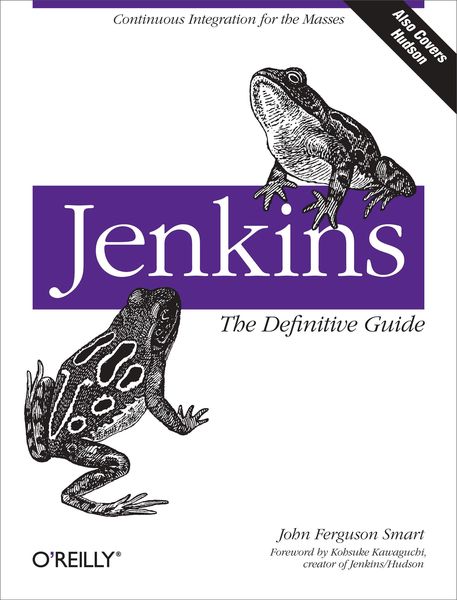
Jenkins: The Definitive Guide The Definitive Guide. Continuous Integration for the Masses. Also covers Hudson

51,99 €

inkl. gesetzl. MwSt., Versandkostenfrei

Lieferung nach Hause

Beschreibung

Produktdetails

Einband

Taschenbuch

Erscheinungsdatum

23.08.2011

Abbildungen

w. Illustrationen

Verlag

O'Reilly Media

Seitenzahl

406

Maße (L/B/H)

23,3/17,9/2,5 cm

Gewicht

695 g

Sprache

Englisch

ISBN

978-1-4493-0535-2

Beschreibung

Produktdetails

Einband

Taschenbuch

Erscheinungsdatum

23.08.2011

Abbildungen

w. Illustrationen

Verlag

O'Reilly Media

Seitenzahl

406

Maße (L/B/H)

23,3/17,9/2,5 cm

Gewicht

695 g

Sprache

Englisch

ISBN

978-1-4493-0535-2

Herstelleradresse

Libri GmbH
Europaallee 1
36244 Bad Hersfeld
DE

Email: GPSR Kontakt

Noch keine Bewertungen vorhanden

Verfassen Sie die erste Bewertung zu diesem Artikel

Helfen Sie anderen Kundinnen und Kunden durch Ihre Meinung.

Kundinnen und Kunden meinen

Bewertungen (0)

Die Leseprobe wird geladen.
  • Produktbild: Jenkins: The Definitive Guide
  • Foreword; Preface; Audience; Book Layout; Jenkins or Hudson?; Font Conventions; Command-Line Conventions; Contributors; The Review Team; Book Sponsors; Using Code Examples; Safari® Books Online; How to Contact Us; Acknowledgments; Chapter 1: Introducing Jenkins; 1.1 Introduction; 1.2 Continuous Integration Fundamentals; 1.3 Introducing Jenkins (née Hudson); 1.4 From Hudson to Jenkins-A Short History; 1.5 Should I Use Jenkins or Hudson?; 1.6 Introducing Continuous Integration into Your Organization; 1.7 Where to Now?; Chapter 2: Your First Steps with Jenkins; 2.1 Introduction; 2.2 Preparing Your Environment; 2.3 Starting Up Jenkins; 2.4 Configuring the Tools; 2.5 Your First Jenkins Build Job; 2.6 Your First Build Job in Action; 2.7 More Reporting-Displaying Javadocs; 2.8 Adding Code Coverage and Other Metrics; 2.9 Conclusion; Chapter 3: Installing Jenkins; 3.1 Introduction; 3.2 Downloading and Installing Jenkins; 3.3 Preparing a Build Server for Jenkins; 3.4 The Jenkins Home Directory; 3.5 Installing Jenkins on Debian or Ubuntu; 3.6 Installing Jenkins on Red Hat, Fedora, or CentOS; 3.7 Installing Jenkins on SUSE or OpenSUSE; 3.8 Running Jenkins as a Stand-Alone Application; 3.9 Running Jenkins Behind an Apache Server; 3.10 Running Jenkins on an Application Server; 3.11 Memory Considerations; 3.12 Installing Jenkins as a Windows Service; 3.13 What's in the Jenkins Home Directory; 3.14 Backing Up Your Jenkins Data; 3.15 Upgrading Your Jenkins Installation; 3.16 Conclusion; Chapter 4: Configuring Your Jenkins Server; 4.1 Introduction; 4.2 The Configuration Dashboard-The Manage Jenkins Screen; 4.3 Configuring the System Environment; 4.4 Configuring Global Properties; 4.5 Configuring Your JDKs; 4.6 Configuring Your Build Tools; 4.7 Configuring Your Version Control Tools; 4.8 Configuring the Mail Server; 4.9 Configuring a Proxy; 4.10 Conclusion; Chapter 5: Setting Up Your Build Jobs; 5.1 Introduction; 5.2 Jenkins Build Jobs; 5.3 Creating a Freestyle Build Job; 5.4 Configuring Source Code Management; 5.5 Build Triggers; 5.6 Build Steps; 5.7 Post-Build Actions; 5.8 Running Your New Build Job; 5.9 Working with Maven Build Jobs; 5.10 Using Jenkins with Other Languages; 5.11 Conclusion; Chapter 6: Automated Testing; 6.1 Introduction; 6.2 Automating Your Unit and Integration Tests; 6.3 Configuring Test Reports in Jenkins; 6.4 Displaying Test Results; 6.5 Ignoring Tests; 6.6 Code Coverage; 6.7 Automated Acceptance Tests; 6.8 Automated Performance Tests with JMeter; 6.9 Help! My Tests Are Too Slow!; 6.10 Conclusion; Chapter 7: Securing Jenkins; 7.1 Introduction; 7.2 Activating Security in Jenkins; 7.3 Simple Security in Jenkins; 7.4 Security Realms-Identifying Jenkins Users; 7.5 Authorization-Who Can Do What; 7.6 Auditing-Keeping Track of User Actions; 7.7 Conclusion; Chapter 8: Notification; 8.1 Introduction; 8.2 Email Notification; 8.3 More Advanced Email Notification; 8.4 Claiming Builds; 8.5 RSS Feeds; 8.6 Build Radiators; 8.7 Instant Messaging; 8.8 IRC Notification; 8.9 Desktop Notifiers; 8.10 Notification via Notifo; 8.11 Mobile Notification; 8.12 SMS Notification; 8.13 Making Noise; 8.14 Extreme Feedback Devices; 8.15 Conclusion; Chapter 9: Code Quality; 9.1 Introduction; 9.2 Code Quality in Your Build Process; 9.3 Popular Java and Groovy Code Quality Analysis Tools; 9.4 Reporting on Code Quality Issues with the Violations Plugin; 9.5 Using the Checkstyle, PMD, and FindBugs Reports; 9.6 Reporting on Code Complexity; 9.7 Reporting on Open Tasks; 9.8 Integrating with Sonar; 9.9 Conclusion; Chapter 10: Advanced Builds; 10.1 Introduction; 10.2 Parameterized Build Jobs; 10.3 Parameterized Triggers; 10.4 Multiconfiguration Build Jobs; 10.5 Generating Your Maven Build Jobs Automatically; 10.6 Coordinating Your Builds; 10.7 Build Pipelines and Promotions; 10.8 Conclusion; Chapter 11: Distributed Builds; 11.1 Introduction; 11.2 The Jenkins Distributed Build Architecture; 11.3 Master/Slave Strategies in Jenkins; 11.4 Associating a Build Job with a Slave or Group of Slaves; 11.5 Node Monitoring; 11.6 Cloud Computing; 11.7 Using the CloudBees DEV@cloud Service; 11.8 Conclusion; Chapter 12: Automated Deployment and Continuous Delivery; 12.1 Introduction; 12.2 Implementing Automated and Continuous Deployment; 12.3 Deploying to an Application Server; 12.4 Conclusion; Chapter 13: Maintaining Jenkins; 13.1 Introduction; 13.2 Monitoring Disk Space; 13.3 Monitoring the Server Load; 13.4 Backing Up Your Configuration; 13.5 Archiving Build Jobs; 13.6 Migrating Build Jobs; 13.7 Conclusion; Automating Your Unit and Integration Tests; Automating Your Tests with Maven; Automating Your Tests with Ant; Colophon;