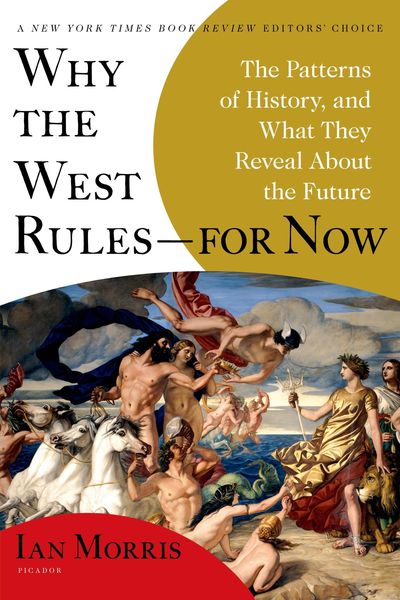
Why the West Rules--For Now The Patterns of History, and What They Reveal About the Future
-
- Taschenbuch ausgewählt
- eBook
-
Sprache:Englisch
-
Verlag:Macmillan US
- Profile Books 15,99 €
- Macmillan US 24,99 € ausgewählt
24,99 €
inkl. gesetzl. MwSt.,
Lieferung nach Hause
Beschreibung
Produktdetails
Einband
Taschenbuch
Erscheinungsdatum
25.10.2011
Verlag
Macmillan USSeitenzahl
750
Maße (L/B/H)
20,8/14,1/3,8 cm
Gewicht
589 g
Sprache
Englisch
ISBN
978-0-312-61169-9
A New York Times Notable Book for 2011
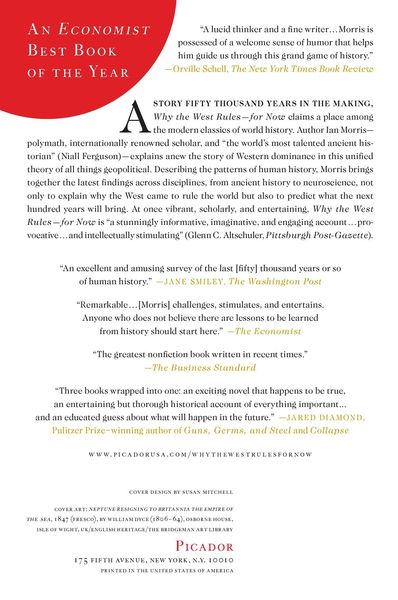
Sometime around 1750, English entrepreneurs unleashed the astounding energies of steam and coal, and the world was forever changed. The emergence of factories, railroads, and gunboats propelled the West's rise to power in the nineteenth century, and the development of computers and nuclear weapons in the twentieth century secured its global supremacy. Now, at the beginning of the twenty-first century, many worry that the emerging economic power of China and India spells the end of the West as a superpower. In order to understand this possibility, we need to look back in time. Why has the West dominated the globe for the past two hundred years, and will its power last?
Describing the patterns of human history, the archaeologist and historian Ian Morris offers surprising new answers to both questions. It is not, he reveals, differences of race or culture, or even the strivings of great individuals, that explain Western dominance. It is the effects of geography on the everyday efforts of ordinary people as they deal with crises of resources, disease, migration, and climate. As geography and human ingenuity continue to interact, the world will change in astonishing ways, transforming Western rule in the process.
Deeply researched and brilliantly argued, Why the West Rules-for Now spans fifty thousand years of history and offers fresh insights on nearly every page. The book brings together the latest findings across disciplines-from ancient history to neuroscience-not only to explain why the West came to rule the world but also to predict what the future will bring in the next hundred years.
Kundinnen und Kunden meinen
Verfassen Sie die erste Bewertung zu diesem Artikel
Helfen Sie anderen Kund*innen durch Ihre Meinung
Kurze Frage zu unserer Seite
Vielen Dank für dein Feedback
Wir nutzen dein Feedback, um unsere Produktseiten zu verbessern. Bitte habe Verständnis, dass wir dir keine Rückmeldung geben können. Falls du Kontakt mit uns aufnehmen möchtest, kannst du dich aber gerne an unseren Kund*innenservice wenden.
zum Kundenservice