Gutscheinbedingungen

**Gültig vom 15.06.2026 bis 17.06.2026 | Gültig für nicht preisgebundene fremdsprachige Bücher | Einzelne Artikel können ausgeschlossen sein | Maximaler rabattfähiger Warenkorbwert 500 € | Nicht kombinierbar mit weiteren Aktionen | Nur einmal pro Person einlösbar | Nur solange der Vorrat reicht

  • Produktbild: Teaching Numeracy
  • Produktbild: Teaching Numeracy

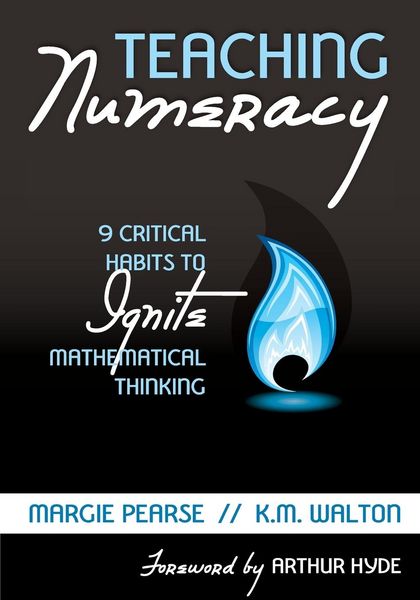
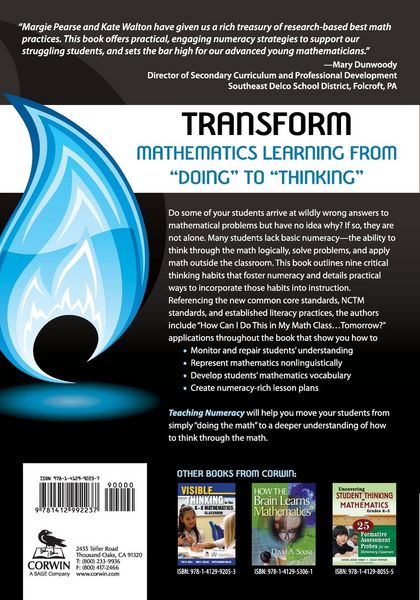
Teaching Numeracy 9 Critical Habits to Ignite Mathematical Thinking

45,99 €

inkl. gesetzl. MwSt., Versandkostenfrei

Lieferung nach Hause

Beschreibung

Produktdetails

Einband

Taschenbuch

Erscheinungsdatum

23.03.2011

Verlag

Corwin

Seitenzahl

240

Maße (L/B/H)

25,4/17,8/1,3 cm

Gewicht

460 g

Sprache

Englisch

ISBN

978-1-4129-9223-7

Beschreibung

Produktdetails

Einband

Taschenbuch

Erscheinungsdatum

23.03.2011

Verlag

Corwin

Seitenzahl

240

Maße (L/B/H)

25,4/17,8/1,3 cm

Gewicht

460 g

Sprache

Englisch

ISBN

978-1-4129-9223-7

Herstelleradresse

Libri GmbH
Europaallee 1
36244 Bad Hersfeld
DE

Email: gpsr@libri.de

Kundinnen und Kunden meinen

0 Bewertungen

Informationen zu Bewertungen

Zur Abgabe einer Bewertung ist eine Anmeldung im Konto notwendig. Die Authentizität der Bewertungen wird von uns nicht überprüft. Wir behalten uns vor, Bewertungstexte, die unseren Richtlinien widersprechen, entsprechend zu kürzen oder zu löschen.

Die Bewertungen sind nach Format, Anzahl Sterne und Datum sortiert.

Verfassen Sie die erste Bewertung zu diesem Artikel

Helfen Sie anderen Kund*innen durch Ihre Meinung

Kundinnen und Kunden meinen

0 Bewertungen filtern

Weitere Artikel findest du in

  • Produktbild: Teaching Numeracy
  • Produktbild: Teaching Numeracy
  • Foreword by Arthur Hyde
    Preface
    Acknowledgments
    About the Authors
    Introduction: Numeracy: What Is It, and Why Is It Important?
    Part I. The 9 Critical Habits to Ignite Numerate Thinking
    Habit 1. Monitor and Repair Understanding
    Habit 2. Develop Schema and Activate Background Knowledge
    Habit 3. Identify Similarities and Differences, Recognize Patterns, Organize and Categorize Ideas, Investigate Analogies and Metaphors
    Habit 4. Represent Mathematics Nonlinguistically
    Habit 5. Predict, Infer, Recognize Trends, Use Patterns, and Generate and Test Hypotheses
    Habit 6. Question for Understanding
    Habit 7. Summarize, Determine Importance, Synthesize: Using Note Taking and Journaling
    Habit 8. Develop Vocabulary
    Habit 9. Collaborate to Learn
    Part II. The 5 Essential Components of a Numeracy-Based Mathematics Lesson
    Component 1. Purpose and Focus
    Component 2. Ignition
    Component 3. Bridge to the Learning
    Component 4. Gradual Release in Mathematics
    Component 5. Debrief: Tying It All Together
    Conclusion: Our Debrief
    Appendix A. Sample Numeracy-Based Lesson Plans
    Sample Lesson 1: Introduction to Division (Grades 2-3)
    Sample Lesson 2: Elapsed Time (Grades 5-6)
    Sample Lesson 3: Surface Area of a Right Rectangular Prism (Grades 7-8)
    Appendix B. Anticipation Guide: The 2010 Census
    Appendix C. Clock Reproducible for Clock Partners
    References and Further Reading
    Index