KI-Beratung Beta

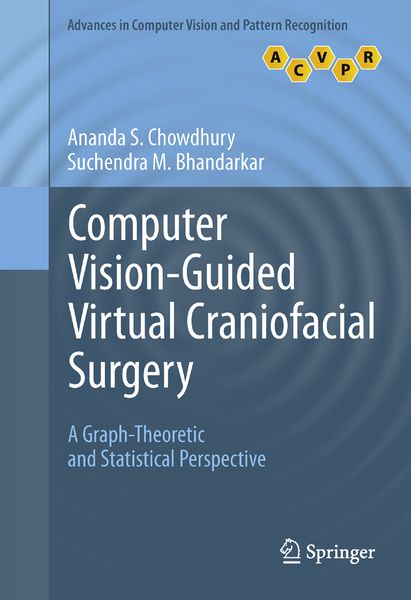
Produktbild: Computer Vision-Guided Virtual Craniofacial Surgery

Computer Vision-Guided Virtual Craniofacial Surgery A Graph-Theoretic and Statistical Perspective

92,99 €

inkl. gesetzl. MwSt., Versandkostenfrei


Beschreibung

Produktdetails

Einband

Gebundene Ausgabe

Erscheinungsdatum

28.03.2011

Abbildungen

XXVI, 166 p.

Verlag

Springer London

Seitenzahl

166

Maße (L/B/H)

24,5/16,4/2,5 cm

Gewicht

458 g

Auflage

2011 edition

Sprache

Englisch

ISBN

978-0-85729-295-7

Beschreibung

Rezension

From the reviews:

“The goal of the research is to apply image processing techniques for the construction of a virtual human jaw. … The monograph presents the underlying computational mathematics and algorithms and the results of the corresponding experiments. … Readers with a normal understanding of the human anatomy can understand the book. … It can be used as a textbook in graduate or higher-level image processing courses.” (Maulik A. Dave, ACM Computing Reviews, April, 2012)

Produktdetails

Einband

Gebundene Ausgabe

Erscheinungsdatum

28.03.2011

Abbildungen

XXVI, 166 p.

Verlag

Springer London

Seitenzahl

166

Maße (L/B/H)

24,5/16,4/2,5 cm

Gewicht

458 g

Auflage

2011 edition

Sprache

Englisch

ISBN

978-0-85729-295-7

Herstelleradresse

Libri GmbH
Europaallee 1
36244 Bad Hersfeld
DE

Email: gpsr@libri.de

Noch keine Bewertungen vorhanden

Verfassen Sie die erste Bewertung zu diesem Artikel

Helfen Sie anderen Kundinnen und Kunden durch Ihre Meinung.

Kundinnen und Kunden meinen

Bewertungen (0)

  • Produktbild: Computer Vision-Guided Virtual Craniofacial Surgery

  • Part I: Overview and Foundations.- Introduction.- Graph-Theoretic Foundations.- A Statistical Primer.- Part II: Virtual Craniofacial Reconstruction.- Virtual Single-fracture Mandibular Reconstruction.- Virtual Multiple-fracture Mandibular Reconstruction.- Part III Computer-aided Fracture Detection.- Fracture Detection using Bayesian Inference.- Fracture Detection in an MRF-based Hierarchical Bayesian Framework.- Fracture Detection using Max-Flow Min-Cut.- Part IV: Concluding Remarks.- GUI Design and Research Synopsis.