• Produktbild: Signal Transduction and the Gasotransmitters
  • Produktbild: Signal Transduction and the Gasotransmitters
- 10%

Signal Transduction and the Gasotransmitters NO, CO, and H2S in Biology and Medicine

10% sparen

142,99 € UVP 160,49 €

inkl. gesetzl. MwSt., Versandkostenfrei


Beschreibung

Produktdetails

Einband

Taschenbuch

Erscheinungsdatum

05.11.2010

Abbildungen

XIV, 378 p.

Herausgeber

Rui Wang

Verlag

Humana Press

Seitenzahl

378

Maße (L/B/H)

25,4/17,8/2,2 cm

Gewicht

735 g

Sprache

Englisch

ISBN

978-1-61737-512-5

Beschreibung

Rezension

From the foreword...


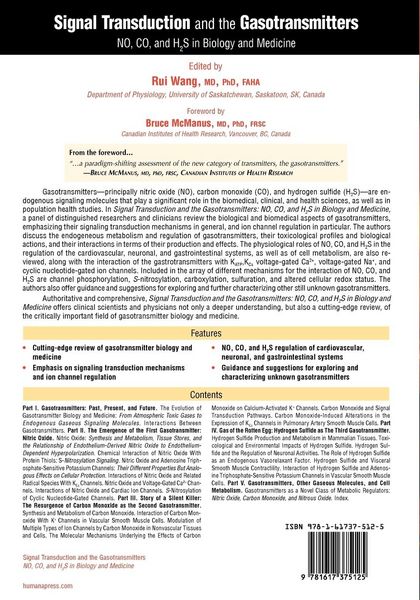
"...a paradigm-shifting assessment of the new category of transmitters, the gasotransmitters."


-Bruce McManus, MD, PhD, FRSC, Canadian Institutes of Health Research


"...well-written...the account by Sanada and colleagues is particularly interesting on cardio protection and ischeamic preconditioning...this book should be of interest to both specialist researchers as well as members of the wider scientific commuity." -BTS Newsletters


"...an excellent source of references for signal transduction mechanisms underlying he physiological functions of NO, CO, and H2S." - British Journal of Anesthesiology

Produktdetails

Einband

Taschenbuch

Erscheinungsdatum

05.11.2010

Abbildungen

XIV, 378 p.

Herausgeber

Rui Wang

Verlag

Humana Press

Seitenzahl

378

Maße (L/B/H)

25,4/17,8/2,2 cm

Gewicht

735 g

Sprache

Englisch

ISBN

978-1-61737-512-5

Herstelleradresse

Springer-Verlag GmbH
Tiergartenstr. 17
69121 Heidelberg
DE

Email: ProductSafety@springernature.com

Noch keine Bewertungen vorhanden

Verfassen Sie die erste Bewertung zu diesem Artikel

Helfen Sie anderen Kundinnen und Kunden durch Ihre Meinung.

Kundinnen und Kunden meinen

Bewertungen (0)

  • Produktbild: Signal Transduction and the Gasotransmitters
  • Produktbild: Signal Transduction and the Gasotransmitters
  • I. Gasotransmitters: Past, Present, and Future.- 1 The Evolution of Gasotransmitter Biology and Medicine: From Atmospheric Toxic Gases to Endogenous Gaseous Signaling Molecules.- 2 Interactions Between Gasotransmitters.- II. The Emergence of the First Gasotransmitter: Nitric Oxide.- 3 Nitric Oxide: Synthesis and Metabolism, Tissue Stores, and the Relationship of Endothelium-Derived Nitric Oxide to Endothelium-Dependent Hyperpolarization.- 4 Chemical Interaction of Nitric Oxide With Protein Thiols: S-Nitrosylation Signaling.- 5 Nitric Oxide and Adenosine Triphosphate-Sensitive Potassium Channels: Their Different Properties But Analogous Effects on Cellular Protection.- 6 Interactions of Nitric Oxide and Related Radical Species With KCa Channels.- 7 Nitric Oxide and Voltage-Gated Ca2+ Channels.- 8 Interactions of Nitric Oxide and Cardiac Ion Channels.- 9 S-Nitrosylation of Cyclic Nucleotide-Gated Channels.- III. Story of a Silent Killer: The Resurgence of Carbon Monoxide as the Second Gasotransmitter.- 10 Synthesis and Metabolism of Carbon Monoxide.- 11 Interaction of Carbon Monoxide With K+ Channels in Vascular Smooth Muscle Cells.- 12 Modulation of Multiple Types of Ion Channels by Carbon Monoxide in Nonvascular Tissues and Cells.- 13 The Molecular Mechanisms Underlying the Effects of Carbon Monoxide on Calcium-Activated K+ Channels.- 14 Carbon Monoxide and Signal Transduction Pathways.- 15 Carbon Monoxide-Induced Alterations in the Expression of KCa Channels in Pulmonary Artery Smooth Muscle Cells.- IV. Gas of the Rotten Egg: Hydrogen Sulfide as the Third Gasotransmitter.- 16 Hydrogen Sulfide Production and Metabolism in Mammalian Tissues.- 17 Toxicological and Environmental Impacts of Hydrogen Sulfide.- 18 Hydrogen Sulfide and the Regulation of Neuronal Activities.- 19 The Role of Hydrogen Sulfide as an Endogenous Vasorelaxant Factor.- 20 Hydrogen Sulfide and Visceral Smooth Muscle Contractility.- 21 Interaction of Hydrogen Sulfide and Adenosine Triphosphate-Sensitive Potassium Channels in Vascular Smooth Muscle Cells.- V. Gasotransmitters, Other Gaseous Molecules, and Cell Metabolism.- 22 Gasotransmitters as a Novel Class of Metabolic Regulators: Nitric Oxide, Carbon Monoxide, and Nitrous Oxide.