KI-Beratung Beta

Gutscheinbedingungen

**Gültig vom 23.11. bis 30.11.2026 | Gültig für nicht preisgebundene fremdsprachige Bücher | Einzelne Artikel können ausgeschlossen sein | Online auf www.bücher.de einlösbar | Click & Collect nur mit Online-Zahlung (Paypal/Kreditkarte) vorab | Nicht kombinierbar mit anderen Gutscheinen oder Preisaktionen | Nur einmal pro Einkauf einlösbar | Gutschein wird auf max. 500€ Bestellwert angerechnet | Keine Barauszahlung | Nicht gültig für Versandkosten und Services

Produktbild: Artistic and Cultural Exchanges Between Europe and Asia, 1400-1900

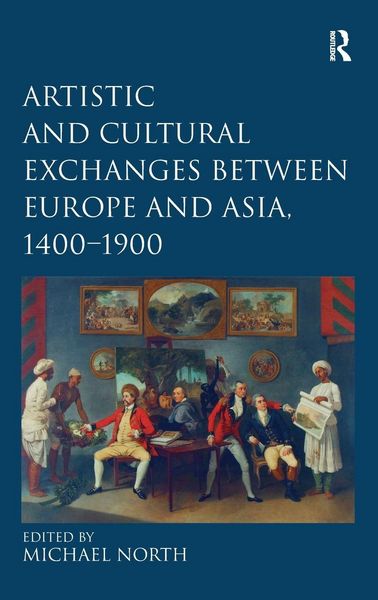
Artistic and Cultural Exchanges Between Europe and Asia, 1400-1900 Rethinking Markets, Workshops and Collections

231,99 €

inkl. gesetzl. MwSt., Versandkostenfrei


Beschreibung

The European expansion to Asia was driven by the desire for spices and Asian luxury products. Its results, however, exceeded the mere exchange of commodities and precious metals. The meeting of Asia and Europe signaled not only the beginnings of a global market but also a change in taste and lifestyle...

Beschreibung

The European expansion to Asia was driven by the desire for spices and Asian luxury products. Its results, however, exceeded the mere exchange of commodities and precious metals. The meeting of Asia and Europe signaled not only the beginnings of a global market but also a change in taste and lifestyle that influences our lives even today. Manifold kinds of cultural transfers evolved within a market framework that was not just confined to intercontinental and intra-Asiatic trade. In Europe and Asia markets for specific cultural products emerged and the transfers of objects affected domestic arts and craft production. Traditionally, relations between Europe and Asia have been studied in a hegemonic perspective, with Europe as the dominant political and economic centre. Even with respect to cultural exchange, the model of diffusion regarded Europe as the centre, and Asia the recipient, whereby Asian objects in Europe became exotica in the Kunst- und Wunderkammern. Conceptions of Europe and Asia as two monolithic regions emerged in this context. However, with the current process of globalization these constructions and the underlying models of cultural exchange have come under scrutiny. For this reason, the book focuses on cultural exchange between different European and Asian civilizations, whereby the reciprocal complexities of cultural transfers are at the centre of observation. By investigating art markets, workshops and collections in Europe and Asia the contributors exemplify the varieties of cultural exchange. The book examines the changing roles of Asian objects in European material culture and collections and puts a special emphasis on the reception of European visual arts in colonial settlements in Asia as well as in different Asian societies.

Portrait

Michael North is Professor of Modern History at Ernst-Moritz-Arndt-Universitÿt, Greifswald, Germany.

Produktdetails

Einband

Gebundene Ausgabe

Erscheinungsdatum

28.07.2010

Herausgeber Michael North
Verlag Taylor and Francis

Produktdetails

Einband

Gebundene Ausgabe

Erscheinungsdatum

28.07.2010

Herausgeber Michael North
Verlag Taylor and Francis
Seitenzahl

216

Maße (L/B/H)

23,4/15,6/1,4 cm

Gewicht

481 g

Sprache

Englisch

ISBN

978-0-7546-6937-1

Herstelleradresse

Libri GmbH
Europaallee 1
36244 Bad Hersfeld
DE

Email: gpsr@libri.de

Noch keine Bewertungen vorhanden

Verfassen Sie die erste Bewertung zu diesem Artikel

Helfen Sie anderen Kundinnen und Kunden durch Ihre Meinung.

Kundinnen und Kunden meinen

Bewertungen (0)

Die Leseprobe wird geladen.
  • Produktbild: Artistic and Cultural Exchanges Between Europe and Asia, 1400-1900
  • Contents: Preface; Introduction, Michael North and Thomas Dacosta Kaufmann; Asian objects and Western European court culture in the Middle Ages, Karl-Heinz Spieß; The Euro-Asian trade in bezoar stones (approx. 1500 to 1700), Peter Borschberg; Asia as a fantasy of France in the 19th century, Ting Chang; Material culture, knowledge, and European society in colonial India around 1800: Danish Tranquebar, Martin Krieger; Changing cultural contexts: the incorporation of Mughal architectural elements in European memorials in India in the 17th century, Alexander Drost; Production and reception of art through European company channels in Asia, Michael North; The movable center: the Netherlandish map in Japan, Mia M. Mochizuki; Interpreting cultural transfer and the consequences of markets and exchange: reconsidering Fumi-e, Thomas Dacosta Kaufmann; An assimilation between two different cultures: Japan and the West during the Edo period, Yoriko Kobayashi-Sato; Index.