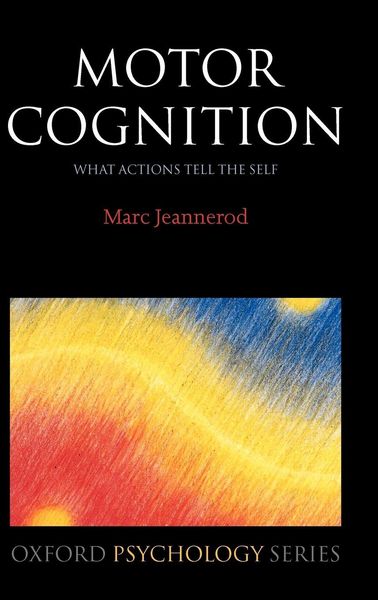

• Produktbild: Motor Cognition
  • Produktbild: Motor Cognition

Motor Cognition What Actions Tell the Self

134,99 €

inkl. gesetzl. MwSt., Versandkostenfrei


Beschreibung

Produktdetails

Einband

Gebundene Ausgabe

Erscheinungsdatum

29.06.2006

Abbildungen

1 halftone, numerous line drawings

Verlag

Oxford Academic

Seitenzahl

220

Maße (L/B/H)

24/16,1/1,7 cm

Gewicht

499 g

Sprache

Englisch

ISBN

978-0-19-856964-0

Beschreibung

Produktdetails

Einband

Gebundene Ausgabe

Erscheinungsdatum

29.06.2006

Abbildungen

1 halftone, numerous line drawings

Verlag

Oxford Academic

Seitenzahl

220

Maße (L/B/H)

24/16,1/1,7 cm

Gewicht

499 g

Sprache

Englisch

ISBN

978-0-19-856964-0

Herstelleradresse

Libri GmbH
Europaallee 1
36244 Bad Hersfeld
DE

Email: gpsr@libri.de

Noch keine Bewertungen vorhanden

Verfassen Sie die erste Bewertung zu diesem Artikel

Helfen Sie anderen Kundinnen und Kunden durch Ihre Meinung.

Kundinnen und Kunden meinen

Bewertungen (0)

  • Produktbild: Motor Cognition
  • Produktbild: Motor Cognition

    • 1: Representations for actions


    • 1.1: Definitions


    • 1.2: Neural models of action representations


    • 1.3: Functional models of action representation


    • 2: Imagined actions as a prototypical form of action representation


    • 2.1: The kinematic content of motor images


    • 2.2: Dynamic changes in physiological parameters during motor imagery


    • 2.3: The functional anatomy of motor images


    • 2.4: The consequences of the embodiment of action representations


    • 3: Consciousness of self-produced actions and intentions


    • 3.1: Consciousness of actions


    • 3.2: Consciousness of intentions


    • 4: The sense of agency and the self/other distinction


    • 4.1: Sense of ownership and sense of agency in self-identification


    • 4.2: The nature of the mechanism for self-identification


    • 4.3: The problem of the self/other distinction


    • 4.4: Failure of self-recognition/attribution mechanisms in pathological states


    • 5: How do we perceive and understand the actions of others


    • 5.1: The perception of faces and bodies


    • 5.2: The perception of biological motion


    • 5.3: The understanding of others' actions


    • 5.4: Functional implications of the mirror system in motor cognition


    • 5.5: The role of the mirror system in action imitation


    • 6: The simulation hypothesis of motor cognition


    • 6.1: Motor simulation: a hypothesis for explaining action representations


    • 6.2: Motor cognition and social cognition


    • 6.3: Motor simulation and language understanding


    • Conclusion