KI-Beratung Beta

Gutscheinbedingungen

**Gültig vom 23.11. bis 30.11.2026 | Gültig für nicht preisgebundene fremdsprachige Bücher | Einzelne Artikel können ausgeschlossen sein | Online auf www.bücher.de einlösbar | Click & Collect nur mit Online-Zahlung (Paypal/Kreditkarte) vorab | Nicht kombinierbar mit anderen Gutscheinen oder Preisaktionen | Nur einmal pro Einkauf einlösbar | Gutschein wird auf max. 500€ Bestellwert angerechnet | Keine Barauszahlung | Nicht gültig für Versandkosten und Services

Produktbild: Advances in Brain Resuscitation

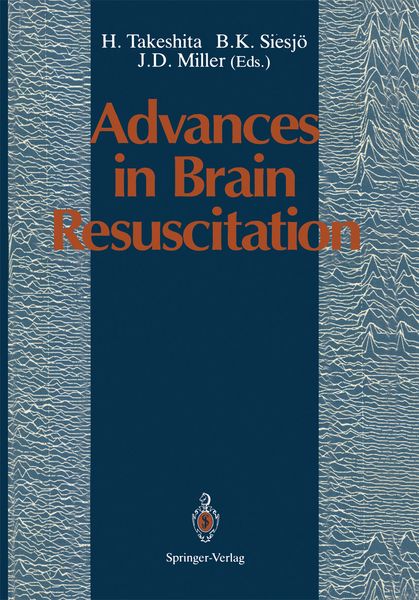
Advances in Brain Resuscitation

48,99 €

inkl. gesetzl. MwSt., Versandkostenfrei


Beschreibung

Brain resuscitation is the therapeutic intervention for critically ill patients with severe brain damage, particularly the types caused by ischemia and hypoxia. The The objective of the International Symposium on Brain Resuscitation held in Ube, Yamaguchi Japan October 31 to November 2 1988, and sponsored...

Beschreibung

Brain resuscitation is the therapeutic intervention for critically ill patients with severe brain damage, particularly the types caused by ischemia and hypoxia. The The objective of the International Symposium on Brain Resuscitation held in Ube, Yamaguchi Japan October 31 to November 2 1988, and sponsored by Yamaguchi University and the Japanese Ministry of Education, was to review our recent progress in brain resuscitation and to discuss controversies both basic and clinical. To my knowledge, this symposium was the first held in Japan. Our understanding of neuronal dysfunction due to ischemic/hypoxic insults at organ, cellular, and molecular levels has advanced significantly in the last two decades. We had therefore intended that this international symposium should broadly cover the topics which are of interest to both basic researchers and clinicians. Three hundred and twenty-five attendants, including twenty scientists from eight different countries, actively participated in discussion and exchange of new ideas and thoughts concerning brain resuscitation. This book comprises the re ports presented during the symposium which consisted of two main parts: basic and clinical. Although one single meeting can never be expected to solve any problems, meetings often highlight areas of ignorance and problems which are ripe for solving. It has been hard to review all the papers because of the multi plicity of the discussed topics, but the overview on brain resuscitation by Profes sor Bo K. Siesjo and the summary by Professor J.

Produktdetails

Einband

Gebundene Ausgabe

Erscheinungsdatum

03.06.1991

Abbildungen

XI, 329 p.

Herausgeber H. Takeshita + weitere

Produktdetails

Einband

Gebundene Ausgabe

Erscheinungsdatum

03.06.1991

Abbildungen

XI, 329 p.

Herausgeber
Verlag Springer Tokyo
Seitenzahl

329

Maße (L/B/H)

24,6/17,3/2,5 cm

Gewicht

697 g

Auflage

1. Auflage

Sprache

Englisch

ISBN

978-4-431-70067-8

Herstelleradresse

Springer-Verlag GmbH
Europaplatz 3
69115 Heidelberg
DE

Email: ProductSafety@springernature.com

Noch keine Bewertungen vorhanden

Verfassen Sie die erste Bewertung zu diesem Artikel

Helfen Sie anderen Kundinnen und Kunden durch Ihre Meinung.

Kundinnen und Kunden meinen

Bewertungen (0)

  • Produktbild: Advances in Brain Resuscitation
  • I: Basic Aspects.- 1. Brain Resuscitation: Yesterday, Today and Tomorrow.- 2. Glutamate Neurotoxicity and Ischemic Neuronal Damage.- 3. Are Glutamate/Aspartate Antagonists Protective in Cerebral Ischemia?.- 4. N-Methyl D-Aspartate Excitotoxicity: Is It Important in Ischemic Neuronal Injury?.- 5. Metabolic Derangement and Cell Damage in Cerebral Ischemia with Emphasis on Protein and Nucleic Acid Metabolism.- 6. Protein and Polyamine Metabolism in Reversible Cerebral Ischemia of Gerbils.- 7. Protective Effect of Microinjury in Brain Ischemic Damage.- 8. Behavioral and Memory Impairment Following Cerebral Ischemia in Rats.- 9. Neurobehavioral Changes Following Cerebral Ischemia and Treatment by a TRH Derivative.- 10. Regeneration of Cerebral Microvessels After Cold Injury: Biological Significance of Edema Fluid.- 11. The Effects of Sodium Bicarbonate on Cerebrospinal Fluid Acid-Base Disturbances in Total Cerebral Ischemia.- 12. Effects of Dichloroacetate on Survival Rate, Brain ATP, Lactate, and Water Content Following Cerebral Ischemia in Spontaneously Hypertensive Rats.- 13. Effects of Heparin-Urokinase, Diazepam, or Nimodipine on Brain Damage Induced by Complete Global Brain Ischemia.- 14. Cerebral Protection With Barbiturates, Nizofenone, and Steroids.- 15. Anesthetic Protection in Brain Ischemia.- II: Clinical Aspects.- 16. The Role of Calcium Entry Blockers in Brain Ischemia.- 17. Management of Brain Edema in Head Injury.- 18. Head Injury and Brain Ischemia: Monitoring and Prediction of Outcome.- 19. Multimodal Neuromonitoring of Patients With Severe Brain Damage.- 20. Short-Latency Somatosensory Evoked Potentials (SSEPs) in Comatose Patients.- 21. Monitoring Evoked Potentials and Cerebral Circulatory Index in Acute Cerebrovascular Disorders and Posthypoxic Brain Damage: Localized Brain Function vs Whole Brain Circulation and Metabolism.- 22. Clinical Evaluation of Brain Damage by Proton T1 Dynamics.- 23. Advanced Treatment of Prolonged Coma: Selection of Candidates for Deep Brain Stimulation and Clinical Results.- 24. Neurological Intensive Care: Past Lessons, Current Accomplishments, Future Directions.- 25. Brain Resuscitation: a Clinical Perspective.