KI-Beratung Beta

Gutscheinbedingungen

**Gültig vom 05.10.2026 bis 07.10.2026 | Gültig für nicht preisgebundene fremdsprachige Bücher | Einzelne Artikel können ausgeschlossen sein | Online auf www.bücher.de einlösbar | Click & Collect nur mit Online-Zahlung (Paypal/Kreditkarte) vorab | Nicht kombinierbar mit anderen Gutscheinen oder Preisaktionen | Nur einmal pro Einkauf einlösbar | Gutschein wird auf max. 500€ Bestellwert angerechnet | Keine Barauszahlung | Nicht gültig für Versandkosten und Services

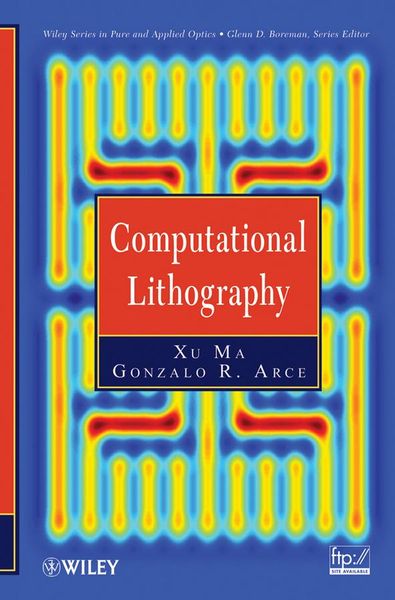
Produktbild: Computational Lithography
Band 1

Computational Lithography

144,99 €

inkl. gesetzl. MwSt., Versandkostenfrei


Beschreibung

Produktdetails

Einband

Gebundene Ausgabe

Erscheinungsdatum

07.09.2010

Verlag

John Wiley & Sons Inc

Seitenzahl

256

Maße (L/B/H)

24,4/16,1/2,2 cm

Gewicht

511 g

Sprache

Englisch

ISBN

978-0-470-59697-5

Beschreibung

Produktdetails

Einband

Gebundene Ausgabe

Erscheinungsdatum

07.09.2010

Verlag

John Wiley & Sons Inc

Seitenzahl

256

Maße (L/B/H)

24,4/16,1/2,2 cm

Gewicht

511 g

Sprache

Englisch

ISBN

978-0-470-59697-5

Herstelleradresse

Libri GmbH
Europaallee 1
36244 Bad Hersfeld
DE

Email: gpsr@libri.de

Noch keine Bewertungen vorhanden

Verfassen Sie die erste Bewertung zu diesem Artikel

Helfen Sie anderen Kundinnen und Kunden durch Ihre Meinung.

Kundinnen und Kunden meinen

Bewertungen (0)

Die Leseprobe wird geladen.
  • Produktbild: Computational Lithography
  • Preface xi

    Acknowledgments xiii

    Acronyms xv

    1 Introduction 1

    1.1 Optical Lithography 1

    1.1.1 Optical Lithography and Integrated Circuits 2

    1.1.2 Brief History of Optical Lithography Systems 3

    1.2 Rayleigh's Resolution 5

    1.3 Resist Processes and Characteristics 7

    1.4 Techniques in Computational Lithography 10

    1.4.1 Optical Proximity Correction 11

    1.4.2 Phase-Shifting Masks 11

    1.4.3 Off-Axis Illumination 14

    1.4.4 Second-Generation RETs 15

    1.5 Outline 16

    2 Optical Lithography Systems 19

    2.1 Partially Coherent Imaging Systems 19

    2.1.1 Abbe's Model 19

    2.1.2 Hopkins Diffraction Model 22

    2.1.3 Coherent and Incoherent Imaging Systems 24

    2.2 Approximation Models 25

    2.2.1 Fourier Series Expansion Model 25

    2.2.2 Singular Value Decomposition Model 29

    2.2.3 Average Coherent Approximation Model 32

    2.2.4 Discussion and Comparison 34

    2.3 Summary 36

    3 Rule-Based Resolution Enhancement Techniques 37

    3.1 RET Types 37

    3.1.1 Rule-Based RETs 37

    3.1.2 Model-Based RETs 38

    3.1.3 Hybrid RETs 39

    3.2 Rule-Based OPC 39

    3.2.1 Catastrophic OPC 40

    3.2.2 One-Dimensional OPC 40

    3.2.3 Line-Shortening Reduction OPC 42

    3.2.4 Two-Dimensional OPC 43

    3.3 Rule-Based PSM 44

    3.3.1 Dark-Field Application 44

    3.3.2 Light-Field Application 45

    3.4 Rule-Based OAI 46

    3.5 Summary 47

    4 Fundamentals of Optimization 48

    4.1 Definition and Classification 48

    4.1.1 Definitions in the Optimization Problem 48

    4.1.2 Classification of Optimization Problems 49

    4.2 Unconstrained Optimization 50

    4.2.1 Solution of Unconstrained Optimization Problem 50

    4.2.2 Unconstrained Optimization Algorithms 52

    4.3 Summary 57

    5 Computational Lithography with Coherent Illumination 58

    5.1 Problem Formulation 59

    5.2 OPC Optimization 62

    5.2.1 OPC Design Algorithm 62

    5.2.2 Simulations 64

    5.3 Two-Phase PSM Optimization 65

    5.3.1 Two-Phase PSM Design Algorithm 65

    5.3.2 Simulations 68

    5.4 Generalized PSM Optimization 72

    5.4.1 Generalized PSM Design Algorithm 72

    5.4.2 Simulations 75

    5.5 Resist Modeling Effects 79

    5.6 Summary 82

    6 Regularization Framework 83

    6.1 Discretization Penalty 84

    6.1.1 Discretization Penalty for OPC Optimization 84

    6.1.2 Discretization Penalty for Two-Phase PSM Optimization 86

    6.1.3 Discretization Penalty for Generalized PSM Optimization 87

    6.2 Complexity Penalty 93

    6.2.1 Total Variation Penalty 93

    6.2.2 Global Wavelet Penalty 94

    6.2.3 Localized Wavelet Penalty 98

    6.3 Summary 100

    7 Computational Lithography with Partially Coherent Illumination 101

    7.1 OPC Optimization 102

    7.1.1 OPC Design Algorithm Using the Fourier Series Expansion Model 102

    7.1.2 Simulations Using the Fourier Series Expansion Model 105

    7.1.3 OPC Design Algorithm Using the Average Coherent Approximation Model 107

    7.1.4 Simulations Using the Average Coherent Approximation Model 111

    7.1.5 Discussion and Comparison 111

    7.2 PSM Optimization 115

    7.2.1 PSM Design Algorithm Using the Singular Value Decomposition Model 116

    7.2.2 Discretization Regularization for PSM Design Algorithm 118

    7.2.3 Simulations 118

    7.3 Summary 122

    8 Other RET Optimization Techniques 123

    8.1 Double-Patterning Method 123

    8.2 Post-Processing Based on 2D DCT 128

    8.3 Photoresist Tone Reversing Method 131

    8.4 Summary 135

    9 Source and Mask Optimization 136

    9.1 Lithography Preliminaries 137

    9.2 Topological Constraint 140

    9.3 Source-Mask Optimization Algorithm 141

    9.4 Simulations 141

    9.5 Summary 145

    10 Coherent Thick-Mask Optimization 146

    10.1 Kirchhoff Boundary Conditions 147

    10.2 Boundary Layer Model 147

    10.2.1 Boundary Layer Model in Coherent Imaging Systems 147

    10.2.2 Boundary Layer Model in Partially Coherent Imaging Systems 151

    10.3 Lithography Preliminaries 153

    10.4 OPC Optimization 157

    10.4.1 Topological Constraint 157

    10.4.2 OPC Optimization Algorithm Based on BL Model Under Coherent Illumination 158

    10.4.3 Simulations 159

    10.5 PSM Optimization 162

    10.5.1 Topological Constraint 162

    10.5.2 PSM Optimization Algorithm Based on BL Model Under Coherent Illumination 165

    10.5.3 Simulations 165

    10.6 Summary 170

    11 Conclusions and New Directions of Computational Lithography 171

    11.1 Conclusion 171

    11.2 New Directions of Computational Lithography 173

    11.2.1 OPC Optimization for the Next-Generation Lithography Technologies 173

    11.2.2 Initialization Approach for the Inverse Lithography Optimization 173

    11.2.3 Double Patterning and Double Exposure Methods in Partially Coherent Imaging System 174

    11.2.4 OPC and PSM Optimizations for Inverse Lithography Based on Rigorous Mask Models in Partially Coherent Imaging System 174

    11.2.5 Simultaneous Source and Mask Optimization for Inverse Lithography Based on Rigorous Mask Models 174

    11.2.6 Investigation of Factors Influencing the Complexity of the OPC and PSM Optimization Algorithms 174

    Appendix A: Formula Derivation in Chapter 5 175

    Appendix B: Manhattan Geometry 181

    Appendix C: Formula Derivation in Chapter 6 182

    Appendix D: Formula Derivation in Chapter 7 185

    Appendix E: Formula Derivation in Chapter 8 189

    Appendix F: Formula Derivation in Chapter 9 194

    Appendix G: Formula Derivation in Chapter 10 195

    Appendix H: Software Guide 199

    References 217

    Index 223