• Produktbild: Doing Good or Doing Better
  • Produktbild: Doing Good or Doing Better

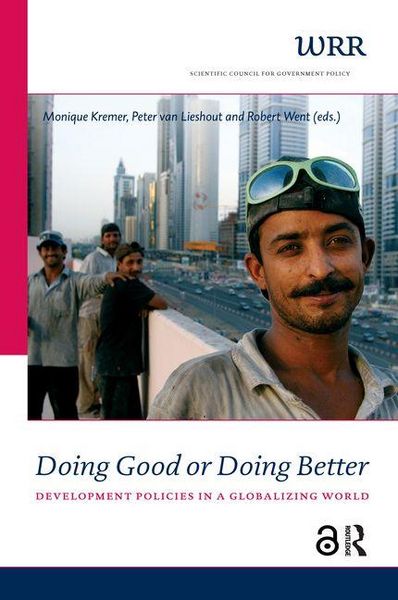
Doing Good or Doing Better Development Policies in a Globalising World

95,99 €

inkl. gesetzl. MwSt., Versandkostenfrei

Lieferung nach Hause

Beschreibung

Produktdetails

Einband

Taschenbuch

Erscheinungsdatum

15.09.2010

Herausgeber

Monique Kremer + weitere

Verlag

Taylor & Francis

Seitenzahl

378

Maße (L/B/H)

23,4/15,2/2,5 cm

Gewicht

635 g

Sprache

Englisch

ISBN

978-90-8964-107-6

Beschreibung

Produktdetails

Einband

Taschenbuch

Erscheinungsdatum

15.09.2010

Herausgeber

Verlag

Taylor & Francis

Seitenzahl

378

Maße (L/B/H)

23,4/15,2/2,5 cm

Gewicht

635 g

Sprache

Englisch

ISBN

978-90-8964-107-6

Herstelleradresse

Libri GmbH
Europaallee 1
36244 Bad Hersfeld
DE

Email: gpsr@libri.de

Noch keine Bewertungen vorhanden

Verfassen Sie die erste Bewertung zu diesem Artikel

Helfen Sie anderen Kundinnen und Kunden durch Ihre Meinung.

Kundinnen und Kunden meinen

Bewertungen (0)

Die Leseprobe wird geladen.
  • Produktbild: Doing Good or Doing Better
  • Produktbild: Doing Good or Doing Better
  • contents - 6[-]about the authors - 10[-]preface - 14[-]1 towards development policies based onlesson learning: an introduction - 16[-] 1.1 paradigm shifts - 17[-] 1.2 globalization - 20[-] 1.3 at the beginning of the 21st century: elements fordevelopment policies based on lesson learning - 23[-]2 twenty-first century globalization,paradigm shifts in development - 28[-] 2.1 twenty-first century globalization - 28[-] 2.2 turning points - 30[-] 2.3 new development era - 31[-] 2.4 international development cooperation - 41[-]3 does foreign aid work? - 48[-] 3.1 introduction - 48[-] 3.2 what aid are we talking about? - 49[-] 3.3 challenges in trying to assess the impact of aid - 52[-] 3.4 does aid work? the evidence - 55[-] 3.5 constraining aid's greater impact and how theseconstraints might be addressed - 66[-] 3.6 concluding comments: aid and the wider perspective - 71[-]4 under-explored treasure troves ofdevelopment lessons: lessons from thehistories of small rich european countries - 82[-] 4.1 introduction: lessons from history, or rather the'secret history' - 82[-] 4.2 agriculture - 87[-] 4.3 industrial development - 90[-] 4.4 corporate governance and the concentration ofeconomic power - 96[-] 4.5 social and political factors - 98[-] 4.6 concluding remarks - 100[-]5 stagnation in africa: disentanglingfigures, facts and fiction - 108[-] 5.1 stagnation in sub-saharan africa - 109[-] 5.2 the low social development cause - 112[-] 5.3 the not-a-nation-state cause - 114[-] 5.4 the dependence on raw material exports cause - 116[-] 5.5 the greedy politicians cause - 117[-] 5.6 the weak states and weak policies cause - 119[-] 5.7 the washington consensus cause - 120[-] 5.8 other traps and curses - 124[-] 5.9 conclusions and consequences - 126[-]6 including the middle classes?latin american social policies after thewashington consensus - 138[-] 6.1 the isi period and the origins of social policy regimes - 139[-] 6.2 the debt crisis and the washington consensus - 140[-] 6.3 neoliberalism and its failures - 141[-] 6.4 turn to the left and basic universalism? - 145[-] 6.5 the role of the middle classes - 149[-] 6.6 lessons for development policy and external support - 151[-]7 imaginary institutions: state-building inafghanistan - 158[-] 7.1 the afghan state and the dynamics that affect it - 159[-] 7.2 the nature of the state-building effort inafghanistan - 164[-] 7.3 how the 'international community' responds - 166[-] 7.4 some concluding remarks - 171[-]8 beyond development orthodoxy:chinese lessons in pragmatism andinstitutional change - 178[-] 8.1 buried under development? - 178[-] 8.2 on land and institutions - 181[-] 8.3 chinese pragmatism: colored cats or the demise ofideology? - 184[-] 8.4 implications of chinese development: someconcluding observations - 194[-]9 business and sustainable development:from passive involvement to activepartnerships - 212[-] 9.1 introduction: from uniform to pluriformdevelopment thinking - 212[-] 9.2 from a traditional to a new development paradigm - 214[-] 9.3 from macro to micro: the role of multinationals insustainable development - 217[-] 9.4 from general to specific: strategic management ofcorporations and poverty alleviation - 220[-] 9.5 from passive to active: the search for partnerships - 227[-] 9.6 conclusion: the challenges ahead - 229[-]10 why 'philanthrocapitalism' is notthe answer: private initiatives andinternational development - 238[-] 10.1 private initiatives - what kind and how much? - 240[-] 10.2 ngo initiatives - 242[-] 10.3 institutional philanthropy - 245[-] 10.4 common problems: impact and accountability - 249[-] 10.5 conclusions and implications for development policy - 250[-]11 the trouble with participation:assessing the new aid paradigm - 256[-] 11.1 participation: on the main menu