Gutscheinbedingungen

**Gültig bis 10.06.2026 / Gültig für gebrauchte Bücher / Mindestbestellwert 20,00 € / Einzelne Artikel können ausgeschlossen sein / Online auf www.bücher.de.de / Nicht kombinierbar mit anderen Gutscheinen oder Preisaktionen / Nur einmal pro Einkauf einlösbar / Gutschein wird auf max. 500€ Bestellwert angerechnet / Keine Barauszahlung / Nicht gültig für Versandkosten und Services

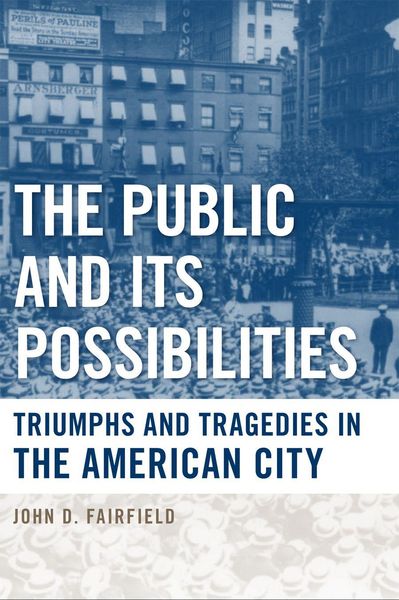
Produktbild: The Public and Its Possibilities

The Public and Its Possibilities Triumphs and Tragedies in the American City

79,99 €

inkl. gesetzl. MwSt., Versandkostenfrei

Lieferung nach Hause

Produktdetails

Einband

Gebundene Ausgabe

Erscheinungsdatum

26.03.2010

Verlag

Temple University Press,U.S.

Seitenzahl

368

Maße (L/B/H)

23,4/15,7/3 cm

Gewicht

612 g

Sprache

Englisch

ISBN

978-1-4399-0210-3

Produktdetails

Einband

Gebundene Ausgabe

Erscheinungsdatum

26.03.2010

Verlag

Temple University Press,U.S.

Seitenzahl

368

Maße (L/B/H)

23,4/15,7/3 cm

Gewicht

612 g

Sprache

Englisch

ISBN

978-1-4399-0210-3

Herstelleradresse

Libri GmbH
Europaallee 1
36244 Bad Hersfeld
DE

Email: [email protected]

Kundinnen und Kunden meinen

0 Bewertungen

Informationen zu Bewertungen

Zur Abgabe einer Bewertung ist eine Anmeldung im Konto notwendig. Die Authentizität der Bewertungen wird von uns nicht überprüft. Wir behalten uns vor, Bewertungstexte, die unseren Richtlinien widersprechen, entsprechend zu kürzen oder zu löschen.

Die Bewertungen sind nach Format, Anzahl Sterne und Datum sortiert.

Verfassen Sie die erste Bewertung zu diesem Artikel

Helfen Sie anderen Kund*innen durch Ihre Meinung

Kundinnen und Kunden meinen

0 Bewertungen filtern

  • Produktbild: The Public and Its Possibilities
  • Preface: The Public and Its Possibilities 
    Introduction: Liberalism and the Civic Strand in the American Past 
    Civic Aspirations and Liberal Values 
    An Urban Thesis

    Part I. Civic Aspirations and Market Development in a Long Age of Revolution 

    1.Democratizing the Republican Ideal of Citizenship: Virtue, Interests, and the Citizen-Proprietor in the Revolutionary Era 
    Seaport Cities: Crucibles of Market and Public 
    The People Out of Doors and the Imperial Crisis 
    A More Democratic Public: Consumer Boycotts Politicize the Household 
    The Threat of Enslavement and the Need for Virtue: The Unifying Myth of the American Revolution 
    Virtue and Vice in an Overheated Market 
    Redeeming the Revolution: Virtues or Mechanisms? 
    Citizen-Proprietors and the Democratization of Competence 
    Revolutionary Legacies, Democratic Futures 

    2. Creating Citizens in a Commercial Republic: Market 33 Transformation and the Free Labor Ideal, 1812–1873 
    The Origins of the Free Labor Ideal 
    The Market Revolution and the Public Purpose 
    Labor Politics in the Jacksonian City: Unjust Government and a Conspiracy to Enslave 
    A Crippled Democracy: Jacksonian Fears and Whig Paternalism 
    The Free Labor Ideology and the Transformation of Northern Whiggery 
    Positive Liberty: Turning Slaves into Citizens 
    The Limits of Radical Republicanism 

    3. The Short, Strange Career of Laissez-Faire: Liberal Reformers and Genteel Culture in the Gilded Age 
    Big Business and Small Politics in the Gilded Age 
    Liberal Reformers and Genteel Culture 
    The Liberal Reformers’ Encounter with the City 
    Civic Murder: Liberal Reformers and Public Opinion 
    “This Word Culture”: An Industrial Tragedy at Pullman

    Part II. Popular Culture, Political Culture: Building a Democratic Public 

    4. The Democratic Public in City and Nation: The Jacksonian City and the Limits of Antislavery 
    Constructing a Public Realm 
    In the Streets: Law and the Public Realm 
    To the Park: The Strengths and Weaknesses of the Jacksonian Public 
    Popular Culture, Political Culture 
    Young America and Democratic Culture 
    The Republic of the Streets and Fields 
    The Astor Place Riot 
    Fatal Flaw: Young America and Negrophobia 
    Cultural Laissez-Faire versus the Evangelical United Front 
    Antislavery: Passion and Rationality in the Antebellum Public 
    Lincoln’s Rhetorical Revolution 

    5. The Democratic Public Discredited: The New York City Draft Riots and Urban Reconstruction, 1850–1872 
    “The Most Radical City in America” 
    Nativism and the Erosion of Municipal Autonomy 
    The New York City Draft Riots 
    Draconian Justice: Reconstructing New York City 
    The Spectacular Rise and Precipitous Fall of Boss Tweed 
    Postwar Republicanism: Labor Revolt and Metropolitan Capital 
    Retrenchment and Reform 

    6. Cultural Hierarchy and Good Government: The Democratic Public in Eclipse 
    Highbrow/Lowbrow and an Incompetent Citizenry 
    Don’t Get Out the Vote 
    Municipal Counterrevolution: Dillon’s Rule and the Benevolent Expert 
    Domesticating the City 
    Civic Vertigo: The City Biological and Pathological 
    The Degeneration of Popular Politics 
    Mob Mind, Befuddled Public

    Part III. The Public in Progressivism and War 

    7. The Republican Moment: The Rediscovery of the Public in the Progressive Era 
    The City Beautiful and Intelligent 
    The Georgists and the City Republic 
    Democracy as Cooperative Inquiry: The Social Centers Movement 
    Mass Media and the Socialization of Intelligence 
    Nickel Madness or the Academy of the Working Man? 
    The National Board of Review of Motion Pictures and the Mutual Decision 
    The Rise of Hollywood and the Incorporation of Movie Culture 

    8. The Public Goes to War but Does Not Come Back: Requiem for a Participatory Democracy 
    The War Intellectuals and The New Republic 
    The War for the American Mind 
    From Mastery to Drift 
    Trusting the Public Too Much or Too Little? 
    A Democrat on the Defensive 
    Participatory Democracy and Urban Culture: From Public Opinion to Public Relations

    Part IV. A Democracy of Consumers 

    9. From Economic Democracy to Social Security: The Labor Movement and the Rise of the Welfare/Warfare State 
    Industrial Democracy, Industrial Discipline 
    The Syndicalist Moment 
    From the New Freedom to the New Nationalism: War and the Triumph of the Corporate State 
    Labor’s War 
    From Welfare Capitalism to Moral Capitalism 
    Democratic Unions, Labor Party 
    The Second New Deal: Consumerist Democracy and the End of Antimonopoly 
    From New Deal to New War: Liberals and Labor Abandon Reform 
    Taming Labor in the Welfare/Warfare State 

    10. Constructing a Consumer Culture: Redirecting Leisure from Civic Engagement to Insatiable Desire 
    The Popular Demand for Leisure and the Rise of the Saloon 
    The Leisure Question and Cheap Amusements 
    The Discovery of Play 
    Captains of Consciousness, Land of Desire 
    Exit the Saloon, Enter the Bijou 
    Shaping Character, Inculcating Values 
    The Incorporation of the Consumer Culture 
    Mass Culture, Mass Media, and the Consumerization of Politics 

    11. Private Vision, Public Resources: Mass Suburbanization and the Decline of the City 
    New Deal Urban Policy and the Suburban-Industrial Complex 
    The Origins of the Urban Crisis I: Eroding the Tax and Employment Base 
    The Origins of the Urban Crisis II: Homeowner Pop u lism and the Fragmentation of Metropolitan Government 
    Central City Housing: The Racial Time Bomb 
    Dispossession: Urban Redevelopment and Urban Renewal 
    Confronting the Reverse Welfare State: From Civil Rights to Black Power 
    Two Societies, Separate and Unequal 
    Suburban Secession and Farewell to the Public Realm 

    Conclusion: The Future of the City: > 
    The Great Unfinished Tasks of American Civilization 
    Private City, Public Crisis 
    Visions of Fear and Hope 
    Toward an Ecology of the City

    Acknowledgments 
    Notes 
    Index