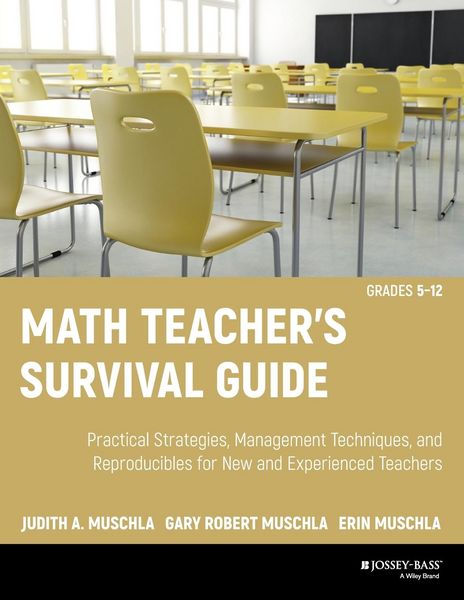
Produktbild: Math Teacher's Survival Guide: Practical Strategies, Management Techniques, and Reproducibles for New and Experienced Teachers, Grades 5-12

Math Teacher's Survival Guide: Practical Strategies, Management Techniques, and Reproducibles for New and Experienced Teachers, Grades 5-12 Practical Strategies, Management Techniques, Reproducibles for New

31,99 €

inkl. gesetzl. MwSt., Versandkostenfrei

Lieferung nach Hause

Beschreibung

Produktdetails

Einband

Taschenbuch

Erscheinungsdatum

08.03.2010

Verlag

Wiley

Seitenzahl

368

Maße (L/B/H)

28/21,6/2 cm

Gewicht

880 g

Sprache

Englisch

ISBN

978-0-470-40764-6

Beschreibung

Produktdetails

Einband

Taschenbuch

Erscheinungsdatum

08.03.2010

Verlag

Wiley

Seitenzahl

368

Maße (L/B/H)

28/21,6/2 cm

Gewicht

880 g

Sprache

Englisch

ISBN

978-0-470-40764-6

Noch keine Bewertungen vorhanden

Verfassen Sie die erste Bewertung zu diesem Artikel

Helfen Sie anderen Kundinnen und Kunden durch Ihre Meinung.

Kundinnen und Kunden meinen

Bewertungen (0)

Weitere Artikel findest du in

Die Leseprobe wird geladen.
  • Produktbild: Math Teacher's Survival Guide: Practical Strategies, Management Techniques, and Reproducibles for New and Experienced Teachers, Grades 5-12
  • About This Book v

    The Authors vii

    Acknowledgments ix

    Section One: Embracing the Profession of Teacher of Mathematics 1

    Traits of Great Math Teachers 1

    Meeting State Standards and District Math Goals 3

    School Policies and Procedures You Need to Know 4

    Professionalism and Common Sense 7

    Professionalism Outside the Classroom 9

    Maintaining Your Professional Expertise 9

    Quick Review for Embracing the Profession of Teacher of Mathematics 12

    Section Two: Before the First Day 15

    Starting the Year Early 15

    Things to Do Before School Starts (Reproducible) 17

    Greeting Administrators, Colleagues, and Support Staff 18

    Getting a Head Start on Paperwork 18

    Your Schedule and Class Lists 19

    Seating Charts 20

    Seating Chart Grid (Reproducible) 21

    Seating Options 22

    Setting Up Your Classroom 23

    Arranging Furniture to Enhance Math Learning 23

    Checking Equipment 23

    Checking Materials and Supplies 24

    Hall Passes (Reproducible) 26

    Classroom Sign-Out Sheet (Reproducible) 27

    Decorating Your Room 28

    Preparing for the First Day 29

    Setting Goals 29

    Rules and Requirements of Your Classes 29

    Rules and Requirements of Ms Smith's Algebra I Class 31

    Activities for the First Day 33

    Making Copies Before the Copy Machine Crunch 33

    Being Connected: Checking Communications Systems 34

    Especially for the First-Year Math Teacher 35

    Learning the Layout of Your School 35

    The Value of Orientation 36

    Reviewing Handbooks 37

    Finding a Mentor 37

    Quick Review for Before the First Day 38

    Section Three: The Math Teacher's Tools of the Trade 41

    Basic Supplies, Materials, and Equipment 41

    Common Math Manipulatives 42

    Sources for Math Materials and Manipulatives 45

    Technology 46

    Calculators 46

    Computers 47

    Interactive Whiteboards 49

    Resources on the Internet 50

    Sources of Supplementary Teaching Materials 53

    Quick Review for the Math Teacher's Tools of the Trade 54

    Section Four: Becoming a Valued Member of the Staff 55

    Working Effectively with Others 56

    The Chain of Command in Your School 56

    Working with Other Teachers 57

    Working with Para-Educators 58

    Working with Support Staff 59

    Committees and Teamwork 59

    The Roles People Play in Committees 60

    Working Together in Sharing 62

    Getting Along with Others in Your School 63

    Evaluations for Math Teachers 65

    How Not to Be Nervous During an Observation 66

    Preparing for an Observation 67

    An Evaluation Checklist 67

    The Pre-Observation Conference 69

    The Observation 69

    The Post-Observation Conference70

    The End-of-the-Year Evaluation 70

    Becoming a Mentor for New Math Teachers 70

    Responsibilities of a Mentor 71

    Responsibilities of a Mentee 72

    After School and Beyond 73

    Providing After-School Math Help 73

    Extracurricular Activities 75

    Quick Review for Becoming a Valued Member of the Staff 75

    Section Five: Organizing for Success 77

    Your Master Schedule for Organization 77

    The Value of an All-Purpose Binder 79

    Practical Routines 79

    Daily Reminders (Reproducible) 81

    How to Avoid Letting the ''Little Things'' Pile Up 83

    Organizing Your Classroom 84

    Special Organizational Considerations When Sharing a Classroom 85

    Record of Used Supplies or Malfunctioning Equipment (Reproducible) 87

    Organizing Files 88

    Your File Cabinet 88

    Electronic Files 89

    Necessary Information to Maintain 90

    Managing Your Paper Load 92

    Taking Control of Time 93

    The Importance of Effective Substitute Plans 94

    Sub Plans That Move Your Students Forward 94

    The True Emergency Plan 94

    Long-Term Absences 95

    Essential Components of a Sub Plan for Your Math Class 95

    Quick Review for Organizing for Success 96

    Section Six: Planning a Great First Day 99

    The First-Day Basics 99

    If You Have a Homeroom 100

    Record of Materials Returned by Students (Reproducible) 102

    Double-Checking Materials and Supplies 104

    Keys to Being Calm and Composed 104

    Welcoming Students at the Classroom Door 105

    Introducing Yourself 105

    Getting Started 105

    Providing an Overview of Your Math Class 106

    Responsibilities of Math Students (Reproducible) 107

    Learning About Your Students 109

    Facts About You (Reproducible) 110

    Name Cards 111

    Circles of Me: A Getting-Acquainted Activity 111

    Circles of Me (Reproducible) 113

    Providing a Math Activity on the First Day 114

    Number Puzzlers 114

    Handing Out Texts, Workbooks, and Other Materials 115

    Quick Review for Having a Great First Day 115

    Section Seven: Managing Your Math Classroom 117

    Establishing Efficient Classroom Routines 117

    Taking Attendance 118

    Dealing with Students Who Arrive Late to Class 118

    Smoothly Handling Requests to Leave the Classroom 118

    Distributing and Collecting Materials 119

    Procedures for Student Computer Use 121

    Computer Sign-Up Sheet (Reproducible) 122

    Computer Etiquette (Reproducible) 124

    Achieving a Smooth Flow of Classroom Traffic 125

    Creating a Productive Math Class 126

    Beginning Class with a Math Do-Now 127

    Agendas or Assignment Pads 128

    Classwork 128

    Group Work 129

    How to Work in a Math Group (Reproducible) 131

    Homework 132

    Math Journals 133

    Math Journal Writing Prompts (Reproducible) 135

    Math Notebooks 136

    Tips for Keeping a Math Notebook (Reproducible) 137

    Procedures for Making Up Missed Work 138

    Math Makeup Work (Reproducible) 140

    Procedures for Ending Class 141

    Helping Your Students Learn to Follow Directions 142

    Quick Review for Managing Your Classroom 143

    Section Eight: Building a Positive Environment for Learning Math 145

    The Physical Classroom 145

    Setting a Tone of Respect and Courtesy 147

    Respect and Courtesy Guidelines (Reproducible) 149

    Preventing and Responding to Bullying 150

    Creating a Positive Math Environment for Diverse Students 152

    Gifted Math Students 152

    Underachieving Students 154

    Mainstreamed Special-Needs Students 155

    Students with 504 Plans 158

    Students with Attention Deficit Disorders 159

    Students Who Are at Risk of Dropping Out of School 162

    Economically Disadvantaged Students 164

    Students Who Speak Little or No English 165

    Avoiding Gender and Ethnic Bias in Math Class 167

    Appreciating Cultural Diversity 168

    Helping Students Overcome Math Anxiety 169

    Steps to Beat Math Anxiety (Reproducible) 170

    Quick Review for Building a Positive Environment for Learning Math 171

    Section Nine: Interacting with Your Students 173

    Maintaining a Professional Role with Your Students 173

    Your Appearance 174

    Your Language and Tone 174

    Your Behavior 175

    Avoiding Potential Trouble 176

    Discretion and Your Personal Life 176

    Getting to Know Your Students 177

    Communication and Being a Good Listener 178

    Tips for Positive Communication in Math Class (Reproducible) 180

    Guiding Students to Become Successful Math Students 181

    How to Become a Successful Math Student (Reproducible) 182

    Helping Students Develop Math Study Skills 183

    How to Improve Your Math Study Skills (Reproducible) 184

    How to Read a Math Textbook 185

    Guidelines for Reading Your Math Text (Reproducible) 186

    How to Prepare for and Do Well on Math Tests 187

    How to Prepare for Math Tests (Reproducible) 188

    Math Test-Taking Tips (Reproducible) 190

    How to Conduct Successful Math Conferences with Students 191

    Preventing and Dealing with Disruptions 192

    Helping Students Cope with the Pressures of Being a Student 194

    Serious Problems Requiring Immediate Action 195

    Quick Review for Interacting with Your Students 196

    Section Ten: Designing Effective Math Lessons and Activities 199

    Making Time for Planning 199

    Planning a Variety of Math Lessons and Activities 200

    The Foundation of Successful Math Lessons and Activities 201

    State Math Standards 201

    District and School Math Goals and Objectives 202

    Curriculum 202

    The Principles, Standards, and Focal Points of the NCTM 203

    Objectives 203

    Resources for Planning Math Lessons and Activities 204

    Components of Effective Math Plans and Activities 205

    Addressing the Needs of Diverse Learners 205

    Building on Prior Knowledge 207

    Including Material for Critical Thinking in Your Math Plans 208

    Incorporating Technology in Math Plans 209

    Providing a Means for Assessment 210

    Types of Math Plans 211

    Basic Course of Study Planning Guide (Reproducible) 213

    Unit Plans 215

    Unit Plan Format (Reproducible) 217

    Sample Unit Plan 220

    Daily Lesson Plans 222

    Daily Lesson Plan Format (Reproducible) 224

    Sample Daily Lesson Plan 227

    Overcoming Common Problems in Planning 229

    Pacing 229

    Pull-Out Programs 230

    Lessons and Activities for Special Days 231

    Adjusting Lesson Plans 232

    Avoiding Planning Pitfalls 233

    Incorporating Literature into Your Math Class 234

    Elementary/Middle School 235

    Middle School/High School 236

    High School 237

    Incorporating Writing into Your Math Class 238

    The Writing Process (Reproducible) 240

    Quick Review for Designing Effective Math Lessons and Activities 241

    Section Eleven: Providing Effective Math Instruction 243

    Being a Facilitator of Learning 243

    Meeting the Needs of Diverse Learners Through Instruction 244

    Using Various Instructional Methods for Teaching 245

    Fostering Problem-Solving Skills in Your Students 247

    Steps for Solving Math Word Problems (Reproducible) 248

    Motivating Your Students 249

    Improving Your Instructional Delivery Skills 250

    Speaking 250

    Body Language 251

    Using the Traditional Board, Overhead Projector, or Interactive Whiteboard 252

    Handling Math Manipulatives Effectively 253

    Using Technology with Expertise 254

    Managing Interruptions and Getting Back on Task 257

    Monitoring Learning During Instruction 259

    Videotaping Your Delivery and Building Confidence 260

    Quick Review for Providing Effective Math Instruction 261

    Section Twelve: Evaluating the Progress of Your Students 263

    Devising a Fair System of Grading 263

    Ways to Assess Student Learning 264

    Assessment Through Tests and Quizzes 265

    Assessment Through Open-Ended Problems 266

    Assessment Through Group Activities 267

    Assessment Through Math Notebooks 268

    Assessment Through Math Projects 269

    Assessment Through Writing 270

    Assessment Through Math Portfolios 270

    Assessment Through Classwork 271

    Assessment Through Homework 272

    Preparing Your Students for Standardized Math Tests 273

    Tips for Taking Standardized Math Tests (Reproducible) 275

    Evaluating Assessment Results 276

    Record Keeping 277

    If Your Grades Are Challenged 279

    Quick Review for Evaluating the Progress of Your Students 280

    Section Thirteen: Managing Inappropriate Behavior 283

    Addressing Inappropriate Behavior in Your Math Class 283

    Involving Parents and Guardians in Addressing Inappropriate Behavior 286

    Record of Parent-Guardian Contact (Reproducible) 288

    The Value of Behavior Contracts 289

    Sample Behavior Contract (Reproducible) 291

    Involving Administrators in Addressing Inappropriate Behavior 292

    The Major Incident Report 293

    Major Incident Report Form (Reproducible) 294

    Common Examples of Inappropriate Behavior and How to Handle Them 295

    Habitual Lateness to Class 295

    Inattentiveness 296

    Incomplete Work 296

    Repeatedly Requesting to Leave Class 297

    Excessive Talking 297

    Passing Notes 298

    Sleeping During Class 298

    Attention Seeking 299

    Inappropriate Use of Technology 300

    Cell Phone Use 300

    Eating or Drinking in Class 301

    Inappropriate Words and Comments 302

    Defiance 302

    Stealing 303

    Cheating 303

    Vandalism 304

    Verbal Abuse 305

    Violence 305

    Quick Review for Managing Inappropriate Behavior 306

    Section Fourteen: Working with Parents and Guardians 309

    The Expectations of Parents and Guardians for Their Child's Math Teacher 309

    How to Make Parents and Guardians Partners in Math Education 310

    How Parents and Guardians Can Help Their Children with Math 312

    Guidelines for Helping Your Child with Math (Reproducible) 313

    Preparing for and Conducting a Successful Back-to-School Night 314

    Sample Back-to-School Night Information Sheet 316

    Parent-Guardian Sign-In Sheet (Reproducible) 318

    Conducting Successful Conferences with Parents and Guardians 319

    Parent-Teacher Conference Log Sheet (Reproducible) 322

    Dealing with Difficult Parents and Guardians 323

    Working with Parents and Guardians Who Speak Limited English 324

    Expanding Your Role as a Math Teacher 325

    Quick Review for Working with Parents and Guardians 328

    Section Fifteen: Keeping the Flame Burning 329

    Causes and Symptoms of Teacher Burnout 329

    Avoiding and Overcoming Teacher Burnout 331

    Becoming the Most Effective Math Teacher You Can Be 333

    Student Course Evaluation Form (Reproducible) 334

    Quick Review for Keeping the Flame Burning 336

    References and Suggested Reading 337

    Index 341