
Gutscheinbedingungen

**Gültig vom 15.06.2026 bis 17.06.2026 | Gültig für nicht preisgebundene fremdsprachige Bücher | Einzelne Artikel können ausgeschlossen sein | Maximaler rabattfähiger Warenkorbwert 500 € | Nicht kombinierbar mit weiteren Aktionen | Nur einmal pro Person einlösbar | Nur solange der Vorrat reicht

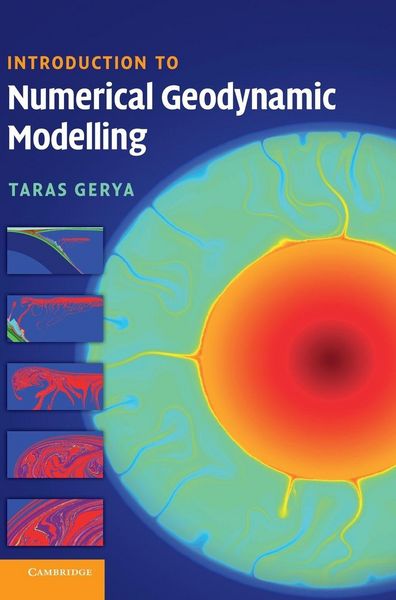
  • Produktbild: Introduction to Numerical Geodynamic Modelling
  • Produktbild: Introduction to Numerical Geodynamic Modelling

Introduction to Numerical Geodynamic Modelling

1

121,99 €

inkl. gesetzl. MwSt., Versandkostenfrei

Lieferung nach Hause

Beschreibung

Produktdetails

Einband

Gebundene Ausgabe

Erscheinungsdatum

25.03.2014

Verlag

Cambridge University Press

Seitenzahl

358

Maße (L/B/H)

25/17,5/2,4 cm

Gewicht

797 g

Sprache

Englisch

ISBN

978-0-521-88754-0

Beschreibung

Rezension

'The book is written in a light and engaging style such that it deserves a place on the recommended reading list of any undergraduate or Masters course that includes geodynamics. Additionally, it will be a valuable resource for any geoscientist who wants to include geodynamic modelling within their research activities.' Geological Magazine

Produktdetails

Einband

Gebundene Ausgabe

Erscheinungsdatum

25.03.2014

Verlag

Cambridge University Press

Seitenzahl

358

Maße (L/B/H)

25/17,5/2,4 cm

Gewicht

797 g

Sprache

Englisch

ISBN

978-0-521-88754-0

Herstelleradresse

Libri GmbH
Europaallee 1
36244 Bad Hersfeld
DE

Email: gpsr@libri.de

Kundinnen und Kunden meinen

1 Bewertungen

Informationen zu Bewertungen

Zur Abgabe einer Bewertung ist eine Anmeldung im Konto notwendig. Die Authentizität der Bewertungen wird von uns nicht überprüft. Wir behalten uns vor, Bewertungstexte, die unseren Richtlinien widersprechen, entsprechend zu kürzen oder zu löschen.

Die Bewertungen sind nach Format, Anzahl Sterne und Datum sortiert.

5 Sterne

(1)

4 Sterne

(0)

3 Sterne

(0)

2 Sterne

(0)

1 Sterne

(0)

outstanding

Bewertung am 18.03.2010

Bewertungsnummer: 630225

Bewertet: Buch (Gebundene Ausgabe)

From the cover: ...Assuming only minimal prerequisite mathematical training (simple linear algebra and derivatives), the author provides a solid grounding in the basic mathematical theory and techniques, including continuum mechanics and partial differential equations, before introducing key numerical and modelling methods. Eight well-documented and state-of-the-art visco-elasto-plastic, 2-D models are the presented, which allow robust modelling of key dynamic processes, such as subduction, lithospheric extension, collision, slab break-off, intrusion emplacement, mantle convection and planetary core formation. Incorporating 47 practical exercises and 67 MATLAB examples..., this textbook provides a user-friendly introduction for graduate courses or for self-study, and encourages readers to experiment with geodynamic models, first hand.

outstanding

Bewertung am 18.03.2010
Bewertungsnummer: 630225
Bewertet: Buch (Gebundene Ausgabe)

From the cover: ...Assuming only minimal prerequisite mathematical training (simple linear algebra and derivatives), the author provides a solid grounding in the basic mathematical theory and techniques, including continuum mechanics and partial differential equations, before introducing key numerical and modelling methods. Eight well-documented and state-of-the-art visco-elasto-plastic, 2-D models are the presented, which allow robust modelling of key dynamic processes, such as subduction, lithospheric extension, collision, slab break-off, intrusion emplacement, mantle convection and planetary core formation. Incorporating 47 practical exercises and 67 MATLAB examples..., this textbook provides a user-friendly introduction for graduate courses or for self-study, and encourages readers to experiment with geodynamic models, first hand.

Kundinnen und Kunden meinen

Introduction to Numerical Geodynamic Modelling

von Taras V. Gerya

0 Bewertungen filtern

Die Leseprobe wird geladen.
  • Produktbild: Introduction to Numerical Geodynamic Modelling
  • Produktbild: Introduction to Numerical Geodynamic Modelling
  • Acknowledgements; Introduction; 1. The continuity equation; 2. Density and gravity; 3. Numerical solutions of partial differential equations; 4. Stress and strain; 5. The momentum equation; 6. Viscous rheology of rocks; 7. Numerical solutions of the momentum and continuity equations; 8. The advection equation and marker-in-cell method; 9. The heat conservation equation; 10. Numerical solution of the heat conservation equation; 11. 2-D thermomechanical code structure; 12. Elasticity and plasticity; 13. 2-D implementation of visco-elastic-plastic rheology; 14. The multi-grid method; 15. Programming of 3-D problems; 16. Numerical benchmarks; 17. Design of 2-D numerical geodynamic models; Epilogue: outlook; Appendix: MATLAB program examples; References; Index.