KI-Beratung Beta

Gutscheinbedingungen

**Gültig vom 05.10.2026 bis 07.10.2026 | Gültig für nicht preisgebundene fremdsprachige Bücher | Einzelne Artikel können ausgeschlossen sein | Online auf www.bücher.de einlösbar | Click & Collect nur mit Online-Zahlung (Paypal/Kreditkarte) vorab | Nicht kombinierbar mit anderen Gutscheinen oder Preisaktionen | Nur einmal pro Einkauf einlösbar | Gutschein wird auf max. 500€ Bestellwert angerechnet | Keine Barauszahlung | Nicht gültig für Versandkosten und Services

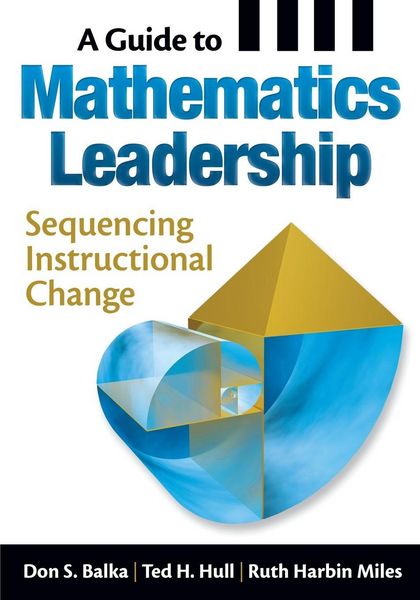
  • Produktbild: A Guide to Mathematics Leadership
  • Produktbild: A Guide to Mathematics Leadership

A Guide to Mathematics Leadership Sequencing Instructional Change

33,99 €

inkl. gesetzl. MwSt., Versandkostenfrei


Produktdetails

Einband

Taschenbuch

Erscheinungsdatum

18.11.2009

Herausgeber

Don S. Balka + weitere

Verlag

SAGE Publications

Seitenzahl

176

Maße (L/B/H)

25,4/17,8/1 cm

Gewicht

344 g

Sprache

Englisch

ISBN

978-1-4129-7543-8

Produktdetails

Einband

Taschenbuch

Erscheinungsdatum

18.11.2009

Herausgeber

Verlag

SAGE Publications

Seitenzahl

176

Maße (L/B/H)

25,4/17,8/1 cm

Gewicht

344 g

Sprache

Englisch

ISBN

978-1-4129-7543-8

Herstelleradresse

Libri GmbH
Europaallee 1
36244 Bad Hersfeld
DE

Email: gpsr@libri.de

Noch keine Bewertungen vorhanden

Verfassen Sie die erste Bewertung zu diesem Artikel

Helfen Sie anderen Kundinnen und Kunden durch Ihre Meinung.

Kundinnen und Kunden meinen

Bewertungen (0)

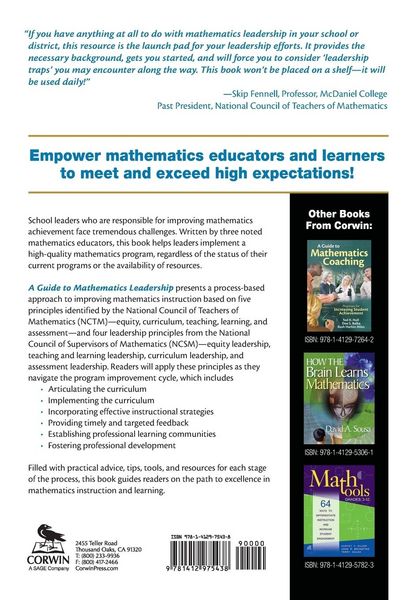
  • Produktbild: A Guide to Mathematics Leadership
  • Produktbild: A Guide to Mathematics Leadership
  • List of Figures
    Preface
    Acknowledgments
    About the Authors
    Part 1. Preparing the Foundation
    1. Understanding and Clarifying Leadership in Mathematics
    What Is Leadership and Who Is a Leader?
    Building a Culture of Success
    NCTM Principles and NCSM Leadership Principles
    2. Engaging and Empowering Staff
    Staff Inclusion and Effective Communication
    Leadership Decision Making
    Instructional Leadership
    Dynamics of Engagement and Empowerment
    Expectations and Challenges
    Part 2. A Leadership Model
    3. Articulating the Curriculum
    Curriculum Alignment
    Opportunity to Learn
    Scope, Sequence, and Timeline Alignment
    Rigorous Curriculum
    4. Implementing the Curriculum
    Curriculum Implementation
    Monitored Implementation
    Monitored Progress
    5. Incorporating Effective Instructional Strategies
    Incorporating Effective Instructional Strategies for All
    Student Collaboration in the Form of Teamwork
    Using Group-Worthy Problems
    Incorporating Instructional Strategies for ELL Students
    Matching Materials to Desired Instructional Strategies
    Using Data to Inform Practice 1: Analyzing Student Work
    Using Data to Inform Practice 2: Analyzing Student Assessments
    6. Providing Timely and Targeted Feedback
    Using Pertinent Data
    Targeted Information
    Building Trust
    7. Establishing Professional Learning Communities
    Establishing Collaboration
    Building Community
    Facilitating Reflection
    8. Fostering Professional Development
    Structuring Effective Professional Development
    Mentoring and Coaching
    Other Approaches to Professional Development
    Part 3. Continuing the Work
    9. Reflecting on How Students Learn Mathematics
    What Mathematics Must or Should Students Learn?
    What Methods and Tools Will Be Most Effective in Helping Students Learn?
    What Does Research Say?
    How Do Students Learn to Become Problem Solvers?
    How Do Students Learn to Communicate Mathematics?
    10. Putting It All Together
    Looping, or Recycling Through the Developmental Stages
    Mathematics Leaders¿ Influence
    Guiding Questions for Critiquing the Developmental Stages
    References
    Index