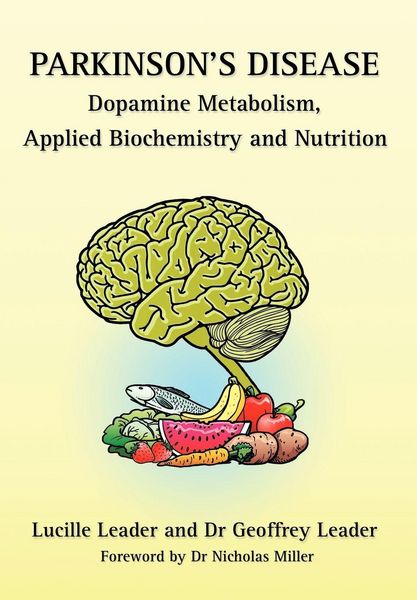
Parkinson's Disease Dopamine Metabolism, Applied Biochemistry and Nutrition Nutritio
-
- Englisch ausgewählt
25,99 €
inkl. gesetzl. MwSt.,
Lieferung nach Hause
Beschreibung
Produktdetails
Einband
Taschenbuch
Erscheinungsdatum
18.05.2009
Verlag
Denor PressSeitenzahl
52
Maße (L/B/H)
24,4/17/0,4 cm
Gewicht
109 g
Sprache
Englisch
ISBN
978-0-9526056-6-9
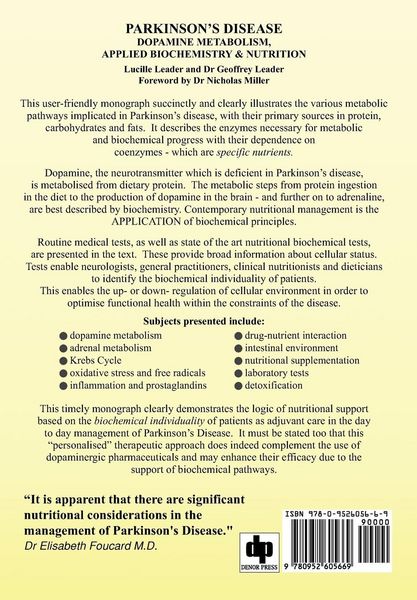
PARKINSON'S DISEASE DOPAMINE METABOLISM, APPLIED BIOCHEMISTRY & NUTRITION Authors: Lucille Leader and Dr Geoffrey Leader Foreword: by Dr Nicholas Miller This user-friendly monograph illustrates the various metabolic pathways implicated in Parkinson's disease, with their primary sources in protein, carbohydrates and fats. It describes the enzymes necessary for metabolic and biochemical progress with their dependence on coenzymes - which are specific nutrients. The text demonstrates that concomitant with dopaminergic pharmaceutical supplementation, dynamic support of the individual's biochemical, metabolic and nutritional status should be considered as essential adjuvant therapy during the degenerative journey. The aim is to optimise potential cellular and general functional health within the constraints of the disease. Dopamine, the neurotransmitter which is deficient in Parkinson's disease, is metabolised from dietary protein. The metabolic steps from protein ingestion in the diet to the production of dopamine in the brain - and further on to adrenaline, are best described by biochemistry. Contemporary nutritional management is the APPLICATION of biochemical principles. Medical tests as well as state of the art nutritional biochemical tests are presented which enable the medical and nutritional professions to up- or down- regulate the individual cellular environment. Subjects presented include: ¿ dopamine metabolism ¿ adrenal metabolism ¿ inflammation and prostaglandins ¿ oxidative stress and free radicals ¿ intestinal environment ¿ Krebs Cycle and cell energy ¿ drug-nutrient interaction ¿ nutritional supplements ¿ detoxification ¿ laboratory tests This "personalised" therapeutic approach does indeed complement the use of dopaminergic pharmaceuticals and may enhance their efficacy due to the support of biochemical pathways.
Noch keine Bewertungen vorhanden
Verfassen Sie die erste Bewertung zu diesem Artikel
Helfen Sie anderen Kundinnen und Kunden durch Ihre Meinung.
Kurze Frage zu unserer Seite
Vielen Dank für dein Feedback
Wir nutzen dein Feedback, um unsere Produktseiten zu verbessern. Bitte habe Verständnis, dass wir dir keine Rückmeldung geben können. Falls du Kontakt mit uns aufnehmen möchtest, kannst du dich aber gerne an unseren Kund*innenservice wenden.
zum Kundenservice