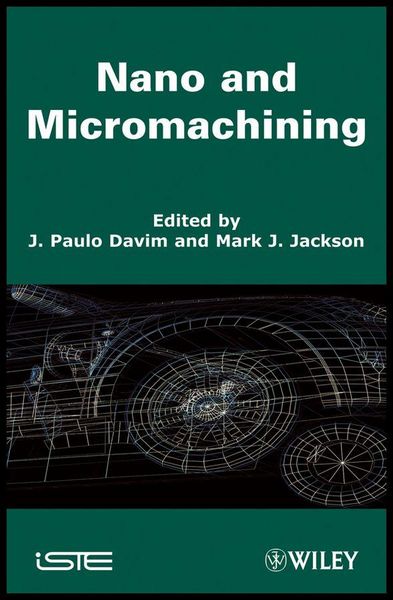
Produktbild: Nano and Micromachining

Nano and Micromachining

197,99 €

inkl. gesetzl. MwSt., Versandkostenfrei

Lieferung nach Hause

Beschreibung

Produktdetails

Einband

Gebundene Ausgabe

Erscheinungsdatum

01.06.2009

Herausgeber

J. Paulo Davim + weitere

Verlag

John Wiley & Sons Inc

Seitenzahl

222

Maße (L/B/H)

23,6/16/1,8 cm

Gewicht

454 g

Auflage

1. Auflage

Sprache

Englisch

ISBN

978-1-84821-103-2

Beschreibung

Produktdetails

Einband

Gebundene Ausgabe

Erscheinungsdatum

01.06.2009

Herausgeber

Verlag

John Wiley & Sons Inc

Seitenzahl

222

Maße (L/B/H)

23,6/16/1,8 cm

Gewicht

454 g

Auflage

1. Auflage

Sprache

Englisch

ISBN

978-1-84821-103-2

Herstelleradresse

Libri GmbH
Europaallee 1
36244 Bad Hersfeld
DE

Email: [email protected]

Kundinnen und Kunden meinen

0 Bewertungen

Informationen zu Bewertungen

Zur Abgabe einer Bewertung ist eine Anmeldung im Konto notwendig. Die Authentizität der Bewertungen wird von uns nicht überprüft. Wir behalten uns vor, Bewertungstexte, die unseren Richtlinien widersprechen, entsprechend zu kürzen oder zu löschen.

Die Bewertungen sind nach Format, Anzahl Sterne und Datum sortiert.

Verfassen Sie die erste Bewertung zu diesem Artikel

Helfen Sie anderen Kund*innen durch Ihre Meinung

Kundinnen und Kunden meinen

0 Bewertungen filtern

Die Leseprobe wird geladen.
  • Produktbild: Nano and Micromachining
  • Preface ix

    Chapter 1. Nanoscale Cutting 1
    Rüdiger RENTSCH

    1.1. Introduction 1

    1.2. Basic elements of molecular dynamics modeling 3

    1.2.1. Material representation and microstructure 3

    1.2.2. Atomic interaction 4

    1.2.3. System dynamics and numerical description 7

    1.2.4. Boundary conditions 8

    1.3. Design and requirements for state-of-the-art MD cutting process simulations 10

    1.4. Capabilities of MD for nanoscale material removal process analysis 12

    1.4.1. Analysis of microstructure and deformation 12

    1.4.2. Obtaining cutting forces, stress and temperature 15

    1.5. Advances and recent developments in material removal process simulation 18

    1.5.1. Complete 3D surface machining simulation 18

    1.5.2. Consideration of fluids in MD cutting simulation 20

    1.6. Summary and outlook 23

    1.7. References 24

    Chapter 2. Ductile Mode Cutting of Brittle Materials: Mechanism, Chip Formation and Machined Surfaces 27
    Xiaoping LI

    2.1. Introduction 27

    2.2. The mechanism of ductile mode cutting of brittle materials 29

    2.2.1. Transition of chip formation mode from ductile to brittle 29

    2.2.2. MD modeling and simulation of nanoscale ductile mode cutting of silicon 32

    2.2.3. The mechanism of ductile mode chip formation in cutting of silicon 32

    2.3. The chip formation in cutting of brittle materials 35

    2.3.1. Material deformation and crack initiation in the chip formation zone 35

    2.3.2. Stress conditions in the chip formation zone in relation to ductile-brittle mode of chip formation 36

    2.4. Machined surfaces in relation to chip formation mode 38

    2.5. References 40

    Chapter 3. Diamond Tools in Micromachining 45
    Waqar AHMED, Mark J. JACKSON and Michael D. WHITFIELD

    3.1. Introduction 45

    3.2. Diamond technology 45

    3.2.1. Hot Filament CVD (HFCVD) 46

    3.3. Preparation of substrate 48

    3.3.1. Selection of substrate material 48

    3.3.2. Pre-treatment of substrate 49

    3.4. Modified HFCVD process 51

    3.4.1. Modification of filament assembly 51

    3.4.2. Process conditions 52

    3.5. Nucleation and diamond growth 53

    3.5.1. Nucleation 54

    3.5.2. Bias-enhanced nucleation (BEN) 55

    3.5.3. Influence of temperature 56

    3.6. Deposition on complex substrates 58

    3.6.1. Diamond deposition on metallic (molybdenum) wire 58

    3.6.2. Deposition on WC-Co microtools 58

    3.6.3. Diamond deposition on tungsten carbide (WC-Co) microtool 59

    3.7. Diamond micromachining 62

    3.7.1. Performance of diamond-coated microtool 66

    3.8. Conclusions 67

    3.9. References 67

    Chapter 4. Conventional Processes: Microturning, Microdrilling and Micromilling 71
    Wit GRZESIK

    4.1. Introduction 71

    4.1.1. Definitions and technological possibilities 71

    4.1.2. Main applications of micromachining 72

    4.2. Microturning 74

    4.2.1. Characteristic features and applications 74

    4.2.2. Microturning tools and tooling systems 75

    4.2.3. Machine tools for microturning 77

    4.3. Microdrilling 79

    4.3.1. Characteristic features and applications 79

    4.3.2. Microdrills and tooling systems 80

    4.3.3. Machine tools for microdrilling 83

    4.4. Micromilling 85

    4.4.1. Characteristic features and applications 85

    4.4.2. Micromills and tooling systems 87

    4.4.3. Machine tools for micromilling 89

    4.5. Product quality in micromachining 92

    4.5.1. Quality challenges in micromachining 92

    4.5.2. Burr formation in micromachining operations 92

    4.5.3. Surface quality inspection of micromachining products 96

    4.6. References 98

    Chapter 5. Microgrinding and Ultra-precision Processes 101
    Mark J. JACKSON and Michael D. WHITFIELD

    5.1. Introduction 101

    5.2. Micro and nanogrinding 104

    5.2.1. Nanogrinding apparatus. 105

    5.2.2. Nanogrinding procedures 105

    5.3. Nanogrinding tools 106

    5.3.1. Dissolution modeling 109

    5.3.2. Preparation of nanogrinding wheels 110

    5.3.3. Bonding systems 112

    5.3.4. Vitrified bonding systems 113

    5.4. Conclusions 121

    5.5. References 122

    Chapter 6. Non-Conventional Processes: Laser Micromachining 125
    Grant M. ROBINSON and Mark J. JACKSON

    6.1. Introduction 125

    6.2. Fundamentals of lasers 126

    6.2.1. Stimulated emission 126

    6.2.2. Types of lasers 127

    6.2.3. Laser optics 128

    6.2.4. Beam quality 129

    6.2.5. Laser-material interactions 131

    6.3. Laser microfabrication 133

    6.3.1. Nanosecond pulse microfabrication 133

    6.3.2.Shielding gas 135

    6.3.3. Nozzle designs for laser micromachining 136

    6.3.4. Stages of surface melting 138

    6.3.5. Effects of nanosecond pulsed microfabrication 138

    6.3.6. Picosecond pulse microfabrication 143

    6.3.7. Femtosecond pulse microfabrication 146

    6.3.8. Effects of femtosecond laser machining 150

    6.4. Laser nanofabrication 151

    6.5. Conclusions 154

    6.6. References 154

    Chapter 7.Evaluation of Subsurface Damage in Nano and Micromachining 157
    Jianmei ZHANG, Jiangang SUN and Zhijian PEI

    7.1. Introduction 157

    7.2. Destructive evaluation technologies 158

    7.2.1. Cross-sectional microscopy 158

    7.2.2. Preferential etching 159

    7.2.3. Angle lapping/angle polishing 159

    7.3. Non-destructive evaluation technologies 160

    7.3.1. X-ray diffraction 160

    7.3.2. Micro-Raman spectroscopy 164

    7.3.3. Laser scattering 167

    7.4. Acknowledgements 172

    7.5. References 172

    Chapter 8. Applications of Nano and Micromachining in Industry 175
    Jiwang YAN

    8.1. Introduction 175

    8.2. Typical machining methods 176

    8.2.1. Diamond turning 176

    8.2.2. Shaper/planner machining 178

    8.3. Applications in optical manufacturing 179

    8.3.1. Aspheric lens 179

    8.3.2. Fresnel lens 186

    8.3.3. Microstructured components 193

    8.4. Semiconductor and electronics related applications 200

    8.4.1. Semiconductor wafer production 200

    8.4.2. LSI substrate planarization 202

    8.5. Summary 203

    8.6. Acknowledgements 204

    8.7. References 204

    List of Authors 209

    Index 211