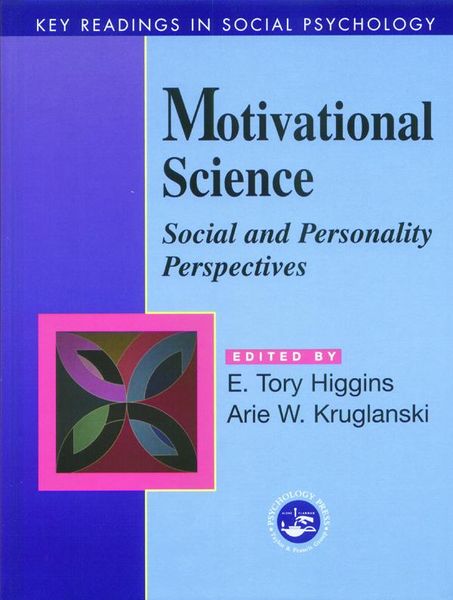
Produktbild: Motivational Science

Motivational Science Social and Personality Perspectives: Key Readings

211,99 €

inkl. gesetzl. MwSt., Versandkostenfrei

Lieferung nach Hause

Beschreibung

Produktdetails

Einband

Gebundene Ausgabe

Erscheinungsdatum

11.08.2000

Abbildungen

farbige Illustrationen

Herausgeber

E. Tory Higgins + weitere

Verlag

Taylor and Francis

Seitenzahl

454

Maße (L/B/H)

24,3/18,6/3 cm

Gewicht

929 g

Sprache

Englisch

ISBN

978-0-86377-696-0

Beschreibung

Produktdetails

Einband

Gebundene Ausgabe

Erscheinungsdatum

11.08.2000

Abbildungen

farbige Illustrationen

Herausgeber

Verlag

Taylor and Francis

Seitenzahl

454

Maße (L/B/H)

24,3/18,6/3 cm

Gewicht

929 g

Sprache

Englisch

ISBN

978-0-86377-696-0

Herstelleradresse

Libri GmbH
Europaallee 1
36244 Bad Hersfeld
DE

Email: [email protected]

Kundinnen und Kunden meinen

0 Bewertungen

Informationen zu Bewertungen

Zur Abgabe einer Bewertung ist eine Anmeldung im Konto notwendig. Die Authentizität der Bewertungen wird von uns nicht überprüft. Wir behalten uns vor, Bewertungstexte, die unseren Richtlinien widersprechen, entsprechend zu kürzen oder zu löschen.

Die Bewertungen sind nach Format, Anzahl Sterne und Datum sortiert.

Verfassen Sie die erste Bewertung zu diesem Artikel

Helfen Sie anderen Kund*innen durch Ihre Meinung

Kundinnen und Kunden meinen

0 Bewertungen filtern

  • Produktbild: Motivational Science
  • Introduction. E. T. Higgins & A. Kruglanski, Motivational Science: The Nature and Functions of Wanting. Part I: Basic Wants. Introduction. T. Pyszczynski, J. Greenberg, & S. Solomon, Why Do We Need What We Need?: A Terror Management Perspective on the Roots of Human Social Motivation. R. Baumeister & M. Leary, The Need to Belong: Desire for Interpersonal Attachments as a Fundamental Human Motivation. M. B. Brewer, The Social Self: On Being the Same and Different at the Same Time. A. Tesser, M. Millar, & J. Moore, Some Affective Consequences of Social Comparison and Reflection Processes: The Pain and Pleasure of Being Close. Part II: When Wants Change. Introduction. N. Cantor, Life Task Problem-Solving: Situational Affordances and Personal Needs. S. Folkman, R. Lazurus, C. D. Schetter, A. DeLongis & R. Gruen, The Dynamics of a Stressful Encounter. E. Deci & R. Ryan, The Support of Autonomy and the Control of Behavior. Part III: Bridging the Gap Between Knowing and Doing. Introduction. J. Atkinson, Motivational Determinants of Risk-Taking Behavior. I. Ajzen, & M. Fishbein, The Prediction of Behavior from Attitudinal and Normative Variables. A. Bandura & D. Cervone, Self-Evaluative and Self-Efficacy Mechanisms Governing the Motivational Effects of Goal Systems. R. Vallacher & D. Wegner, What Do People Think They are Doing?: Action Identification and Human Behavior. W. Mischel & Y. Shoda, A Cognitive-Affective System Theory of Personality: Reconceptualizing Situations, Dispositions, Dynamics, and Invariance in Personality Structure. Part IV: Getting What You Want. Introduction. C. S. Carver & M. Scheier, Origins and Functions of Positive and Negative Affect: A Control-Process View. E. Higgins, Beyond Pleasure and Pain. P. Gollwitzer, H. Heckhausen & B. Stellar, Deliberative vs. Implemental Mind-Sets: Cognitive Tuning Toward Congruous Thoughts and Information. W. Swann Jr., Identity Negotiation: Where Two Roads Meet. Part V: Knowing From Wanting. Introduction. Z. Kunda, The Case for Motivated Reasoning. M. Zanna & J. Cooper, Dissonance and the Pill: An Attribution Approach to Studying the Arousal Properties of Dissonance. R. Sorrentino, D. Bobocel, M. Gitta, J. Olson, & E. Hewitt, Uncertainty Orientation and Persuasion: Individual Differences in the Effects of Personal Relevance on Social Judgments. A. Kruglanski & D. Webster, Motivated Closing of the Mind: "Seizing" and "Freezing". Part VI: Wanting from Knowing. Introduction. B. Weiner & A. Kukla, An Attributional Analysis of Achievement Motivation. C. Dweck & E. Leggett, A Social-Cognitive Approach to Motivation and Personality. D. Zillmann, R. Johnson & K. Day, Attribution of Apparent Arousal and Proficiency of Recovery from Sympathetic Activation Affecting Excitation Transfer to Aggressive Behavior.