KI-Beratung Beta

  • Produktbild: A Normal Totalitarian Society
  • Produktbild: A Normal Totalitarian Society

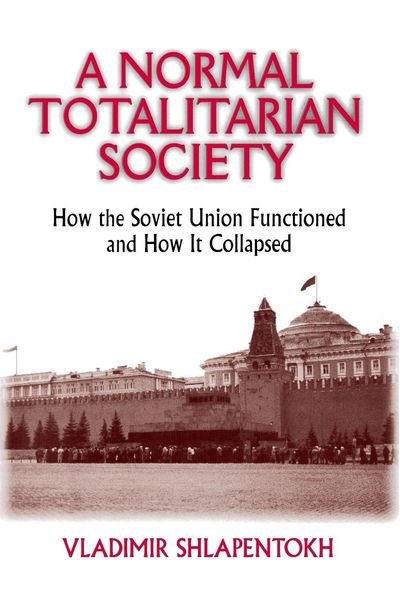
A Normal Totalitarian Society How the Soviet Union Functioned and How It Collapsed

79,99 €

inkl. gesetzl. MwSt., Versandkostenfrei


Beschreibung

Shlapentokh undertakes a dispassionate analysis of the ordinary functioning of the Soviet system from Stalin's death through the Soviet collapse and Russia's first post-communist decade. Without overlooking its repressive character, he treats the USSR as a "normal" system that employed both socialist...

Beschreibung

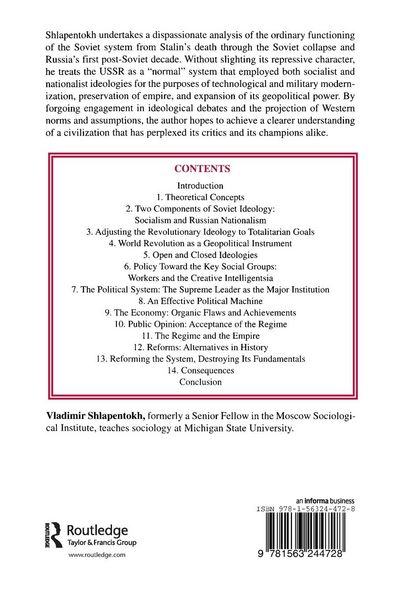
Shlapentokh undertakes a dispassionate analysis of the ordinary functioning of the Soviet system from Stalin's death through the Soviet collapse and Russia's first post-communist decade. Without overlooking its repressive character, he treats the USSR as a "normal" system that employed both socialist and nationalist ideologies for the purposes of technological and military modernization, preservation of empire, and expansion of its geopolitical power. Foregoing the projection of Western norms and assumptions, he seeks to achieve a clearer understanding of a civilization that has perplexed its critics and its champions alike.

Produktdetails

Einband

Taschenbuch

Erscheinungsdatum

31.01.1997

Verlag Taylor & Francis
Seitenzahl

358

Produktdetails

Einband

Taschenbuch

Erscheinungsdatum

31.01.1997

Verlag Taylor & Francis
Seitenzahl

358

Maße (L/B/H)

22,9/15,2/1,9 cm

Gewicht

519 g

Sprache

Englisch

ISBN

978-1-56324-472-8

Herstelleradresse

Produktsicherheitsverantwortliche/r
Europaallee 1
36244 Bad Hersfeld
DE

Email: gpsr@libri.de

Noch keine Bewertungen vorhanden

Verfassen Sie die erste Bewertung zu diesem Artikel

Helfen Sie anderen Kundinnen und Kunden durch Ihre Meinung.

Kundinnen und Kunden meinen

Bewertungen (0)

Die Leseprobe wird geladen.
  • Produktbild: A Normal Totalitarian Society
  • Produktbild: A Normal Totalitarian Society
  • 1: Theoretical Concepts; 2: Two Components of Soviet Ideology; 3: Adjusting the Revolutionary Ideology to Totalitarian Goals; 4: World Revolution As a Geopolitical Instrument; 5: Open and Closed Ideologies; 6: Policy Toward Key Social Groups Workers and Creative Intelligentsia; 7: The Political System The Supreme Leader As the Major Institution; 8: An Effective Political Machine; 9: The Economy Organic Flaws and Achievements; 10: Public Opinion Acceptance of the Regime; 11: The Regime and the Empire A Complex Relationship; 12: Reforms Alternatives in History; 13: Reforming the System, Destroying Its Fundamentals; 14: Consequences; Conclusion