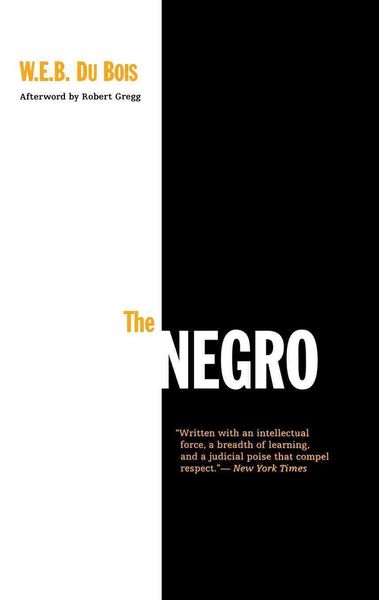
The Negro
-
- Hardcover
- Taschenbuch ausgewählt
- eBook
-
Sprache:Englisch
-
Verlag:University Of Pennsylvania Press
- Cosimo 13,99 €
- Creative Media Partners, LLC 21,99 €
- Black Legacy Press 19,99 €
- Wilder Publications 13,99 €
- Alpha Editions 24,99 €
- Wildside Press 19,99 €
- Bottom of the Hill Publishing 17,99 €
- Ingram Publishers Services 11,99 €
- University Of Pennsylvania Press 34,99 € ausgewählt
- External catalogues UK 17,99 €
- Book Jungle 24,99 €
34,99 €
inkl. gesetzl. MwSt.,
Lieferung nach Hause
Beschreibung
Produktdetails
Einband
Taschenbuch
Erscheinungsdatum
22.05.2001
Verlag
University Of Pennsylvania PressSeitenzahl
288
Maße (L/B/H)
16,7/11,1/1,9 cm
Gewicht
363 g
Sprache
Englisch
ISBN
978-0-8122-1775-9
Originally published in 1915, the book was acclaimed in its time, widely read, and deeply influential in both the white and black communities, yet this beautifully written history is virtually unknown today. As a wellspring of critical studies of Africa and African Americans, it directly and indirectly influenced and inspired the works of scholars such as C. L. R. James, Eric Williams, Herbert Aptheker, Eric Foner, Kwame Anthony Appiah, and Henry Louis Gates, Jr. One of the most important books on Africa ever written, it remains fresh, dynamic, and insightful to this day.
The Negro is compelling on many levels. By comparing W. E. B. Du Bois's analysis with subsequent scholarship, Robert Gregg demonstrates in his afterword that The Negro was well ahead of its time: Du Bois's view of slavery prefigures both paternalistic perspectives and the materialist view that the system was part of the capitalist mode of production. On black contributions to the Civil War and to the emancipation of slaves, historians have yet to acknowledge all that Du Bois delineated. In his discussion of Reconstruction, Du Bois preempts much later historiography. His identification of segregation as an issue of class rather than race is almost forty years ahead of C. Vann Woodward's similar thesis. As to the matter of race, Du Bois is clear that the concept is a social construct having no foundation in biology.
Intellectually and historically prescient, Du Bois assumed globalization as a matter of course, so that his definition of the color line in The Negro links all colonized peoples, not just people of African descent. With the resolution of the Cold War and the ascendancy of the global market, Du Bois's sweeping vision of Africans and the diaspora seems more relevant now than at any time in the past hundred years.
Noch keine Bewertungen vorhanden
Verfassen Sie die erste Bewertung zu diesem Artikel
Helfen Sie anderen Kundinnen und Kunden durch Ihre Meinung.
Kurze Frage zu unserer Seite
Vielen Dank für dein Feedback
Wir nutzen dein Feedback, um unsere Produktseiten zu verbessern. Bitte habe Verständnis, dass wir dir keine Rückmeldung geben können. Falls du Kontakt mit uns aufnehmen möchtest, kannst du dich aber gerne an unseren Kund*innenservice wenden.
zum Kundenservice