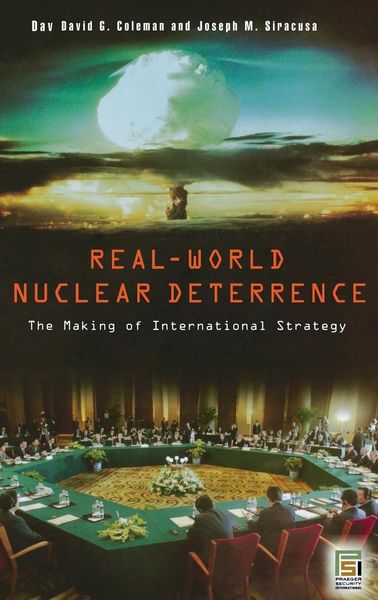
Real-World Nuclear Deterrence The Making of International Strategy
72,99 €
inkl. gesetzl. MwSt.,
Lieferung nach Hause
Beschreibung
Produktdetails
Einband
Gebundene Ausgabe
Erscheinungsdatum
30.06.2006
Verlag
Bloomsbury AcademicSeitenzahl
180
Maße (L/B/H)
24/16,1/1,4 cm
Gewicht
440 g
Sprache
Englisch
ISBN
978-0-275-98098-6
The threat of nuclear weapons did not fade away with the collapse of the Soviet Union. Rather, the geopolitical disorders of the post-Cold War era and the rise of global terrorism have ensured that they remain conspicuously present on the world stage as a serious international concern. With the eight or nine nuclear powers maintaining about 27,000 nuclear weapons in their arsenals to this day, it is clear that they are here to stay for the foreseeable future. The primary mission of these nuclear forces has been and remains deterrence. Using plain language rather than policy jargon, this historically focused book shows how nuclear deterrence has worked rather than how it should. It then shows how the growing threat of nuclear proliferation threatens to create a far more complicated international situation largely because of the attendant proliferation of state nuclear deterrents.
By drawing on a wide array of new sources from international archives and the latest in international scholarship, Coleman and Siracusa put some of the most important and enduring problems of nuclear deterrence over the past sixty years into global context. Nuclear deterrence in the real world often operates very differently from how it should according to the prevailing theories, and Coleman and Siracusa take a fresh look at how nuclear weapons policy has been made, finding that it often has had surprisingly little to do with what works and what does not. By studying in depth how governments here and abroad have confronted and dealt with some of the most important issues in nuclear weapons policy, for example, How many nuclear weapons are enough? and What is it that will deter? they find that the making of nuclear weapons policy is a complex, fluid bargaining process subject to the tides of politics, budgets, threat perception, ideology, technology, parochial service rivalries, flawed information, and sometimes just plain wishful thinking.
Kundinnen und Kunden meinen
Verfassen Sie die erste Bewertung zu diesem Artikel
Helfen Sie anderen Kund*innen durch Ihre Meinung
Kurze Frage zu unserer Seite
Vielen Dank für dein Feedback
Wir nutzen dein Feedback, um unsere Produktseiten zu verbessern. Bitte habe Verständnis, dass wir dir keine Rückmeldung geben können. Falls du Kontakt mit uns aufnehmen möchtest, kannst du dich aber gerne an unseren Kund*innenservice wenden.
zum Kundenservice