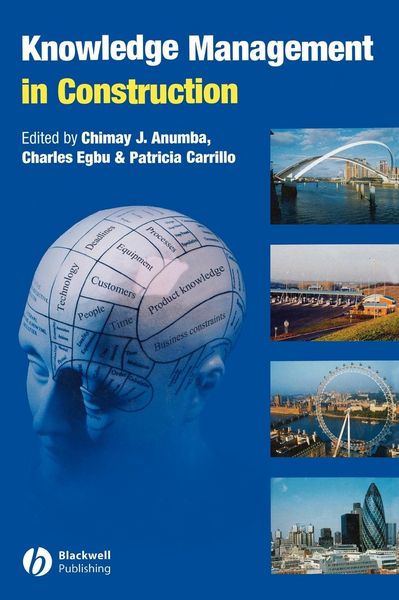
Produktbild: Knowledge Management Construction

Knowledge Management Construction

186,99 €

inkl. gesetzl. MwSt., Versandkostenfrei

Lieferung nach Hause

Beschreibung

Produktdetails

Einband

Gebundene Ausgabe

Erscheinungsdatum

18.05.2005

Verlag

John Wiley & Sons Inc

Seitenzahl

244

Maße (L/B/H)

26/18,3/1,8 cm

Gewicht

663 g

Sprache

Englisch

ISBN

978-1-4051-2972-5

Beschreibung

Produktdetails

Einband

Gebundene Ausgabe

Erscheinungsdatum

18.05.2005

Verlag

John Wiley & Sons Inc

Seitenzahl

244

Maße (L/B/H)

26/18,3/1,8 cm

Gewicht

663 g

Sprache

Englisch

ISBN

978-1-4051-2972-5

Herstelleradresse

Libri GmbH
Europaallee 1
36244 Bad Hersfeld
DE

Email: gpsr@libri.de

Noch keine Bewertungen vorhanden

Verfassen Sie die erste Bewertung zu diesem Artikel

Helfen Sie anderen Kundinnen und Kunden durch Ihre Meinung.

Kundinnen und Kunden meinen

Bewertungen (0)

  • Produktbild: Knowledge Management Construction
  • Chapter 1 INTRODUCTION.

    Chapter 2 NATURE AND DIMENSIONS OF KNOWLEDGE MANAGEMENT.

    2.1 Introduction; 2.2 Why knowledge management now? The Drivers; 2.3 Nature of knowledge; 2.4 Extra organisational knowledge and absorptive capacity; 2.5 Key knowledge processes; 2.6 Conclusions.

    Chapter 3 CONSTRUCTION AS A KNOWLEDGE-BASED INDUSTRY.

    3.1 Introduction; 3.2 Construction industry and knowledge intensive products and services; 3.3 Knowledge production in Construction; 3.4 Communicating and sharing knowledge; 3.5 Creating and sustaining a knowledge culture; 3.6 Conclusions.

    Chapter 4 THE BUSINESS CASE FOR KNOWLEDGE MANAGEMENT.

    4.1 Introduction; 4.2 What does Knowledge Management mean to Construction?; 4.3 What Knowledge Management strategy should be adopted?; 4.4 Delivering Knowledge Management in practice; 4.5 A business case for Knowledge Management; 4.6 The Future.

    Chapter 5 ORGANISATIONAL READINESS FOR KNOWLEDGE MANAGEMENT.

    5.1 Introduction; 5.2 Importance of knowledge lifecycle management (KLM); 5.3 Preparing the organisational context for KLM; 5.4 Conclusions.

    Chapter 6 TOOLS AND TECHNIQUES FOR KNOWLEDGE MANAGEMENT.

    6.1 Introduction; 6.2 Knowledge management tools; 6.3 Selecting Knowledge management tools; 6.4 The SeLEKT approach; 6.5 Conclusions.

    Chapter 7 CROSS-PROJECT KNOWLEDGE MANAGEMENT.

    7.1 Introduction; 7.2 Nature of projects; 7.3 Construction projects; 7.4 Cross project knowledge transfer; 7.5 Live capture and re-use of project knowledge; 7.6 Conclusions.

    Chapter 8 KNOWLEDGE MANAGEMENT AS A DRIVER FOR INNOVATION.

    8.1 Introduction; 8.2 Knowledge management and innovations - building and maintaining capabilities; 8.3 Knowledge management and improved innovations: Issues of strategy, process, structure, culture and technology; 8.4 Managing knowledge for exploitations: Implications for managers; 8.5 Conclusions.

    Chapter 9 PERFORMANCE MEASUREMENT IN KNOWLEDGE MANAGEMENT.

    9.1 Introduction; 9.2 Why measure the performance of knowledge management and knowledge assets; 9.3 Types of performance measures; 9.4 Measurement approaches; 9.5 Application tools; 9.6 Conclusions.

    Chapter 10 KM STATEGY DEVELOPMENT: A CLEVER APPROACH.

    10.1 Introduction; 10.2 The CLEVER project; 10.3 The Clever Framework; 10.4 Utilisation and Evaluation of the Framework; 10.5 Conclusions;.

    Chapter 11 CORPORATE MEMORY.

    11.1 Introduction; 11.2 Research Methodology; 11.3 Related Research; 11.4 Tacit knowledge, capture, sharing and reuse; 11.5 Tacit and explicit knowledge capture, sharing and reuse; 11.6 Conclusions.

    Chapter 12 BUILDING A KNOWLEDGE SHARING CULTURE IN CONSTRUCTION PROJECT TEAMS.

    12.1 Introduction; 12.2 Case study; 12.3 Discussion; 12.4 Conclusions.

    Chapter 13 CONCLUDING NOTES.

    13.1 Introduction; 13.2 Summary; 13.3 Benefits of knowledge management to construction organisations; 13.4 Issues in knowledge management implementation; Future directions