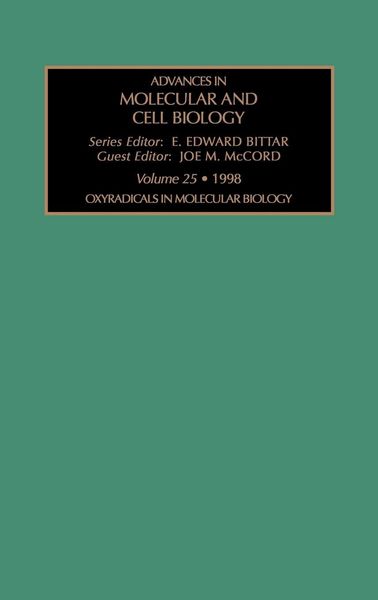

Oxyradicals in Medical Biology
89,99 €
inkl. gesetzl. MwSt.,
Beschreibung
Produktdetails
Einband
Gebundene Ausgabe
Erscheinungsdatum
23.04.1998
Herausgeber
Joe M. McCordVerlag
Elsevier BvSeitenzahl
204
Maße (L/B/H)
23,4/15,6/1,3 cm
Gewicht
465 g
Sprache
Englisch
ISBN
978-0-7623-0379-3
The rapid expansion of the area of free radical biology in the last 25 years has occurred within a framework of assumptions and preconceived notions that has at times directed the course of this movement. The most dominant of these notions has been the view that free radical production is without exception a bad thing, and that the more efficient our elimination of these toxic substances, the better off we will be. The very important observation by Bernard Babior and colleagues in 1973 that activated phagocytes produce superoxide in order to kill micro organisms, served to illustrate that constructive roles are possible for free radicals. For many in the field, however, this merely underscored the deadly nature of oxygen-derived radicals, both from the microbe's point of view and from the host's as well. (Phagocyte-produced superoxide is responsible in part for the tissue injury manifested as inflammation. See Harris and Granger, Chapter 5, and Leff, Hybertson and Repine, Chapter 6.)
Mother Nature, however, has a penchant for being able to make a silk purse from a sow's ear. If one is dealt a bad hand, one must simply make the best of it. After two decades of focusing on the destructive side of free radicals, the last few years have begun to reveal a new and finer perspective on free radical metabolism - a role in regulation of cellular function (see Schulze-Osthoff and Baeuerle, Chapter 2). Evidence from a number of sources suggests that an increase in the oxidative status of cell encourages that cell to grow and divide. Increasing the expression of mangnese superoxide dismutase can suppress the malignant phenotype of melanon cells (see Oberley and Oberley, Chapter 3). Oxidative stress beyond a certain poitosis (from the Greek, literally "to fall apart"). Is this suicide response an evolutionary fail-safe device to curtail tumorogenesis? Does oxidative stress-induced apoptosis account for the loss of immune cells in AIDS (see Flores and McCor Chapter 4)?
This volume attempts to present the spectrum of roles, both good and bad played by active oxygen species as understood at this point in the evolution of this field of free radical biology.
Noch keine Bewertungen vorhanden
Verfassen Sie die erste Bewertung zu diesem Artikel
Helfen Sie anderen Kundinnen und Kunden durch Ihre Meinung.
Kurze Frage zu unserer Seite
Vielen Dank für dein Feedback
Wir nutzen dein Feedback, um unsere Produktseiten zu verbessern. Bitte habe Verständnis, dass wir dir keine Rückmeldung geben können. Falls du Kontakt mit uns aufnehmen möchtest, kannst du dich aber gerne an unseren Kund*innenservice wenden.
zum Kundenservice