Beschreibung
Produktdetails
Einband
Gebundene Ausgabe
Erscheinungsdatum
13.09.2007
Verlag
University PressesSeitenzahl
208
Maße (L/B/H)
22,9/15,2/1,6 cm
Gewicht
431 g
Sprache
Englisch
ISBN
978-1-58901-176-2
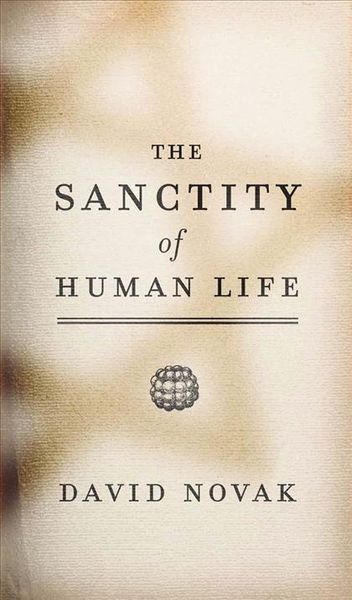
Heated debates are not unusual when confronting tough medical issues where it seems that moral and religious perspectives often erupt in conflict with philosophical or political positions. In The Sanctity of Human Life, Jewish theologian David Novak acknowledges that it is impossible not to take into account the theological view of human life, but the challenge is how to present the religious perspective to nonreligious people. In doing so, he shows that the two positions-the theological and the philosophical--aren't as far apart as they may seem.
Novak digs deep into Jewish scripture and tradition to find guidance for assessing three contemporary controversies in medicine and public policy: the use of embryos to derive stem cells for research, socialized medicine, and physician-assisted suicide. Beginning with thinkers like Plato, Aristotle, Kant, and Nietsche, and drawing on great Jewish figures in history--Maimonides, Rashi, and various commentators on the Torah (written law) and the Mishnah (oral law)--Novak speaks brilliantly to these modern moral dilemmas.
The Sanctity of Human Life weaves a rich and sophisticated tapestry of evidence to conclude that the Jewish understanding of the human being as sacred, as the image of God, is in fact compatible with philosophical claims about the rights of the human person--especially the right to life--and can be made intelligible to secular culture. Thus, according to Novak, the use of stem cells from embryos is morally unacceptable; the sanctity of the human person, and not capitalist or socialist approaches, should drive our understanding of national health care; and physician-assisted suicide violates humankind's fundamental responsibility for caring for one another.
Novak's erudite argument and rigorous scholarship will appeal to all scholars and students engaged in the work of theology and bioethics.
Noch keine Bewertungen vorhanden
Verfassen Sie die erste Bewertung zu diesem Artikel
Helfen Sie anderen Kundinnen und Kunden durch Ihre Meinung.
Kurze Frage zu unserer Seite
Vielen Dank für dein Feedback
Wir nutzen dein Feedback, um unsere Produktseiten zu verbessern. Bitte habe Verständnis, dass wir dir keine Rückmeldung geben können. Falls du Kontakt mit uns aufnehmen möchtest, kannst du dich aber gerne an unseren Kund*innenservice wenden.
zum Kundenservice