
• Produktbild: Fierce Teaching
  • Produktbild: Fierce Teaching

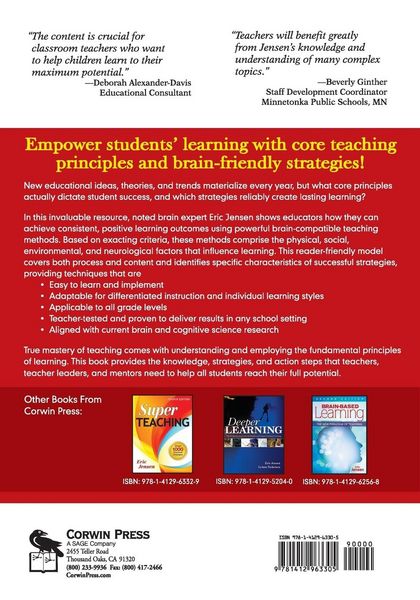
Fierce Teaching Purpose, Passion, and What Matters Most

42,99 €

inkl. gesetzl. MwSt., Versandkostenfrei

Lieferung nach Hause

Beschreibung

Produktdetails

Einband

Taschenbuch

Erscheinungsdatum

01.07.2008

Herausgeber

Jensen Eric P.

Verlag

Sage Publications

Seitenzahl

120

Maße (L/B/H)

25,4/17,8/0,7 cm

Gewicht

260 g

Sprache

Englisch

ISBN

978-1-4129-6330-5

Beschreibung

Produktdetails

Einband

Taschenbuch

Erscheinungsdatum

01.07.2008

Herausgeber

Jensen Eric P.

Verlag

Sage Publications

Seitenzahl

120

Maße (L/B/H)

25,4/17,8/0,7 cm

Gewicht

260 g

Sprache

Englisch

ISBN

978-1-4129-6330-5

Herstelleradresse

Libri GmbH
Europaallee 1
36244 Bad Hersfeld
DE

Email: gpsr@libri.de

Kundinnen und Kunden meinen

0 Bewertungen

Informationen zu Bewertungen

Zur Abgabe einer Bewertung ist eine Anmeldung im Konto notwendig. Die Authentizität der Bewertungen wird von uns nicht überprüft. Wir behalten uns vor, Bewertungstexte, die unseren Richtlinien widersprechen, entsprechend zu kürzen oder zu löschen.

Die Bewertungen sind nach Format, Anzahl Sterne und Datum sortiert.

Verfassen Sie die erste Bewertung zu diesem Artikel

Helfen Sie anderen Kund*innen durch Ihre Meinung

Kundinnen und Kunden meinen

0 Bewertungen filtern

Weitere Artikel findest du in

  • Produktbild: Fierce Teaching
  • Produktbild: Fierce Teaching
  • Preface
    About the Author
    Introduction
    Strategy Number 1. Body and Emotional Connections Made
    Body-Mind Emotional Engagement
    Five Key Emotional States
    Safety
    Vesting
    Connection
    Alertness
    Hope
    Strategy Number 2. Feedback and Error Correction
    The Importance of Feedback
    A Case for Feedback Styles
    Using Feedback Types
    What Makes Feedback Work So Well?
    Feedback Should Be Reliable
    Strategy Number 3. Input-to-Output Ratio
    Whös Doing the Learning?
    The Truth About Time in Learning
    Mastery of Material Through Time
    The Brain¿s Perspective on Learning
    Working Memory
    Consolidating the Learning
    Hippocampus Overload
    Cortical Limitations
    How Does the Need for Time Translate Into the School Day?
    The Importance of Rest Time
    Strategy Number 4. Elaboration for Depth
    What Is Elaboration?
    Preparation for Elaborative Learning
    Elaboration Categories
    The "How-to" of Elaboration
    Five Elaboration Strategies
    Elaboration Alternatives
    Strategy Number 5. Recall and Memory Management
    What Makes Purposeful Memory Encoding So Good?
    Seven Approaches for Repetition to Get Memories Encoded
    Pre-exposure
    Priming
    Prior Knowledge Activation
    Post-viewing
    Guided Practice
    Revision With Links
    Strategy Number 6. Content Coherence
    What Is Coherence?
    Texts With Coherence
    Teaching for Coherence
    Increasing Key Structural Knowledge
    Experiential Learning
    Semantic Support
    The Use of Models
    S-U-P-E-D Up Learning
    Sleeping on It
    Strategy Number 7. Environmental Management
    The Four Environmental Domains
    Physical Environments
    How Do Environments Affect Us?
    Indoor Air Quality
    Acoustic Quality
    Classroon Lighting
    Classroom Temperature
    The Social Environment
    Social Influences on Our Brains, Bodies, and Lives
    Positive Social Structures Work Miracles
    Independent Learners
    Classroom Dialogues to Build Social Structures
    Social Status Strategies in Motion
    Academic Climate Management
    The Five Success Factors
    Celebrate and Affirm the Learning
    Life-Path Guidance
    The Use of Traditions
    Instructional Variety
    Student Asset Building
    Managing the Cultural Environment
    The Culture of "Success" Is All About Achievement
    The Counterculture of Success Is That of Disengagement From the System
    The School Culture of Character Values Such as Responsibility, Honesty, and Fairness
    The Counterculture to Character Is Rebellion
    The Culture of Being Respected and Being Somebody
    The Counterculture Exists Where Students Disrespect Others
    Building Positive Cultures
    Epilogue
    Bibliography
    Index