• Produktbild: Understanding Assessment in the Special Education Process
  • Produktbild: Understanding Assessment in the Special Education Process

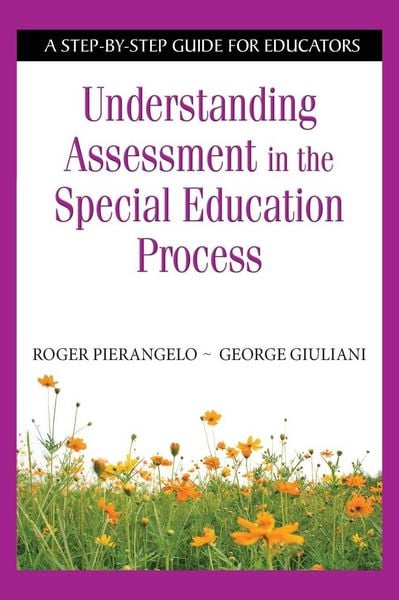
Understanding Assessment in the Special Education Process A Step-by-Step Guide for Educators

83,99 €

inkl. gesetzl. MwSt., Versandkostenfrei

Lieferung nach Hause

Beschreibung

Produktdetails

Einband

Gebundene Ausgabe

Erscheinungsdatum

19.11.2007

Herausgeber

Pierangelo Roger + weitere

Verlag

Sage Publications

Seitenzahl

136

Maße (L/B/H)

26/18,3/1,2 cm

Gewicht

465 g

Sprache

Englisch

ISBN

978-1-4129-5424-2

Beschreibung

Produktdetails

Einband

Gebundene Ausgabe

Erscheinungsdatum

19.11.2007

Herausgeber

Verlag

Sage Publications

Seitenzahl

136

Maße (L/B/H)

26/18,3/1,2 cm

Gewicht

465 g

Sprache

Englisch

ISBN

978-1-4129-5424-2

Herstelleradresse

Libri GmbH
Europaallee 1
36244 Bad Hersfeld
DE

Email: gpsr@libri.de

Noch keine Bewertungen vorhanden

Verfassen Sie die erste Bewertung zu diesem Artikel

Helfen Sie anderen Kundinnen und Kunden durch Ihre Meinung.

Kundinnen und Kunden meinen

Bewertungen (0)

Die Leseprobe wird geladen.
  • Produktbild: Understanding Assessment in the Special Education Process
  • Produktbild: Understanding Assessment in the Special Education Process
  • About the Authors
    Acknowledgments
    Introduction
    Step I. Understanding Assessment and Special Education Assessment
    Importance of Assessment
    Purpose of Assessment
    The Difference Between Testing and Assessment
    Role of the Education Professional in the Special Education Process
    Assessment and Federal Law
    Step II. Understanding and Identifying Students Who Might Exhibit a Disability
    Understand the Meaning of a "High Risk" Student
    High Risk Students: Determine the Severity of the Problem
    Understand How Tension Affects High Risk Students
    Become Familiar With Common Avoidance Behavior Patterns Exhibited By High Risk Students
    Conclusions
    Step III. Understanding and Making a Referral to the Child Study Team
    Understand Your Role in the Referral Process
    Learn About the Membership of the CST
    Understand What Takes Place at the CST Meeting
    Learn About the Various Sources of Information Available on Your Student
    Understand the Options of the CST
    Conclusions
    Step IV. Understanding and Obtaining Parental Informed Consent for Assessment
    Step V. Understanding the Requirements of an Evaluation for a Suspected Disability
    Step VI. Understanding the MDT and the Comprehensive Assessment
    Understand the Responsibilities of the Team Assigned to Do the Comprehensive Assessment: The Multidisciplinary Team
    Understand the Membership of the MDT
    Step VII. Understanding the Various Methods of Assessment Options Available to the MDT
    What Is a Comprehensive Assessment?
    What Is Norm-Referenced Testing?
    Primary Areas of Assessment
    Conclusions
    Step VIII. Understanding Basic Statistics and Scoring Terminology Used in Assessment
    Age Equivalent
    Alternate Forms Reliability
    Concurrent Validity
    Construct Validity
    Content Validity
    Correlation
    Criterion-Related Validity
    Grade Equivalent
    Interrater Reliability
    Mean
    Median
    Mode
    Range
    Percentile Rank
    Predictive Validity
    Raw Scores
    Reliability
    Reliability Coefficients
    Scaled Scores
    Split-Half Reliability or Internal Consistency
    Standard Deviation
    Standard Error of Measurement
    Standard Scores
    Stanine
    Test-Retest Reliability
    T Scores
    Validity
    z Scores
    Conclusions
    Step IX. Understanding Students¿ Behavior During the Assessment Process
    Understand the Possible Effects of Examiner Variables
    Understand How to Observe Overt Signs of Tension
    Understand Behaviors That Are Observed . . .
    Understand Behaviors That Provide Insight Into the Student¿s Organizational Abilities During the Assessment Process
    Conclusions
    Step X. Understanding the Components of a Professional Evaluation Report
    Practical Guidelines for Writing a Professional Evaluation Report
    Understand the Components of the Report
    Step XI. Understanding What Is Required for a Presentation to the IEP Committee
    Concluding Thoughts
    Glossary
    References and Suggested Readings
    Index