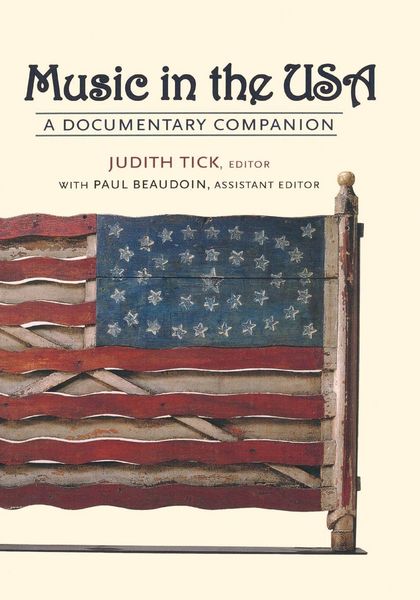
Produktbild: Music in the USA

Music in the USA A Documentary Companion

97,99 €

inkl. gesetzl. MwSt., Versandkostenfrei


Produktdetails

Einband

Taschenbuch

Erscheinungsdatum

01.09.2008

Abbildungen

40 halftones, 25 line illustrations

Herausgeber

Paul Beaudoin

Verlag

Oxford University Press

Seitenzahl

920

Maße (L/B/H)

25,4/17,8/4,9 cm

Gewicht

1692 g

Sprache

Englisch

ISBN

978-0-19-513988-4

Produktdetails

Einband

Taschenbuch

Erscheinungsdatum

01.09.2008

Abbildungen

40 halftones, 25 line illustrations

Herausgeber

Paul Beaudoin

Verlag

Oxford University Press

Seitenzahl

920

Maße (L/B/H)

25,4/17,8/4,9 cm

Gewicht

1692 g

Sprache

Englisch

ISBN

978-0-19-513988-4

Herstelleradresse

Libri GmbH
Europaallee 1
36244 Bad Hersfeld
DE

Email: gpsr@libri.de

Noch keine Bewertungen vorhanden

Verfassen Sie die erste Bewertung zu diesem Artikel

Helfen Sie anderen Kundinnen und Kunden durch Ihre Meinung.

Kundinnen und Kunden meinen

Bewertungen (0)

  • Produktbild: Music in the USA

    • Preface


    • Introduction


    • Acknowledgements


    • Table of Contents


    • List of Illustrations


    • Figures and Graphics


    • 1540-1770


    • 1: Early Encounters between Indigenous Peoples and European Explorers, 1540-1642 (Castañeda, Drake, de Meras, Smith, Wood)


    • 2: From the Preface to the Bay Psalm Book (1640)


    • 3: Four Translations of Psalm 100 (Tehilim, Bay Psalm Book, 1640 and 1698, Watts)


    • 4: From the Diaries of Samuel Sewall


    • 5: The Ministers Rally for Musical Literacy, 1720-21 (Mather, Walter, Symmes)


    • 6: Benjamin Franklin Advises His Brother on How to Write a Ballad and How Not to Write like Handel (ca. 1764)


    • 7: Advertisements and Notices from Colonial Newspapers, 1716-1774


    • 8: Social Music for the Elite in Colonial Williamsburg in the 1750s/1770-1830


    • 9: "Christopher Crotchet, Singing Master from Quavertown"


    • 10: Singing the Revolution (Adams, Dickinson, Greeley)


    • 11: Elisha Bostwick Hears a Scots Prisoner Sing "Gypsie Laddie" in 1777


    • 12: A Sidebar into Ballad Scholarship ca.1880-1970: The Wanderings of "The Gypsy Laddie" (Child, Sharp, Coffin, Bronson)


    • 13: William Billings and the New Psalmody, 1770-1794 (Billings, Gould)


    • 14: Daniel Read on Pirating and "Scientific Music," ca. 1790-1830


    • 15: Padre Narciso Durán Describes Musical Training at the Mission San Jose, 1813-1815


    • 16: Moravian Musical Life at Bethlehem in the 1800s (Henry, Till, Bowne)


    • 17: Reverend Burkitt Brings Camp Meeting Hymns from Kentucky to North Carolina in 1803


    • 18: John Fanning Watson and The Errors in Methodist Worship (1819)


    • 19: Reverend James B. Finley and Mononcue Sing "Come Thou Fount of Every Blessing" in 1823


    • 20: Turn-of-the Century Theater Songs from Reinagle, Rowson, and Carr: "America, Commerce, and Freedom" and "The Little Sailor Boy"/1830-1870


    • 21: Thomas D. Rice Acts Out "Jim Crow" and "Cuff," in the 1830s


    • 22: William M. Whitlock, Banjo Player for the Virginia Minstrels in the 1850s


    • 23: Edwin P. Christy, Stephen Foster, and "Ethiopian Minstrelsy"


    • 24: Stephen Foster's Legacy, ca. 1845-1960 (Foster, Gordon, Robb, Simpson, Willis, Galli-Curci, Kuller and Webster, Charles)


    • 25: The Fasola Folk, The Southern Harmony and The Sacred Harp, ca. 1830-1860 (Walker, White, and King )


    • 26: A Sidebar into the Discovery of Shape-Note Music by a National Audience (Jackson, the 1991 Edition)


    • 27: The Boston Public Schools Set a National Precedent in Music Education in 1837


    • 28: Music Education for American Girls in the 1850s


    • 29: Lorenzo Da Ponte Recruits an Italian Opera Company for New York (1831)


    • 30: Early Expressions of Cultural Nationalism in the 1850s (Hopkins, Fry, Putnam's Monthly)/31. John S. Dwight Remembers How He and His Circle "Were But Babes in Music"


    • 32: George Templeton Strong Hears the American Premiere of Beethoven's Fifth in 1841


    • 33: German Americans Adapting and Contributing to Musical Life in the Mid 1800s


    • 34: Emil Klauprecht's German-American novel, Cincinnati, oder die Geheimnisse des Westens, 1854


    • 35: P. T. Barnum and the Jenny Lind Fever in 1850


    • 36: Miska Hauser, Hungarian Violinist, Pans For Musical Gold in 1853


    • 37: From the Journals of Louis Moreau Gottschalk


    • 38: The 'Four-Part Blend' of the Hutchinson Family


    • 39: Walt Whitman's Conversion to Opera in the 1850s


    • 40: Clara Kellogg and the Memoirs of an American Prima Donna in the 1860s and '70s


    • 41: Frederick Douglass from My Bondage and My Freedom, 1855


    • 42: Harriet Beecher Stowe and Two Scenes from Uncle Tom's Cabin, 1852


    • 43: From Slave Songs of the United States, 1867


    • 44: A Sidebar into Memory: Slave Narratives from the Federal Writers' Project, 1936-1938


    • 45: George F. Root Recalls How He Wrote a Classic Union Song


    • 46: A Confederate Girl's Diary during the Civil War


    • 47: Soldier-Musicians from the North and the South Recall Duties on the Front


    • 48: Patrick S. Gilmore and the Golden Age of Bands (Newspaper review, Herbert)


    • 49: Ella Sheppard Moore, a Fisk Jubilee Singer in the 1870s


    • 50: Theodore Thomas and His Musical Manifest Destiny (Rose Fay Thomas, Theodore Thomas)/1880-1920


    • 51: John Philip Sousa -Excerpts from his Autobiography


    • 52: Why is a Good March like a Marble Statue? (Pryor, Fennell)


    • 53: Willa Cather Mourns the Passing of the Small-Town Opera House


    • 54: Henry Lee Higginson and the Founding of the Boston Symphony Orchestra in 1881


    • 55: American Classical Music Goes to the Paris World's Fair, 1889


    • 56: George Chadwick's Ideals for Composing Classical Concert Music in the 1890s


    • 57: Late 19th-Century Cultural Nationalism: The Paradigm of Dvorák (Creelman, Paine, Burleigh)


    • 58: Henry Krehbiel Explains a Critic's Craft and a Listener's Duty in 1896


    • 59: Amy Fay Tackles the "Woman Question" in 1900


    • 60: Amy Beach, Composer, on "Why I Chose My Profession" (1914)


    • 61: Edward MacDowell, Poet-Musician, Remembered (Currier, Gilman)


    • 62: Paul Rosenfeld's Manifesto for American Composers, 1916


    • 63: From the Writings of Charles Ives/64, Frederic Louis Ritter Looks for "the People's Song" (1884)


    • 65: Emma Bell Miles on "Some Real American Music" (1905)


    • 66: Frances Densmore and the Documentation of American Indian Songs and Poetry


    • 67: A Sidebar into National Cultural Policy: The Federal Cylinder Project (1979)


    • 68: Charles K. Harris on Writing for Tin Pan Alley


    • 69: Scott Joplin, Ragtime Visionary (Scott Joplin, Lottie Joplin)


    • 70: A Sidebar into the Ragtime Revival of the 1970s: William Bolcom reviews The Collected Works of Scott Joplin


    • 71: James Reese Europe Credits "Men of His Blood with Introducing Modern Dances" in the 1910s


    • 72: Irving Berlin on "Love-Interest" As a Commodity in Popular Songs (1915)


    • 73: Ferdinand "Jelly Roll" Morton Describes New Orleans and Its Jazz Scene, 1920-1950


    • 74: Bessie Smith, Artist and Blues Singer (Press notice, Bailey, Schuller)


    • 75: Thomas Andrew Dorsey "Brings the People Up" and Carries Himself Along


    • 76: Louis Armstrong in His Own Words


    • 77: Gilbert Seldes Waves the Flag of Pop


    • 78: Al Jolson and The Jazz Singer


    • 79: Carl Stalling: Master of Cartoon Music: An Interview


    • 80: A Sidebar into Postmodernism: John Zorn Turns Carl Stalling into a Prophet


    • 81: Alec Wilder Writes Lovingly about Jerome Kern


    • 82: George Gershwin Surveys "Fifty Years of American Music"


    • 83: William Grant Still, Pioneering African American Composer (Still, Locke, Still)


    • 84: The Inimitable Henry Cowell as described by the Irrepressible Nicolas Slonimsky


    • 85: Ruth Crawford on "Dissonant Music"


    • 86: "River Sirens, Lion Roars, All Music to Varèse"


    • 87: Leopold Stokowski and "Debatable Music"


    • 88: Henry Leland Clark on the Composer's Collective


    • 89: Marc Blitzstein In and Out of the Treetops of The Cradle Will Rock


    • 90: Samuel Barber and the Controversy around the Premiere of Adagio for Strings (Downes, Pettis, Menotti, Harris)


    • 92: Arthur Berger Divides Aaron Copland into Two Styles


    • 93: Aaron Copland on the "The Personality of Stravinsky"


    • 94: Roger Sessions Describes the American Period of Arnold Schoenberg (Sessions, Schoenberg, Sessions)


    • 95: Uncle Dave Macon, Banjo Trickster at the Grand Ole Opry


    • 96: The Bristol Sessions and Country Music


    • 97: A Sidebar into the Folk Revival: Harry Smith's Canon of "Old-Time" Recordings


    • 98: Zora Neale Hurston on "Spirituals and Neo-Spirituals"


    • 99: Emma Dusenbury, Source Singer, Describes her Hard Times (1941)


    • 100: John and Alan Lomax Propose a "Canon for American Folk Song" (1947)


    • 101: Woody Guthrie Praises the "Spunkfire" Attitude of a Folk Song (1948)


    • 102: Fred Astaire Dances like a Twentieth-Century American (Williams)


    • 103: The Innovations of Oklahoma! (de Mille, Engel)


    • 104: Duke Ellington on Swing as a Way of Life


    • 105: Malcolm X Recalls the Years of Swing


    • 106: The Many Faces of Billie Holiday (Holiday, Wilson, Bennett)


    • 107: Ralph Ellison and the Birth of Bebop at Minton's, 1950-1975


    • 108: Ella Fitzgerald On Stage (Peterson)


    • 109: Leonard Bernstein Finds His Way to the American Musical


    • 110: Stephen Sondheim on Writing "Theater Lyrics"


    • 111: Muddy Waters Explains "Why It Doesn't Pay to Run from Trouble"


    • 112: Elvis Presley in the Eye of Musical Twister (newspaper reviews, Gould, Lewis)


    • 113: Chuck Berry in His Own Words


    • 114: Greil Marcus and the New Rock Criticism in the 1970s


    • 115: The Five String Banjo: Hints from the 1960s Speed-Master, Earl Scruggs


    • 116: Pete Seeger, a TCUSAPSS, "Sings Out!"


    • 117: Bob Dylan Turns Liner Notes into Poetry


    • 118: Janis Joplin Grabs Pieces of Our Hearts (Joplin, Graham)


    • 119: "Handcrafting the Grooves" in the Studio: Aretha Franklin at Muscle Shoals (Wexler)


    • 120: Jimi Hendrix, Virtuoso of Electricity (Hendrix, Bloomfield)


    • 121: Amiri Baraka Theorizes a Black Nationalist Aesthetic


    • 122: Charles Reich on The Music of "Consciousness III"


    • 123: McCoy Tyner on "The Jubilant Experience of John Coltrane's Classic Quartet


    • 124: Miles Davis - Excerpts from his Autobiography


    • 125: A Vietnam Vet Remembers Rocking and Rolling in the Mud of War (Rodriguez, Beaudoin and Rodriguez)


    • 126: George Crumb and Black Angels--"A Quartet in Time of War"


    • 127: Milton Babbitt on Electronic Music (Brody and Miller, Babbitt)


    • 128: Edward T. Cone Satirizes Music Theory's New Vocabulary in the 1960s


    • 129: Mario Davidovsky, An Introduction (Chasalow)


    • 130: Elliot Carter on the 'Different Time Worlds' in String Quartets No. 1 and 2


    • 131: John Cage, Words and Music For Changes (Cage, Anderson)


    • 132: Harold Schonberg on "Art and Bunk, Matter and Anti Matter"


    • 133: Pauline Oliveros, Composer and Teacher


    • 134: Steve Reich on "Music as a Gradual Process," 1975-2000


    • 135: Star Wars meets Wagner (Williams, Tomlinson)


    • 136: Tom Johnson--What is Minimalism Really About?


    • 137: Morton Feldman and His West German Fan Base (Feldman, Post)


    • 138: Philip Glass and the Roots of Reform Opera


    • 139: Laurie Anderson, Performance Artist (Anderson, Gordon)


    • 140: Meredith Monk and the Revelation of Voice


    • 141: Recapturing the Soul of the American Orchestra (Duffy, Tower)


    • 142: Two Economists Measure the Impact of Blind Auditions between 1960 and 2000


    • 143: John Harbison on Modes of Composing


    • 144: Wynton Marsalis on Learning from the Past for the Sake of the Present


    • 145: John Adams, an American Master


    • 146: The Incorporation of the American Folklife Center


    • 147: Daniel Boorstin's Welcoming Remarks at the Conference on Ethnic Recordings in America (1977)


    • 148: Willie Colon on "Conscious Salsa"


    • 149: The Accordion Travels Through "Roots Music" (Savoy)


    • 150: Santiago Jiménez, a Patriarch of Conjunto


    • 151: Gloria Anzaldúa on "Vistas" y corridos: My Native Tongue


    • 152: Contemporary Native American Music and the Pine Ridge Reservation (Porcupine Singers, Frazier)


    • 153: MTV and the Music Video (MoMA Exhibition of 1985, Hoberman)


    • 154: Turning Points in the Career of Michael Jackson (Jackson, Jones)


    • 155: Sally Banes Explains Why Breaking is Hard to Do


    • 156: Two Members of Public Enemy Discuss Sampling and Copyright Law


    • 157: DJ Q-bert, Master of Turntable Music (Chin)


    • 158: A Press Release from the Country Music Association (1997)


    • 159: Ephemeral Music: Napster's Congressional Testimony (2000)