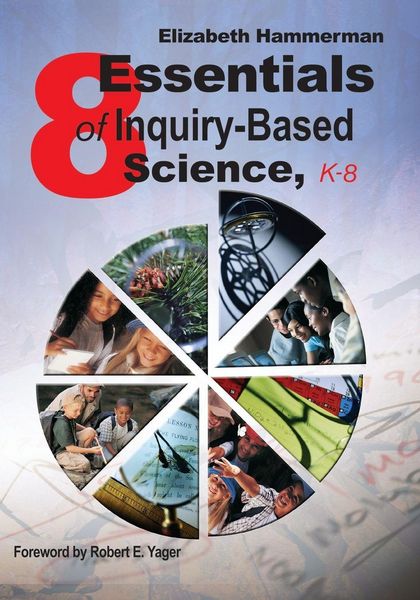
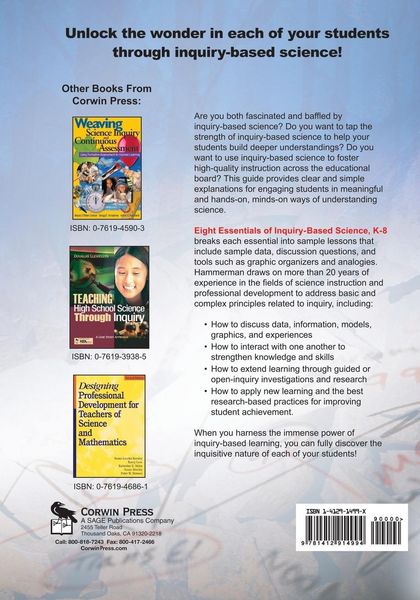
• Produktbild: Eight Essentials of Inquiry-Based Science, K-8
  • Produktbild: Eight Essentials of Inquiry-Based Science, K-8

Eight Essentials of Inquiry-Based Science, K-8

45,99 €

inkl. gesetzl. MwSt., Versandkostenfrei

Lieferung nach Hause

Beschreibung

Produktdetails

Einband

Taschenbuch

Erscheinungsdatum

01.07.2005

Herausgeber

Hammerman Elizabeth

Verlag

Sage Publications

Seitenzahl

184

Maße (L/B/H)

25,4/17,8/1 cm

Gewicht

370 g

Sprache

Englisch

ISBN

978-1-4129-1499-4

Beschreibung

Produktdetails

Einband

Taschenbuch

Erscheinungsdatum

01.07.2005

Herausgeber

Hammerman Elizabeth

Verlag

Sage Publications

Seitenzahl

184

Maße (L/B/H)

25,4/17,8/1 cm

Gewicht

370 g

Sprache

Englisch

ISBN

978-1-4129-1499-4

Herstelleradresse

Libri GmbH
Europaallee 1
36244 Bad Hersfeld
DE

Email: Libri GmbH

Noch keine Bewertungen vorhanden

Verfassen Sie die erste Bewertung zu diesem Artikel

Helfen Sie anderen Kundinnen und Kunden durch Ihre Meinung.

Kundinnen und Kunden meinen

Bewertungen (0)

Weitere Artikel findest du in

  • Produktbild: Eight Essentials of Inquiry-Based Science, K-8
  • Produktbild: Eight Essentials of Inquiry-Based Science, K-8
  • Foreword - Robert E. Yager
    Preface: Improving Student Achievement Through Professional Development
    Rationale for Professional Development in Science
    Themes and Threads
    The Goals of Eight Essentials
    Using Eight Essentials of Inquiry-Based Science in Study Groups and Professional Development Initiatives
    An I.D.E.A. Approach
    The Eight Essentials of Inquiry-Based Science
    Introduction: Inquiry-Based Science and the Inquiry Classroom
    Defining Inquiry-Based Science
    Inquiry as a Process for Learning
    Teaching Thinking Through Inquiry
    Teaching Scientific Habits of Mind Through Inquiry
    Guiding and Facilitating Learning Through Inquiry
    Implications for the Classroom
    Using Eight Essentials as Criteria for Assessing Curriculum & Informing Instruction
    Traditional vs. Inquiry Classroom Behaviors
    1. Essential #1: Inquiry-Based Science Develops an Understanding of Basic Concepts
    Understanding Big Ideas in the Curriculum
    Standards as Concept Categories
    Using Standards to Inform Curriculum and Instruction
    Using Activities to Engage Learners and Promote Inquir
    2. Essential #2: Inquiry-Based Science Develops Process and Thinking Skills
    Science Process Skills
    Complex Thinking Skills
    Activities That Develop Skills for Learning and Concept Understanding
    Guided Inquiry Activities for Upper Primary/Intermediate Level: An Introduction to Metric Measurement and the Structure of Seeds
    Student Constructed or Guided Inquiry for Intermediate/Middle School Level: Heating and Cooling Rates of Water and Land
    Guided Inquiry Activity for Intermediate/Middle School Level: Creating Climagraphs
    Using Visual Organizers to Show Connections
    3. Essential #3: Inquiry-Based Science Actively Engages Students in a Learning Cycle
    Defining a Learning Cycle
    The Five E¿s Lesson Plan
    Guided Inquiry Lessons Using a Five E¿s Format
    Primary Level: The Ear and Hearing
    Intermediate Level: It¿s All in the Family - A Study of Heredity
    Analysis of It¿s All in the Family
    Classroom Applications of the Learning Cycle
    4. Essential #4: Inquiry-Based Science Builds a Greater Understanding of the Ways That Science-Technology-Society (STS) are Linked
    Goals of S-T-S
    Defining S-T-S
    Technology as Computers and Other AV Equipment
    Technology as Tools for Learning
    Technology as Concept Application
    Technology as Problem-Solving and Inventions
    Technology as Tools for Learning
    Environmental Problems and Issues
    Analysis of a Case Study: Large Numbers of Elk Die in Wyoming
    Technology as a Production System
    Applying Technological Design in the Classroom
    Activities That Engage Students in Problem Solving and Technological Design
    Using Technological Design to Show Concept Understanding: Understanding Adaptation
    Building Technology and Technological Design Into the Curriculum
    5. Essential #5: Inquiry-Based Science Provides Experiences Necessary to Support and Develop or Modify Interpretations of the World
    Misconceptions
    Analyzing Misconceptions Case Study
    Using Discrepant Events in the Classroom
    Mediated Learning Experiences
    Dispositions That Underlie Science
    6. Essential #6: Inquiry-Based Science Enhances Reading and Writing Skills
    Integrating Reading
    Analyzing Current Events Through Articles
    Integrating Writing
    Using Science Notebooks
    Designing Science Notebooks
    Using Science Notebooks to Enhance Reading, Writing, Math, and Thinking: Comparing the Strength of Magnets
    Criteria for Scoring Notebooks
    Developing Thinking Skills Through Analysis, Creative Writing, and Analogies
    Analogies
    Analogies in Science
    7. Essential #7: Inquiry-Based Science Allows for a Diversity of Strategies for Learning
    Analyzing Learning
    Methods, Strategies, and Best Practices
    The Creative Use of Strategies
    8. Essential #8: Inquiry-Based Science Allows for a Variety of Ways for Students to Show What They Know and Are Able to Do
    Fundamentals of Assessment
    Multiple and Varied Assessment
    9. Using Eight Essentials to Enhance Learning
    Eight-Point Lessons
    Using the Eight Essentials to Analyze Curriculum Materials
    Resource
    Strategies for Instruction or Assessment Linked to Multiple Intelligences
    References
    Index