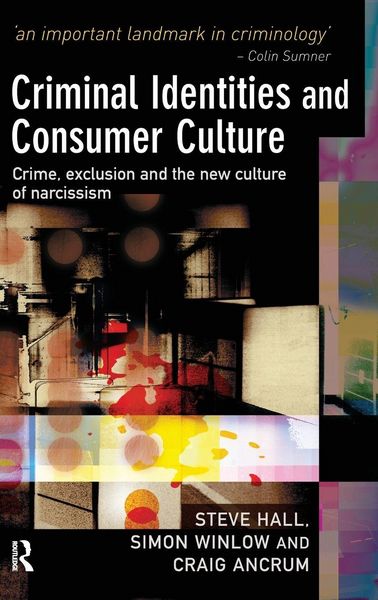
Criminal Identities and Consumer Culture Crime, Exclusion and the New Culture of Narcissm
-
- Hardcover ausgewählt
- Taschenbuch
- eBook
-
Sprache:Englisch
233,99 €
inkl. gesetzl. MwSt.,
Beschreibung
Produktdetails
Einband
Gebundene Ausgabe
Erscheinungsdatum
01.09.2008
Verlag
Taylor and FrancisSeitenzahl
264
Maße (L/B/H)
24/16,1/1,9 cm
Gewicht
564 g
Sprache
Englisch
ISBN
978-1-84392-256-8
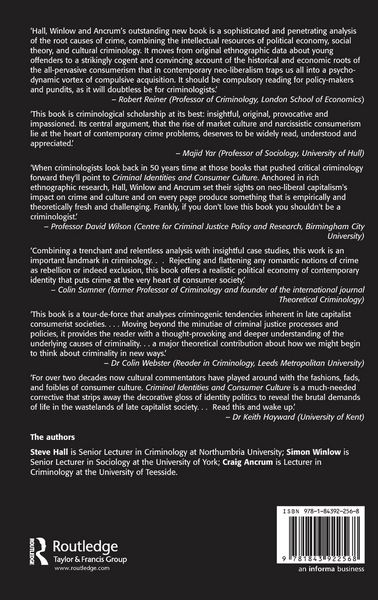
Offering the first in-depth investigation into the relationship between today's crinimal identities and consumer culture, this book uses unique data - taken from criminals locked in areas of permanent recession - to uncover feelings and attitudes towards a variety of criminal activities.
Noch keine Bewertungen vorhanden
Verfassen Sie die erste Bewertung zu diesem Artikel
Helfen Sie anderen Kundinnen und Kunden durch Ihre Meinung.
Kurze Frage zu unserer Seite
Vielen Dank für dein Feedback
Wir nutzen dein Feedback, um unsere Produktseiten zu verbessern. Bitte habe Verständnis, dass wir dir keine Rückmeldung geben können. Falls du Kontakt mit uns aufnehmen möchtest, kannst du dich aber gerne an unseren Kund*innenservice wenden.
zum Kundenservice