KI-Beratung Beta

  • Produktbild: Ecological Impacts of Non-Native Invertebrates and Fungi on Terrestrial Ecosystems
  • Produktbild: Ecological Impacts of Non-Native Invertebrates and Fungi on Terrestrial Ecosystems
- 12%

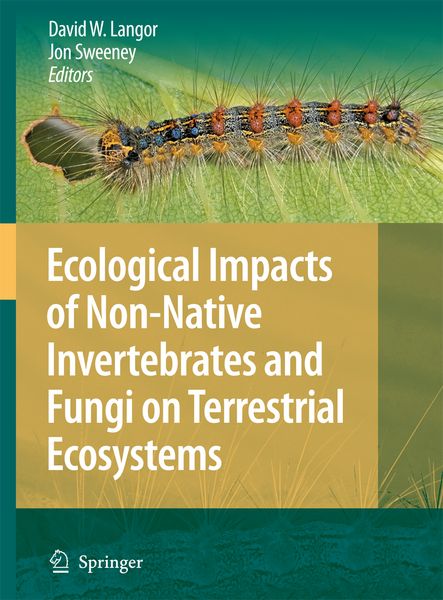
Ecological Impacts of Non-Native Invertebrates and Fungi on Terrestrial Ecosystems

12% sparen

93,99 € UVP 106,99 €

inkl. gesetzl. MwSt., Versandkostenfrei


Beschreibung

Since the arrival of Europeans about 500 years ago, an estimated 50,000 non-native species have been introduced to North America (including Hawaii). Non-native species figure prominently in our lives, often as ornamentals, sources of food or pests. Although many introduced species are beneficial, there...

Beschreibung

Since the arrival of Europeans about 500 years ago, an estimated 50,000 non-native species have been introduced to North America (including Hawaii). Non-native species figure prominently in our lives, often as ornamentals, sources of food or pests. Although many introduced species are beneficial, there is increasing awareness of the enormous economic costs associated with non-native pests. In contrast, the ecological impacts of non-native species have received much less public and scientific attention, despite the fact that invasion by exotic species ranks second to habitat destruction as a cause of species loss. In particular, there is little information about the ecological impacts of hyper-diverse groups such as terrestrial fungi and invertebrates.


A science symposium, Ecological impacts of non-native invertebrates and fungi on terrestrial ecosystems, held in 2006, brought together scientists from the USA and Canada to review the state of knowledge in this field of work. Additional reviews were solicited following the symposium. The resulting set of review/synthesis papers and case studies represents a cross-section of work on ecological impacts of non-native terrestrial invertebrates and fungi. Although there is a strong focus on Canadian work, there is also significant presentation of work in the northern USA and Europe.

Rezension

Aus den Rezensionen:
“... Das Buch gibt einen guten Überblick über invasive Pilze und Insekten in Kanada und ihren Einfluss auf Ökosysteme ... Repräsentative Fallstudien bearbeiten invasive Arten europäischen Ursprungs … Der Fokus der angewandten Aspekte der insgesamt 13 Beiträge liegt ganz klar in Kanada. Die englische Sprache der Aufsätze nehmen Interessierte sicherlich gern in Kauf. Die Stärken der Aufsätze liegen in der Aktualität ihrer Bearbeitung, einer sehr umfassend recherchierten Literatur und in reviewartigen Berichten über erfolgreiche Managementstrategie, Toleranz, Duldung bei geringer Populationsdichte und Ausrottung ...“ (Klaus Lunau, in: Entomologie heute, November/2009, Vol. 21, S. 196)

Produktdetails

Einband

Gebundene Ausgabe

Erscheinungsdatum

05.02.2009

Abbildungen

V, 157 p.

Herausgeber David Langor + weitere

Produktdetails

Einband

Gebundene Ausgabe

Erscheinungsdatum

05.02.2009

Abbildungen

V, 157 p.

Herausgeber
Verlag Springer Netherland
Seitenzahl

157

Maße (L/B/H)

26,6/19,8/1,5 cm

Gewicht

545 g

Sprache

Englisch

ISBN

978-1-4020-9679-2

Herstelleradresse

Springer-Verlag GmbH
Europaplatz 3
69115 Heidelberg
DE

Email: ProductSafety@springernature.com

Noch keine Bewertungen vorhanden

Verfassen Sie die erste Bewertung zu diesem Artikel

Helfen Sie anderen Kundinnen und Kunden durch Ihre Meinung.

Kundinnen und Kunden meinen

Bewertungen (0)

  • Produktbild: Ecological Impacts of Non-Native Invertebrates and Fungi on Terrestrial Ecosystems
  • Produktbild: Ecological Impacts of Non-Native Invertebrates and Fungi on Terrestrial Ecosystems
  • Ecological impacts of non-native invertebrates and fungi on terrestrial ecosystems.- Diversity of non-native terrestrial arthropods on woody plants in Canada.- Ecological effects of invasive alien insects.- Beyond Pandora’s Box: quantitatively evaluating non-target effects of parasitoids in classical biological control.- Distribution and impacts of invasive earthworms in Canadian forest ecosystems.- Ecological impacts of non-indigenous invasive fungi as forest pathogens.- The impact of invasive fungi on agricultural ecosystems in the United States.- Responses of Chalcidoidea (Hymenoptera) parasitoids to invasion of the cabbage seedpod weevil (Coleoptera: Curculionidae) in western Canada.- Non-native insects in agriculture: strategies to manage the economic and environmental impact of wheat midge, Sitodiplosis mosellana, in Saskatchewan.- Climate suitability and management of the gypsy moth invasion into Canada.- We can eliminate invasions or live with them. Successful management projects.