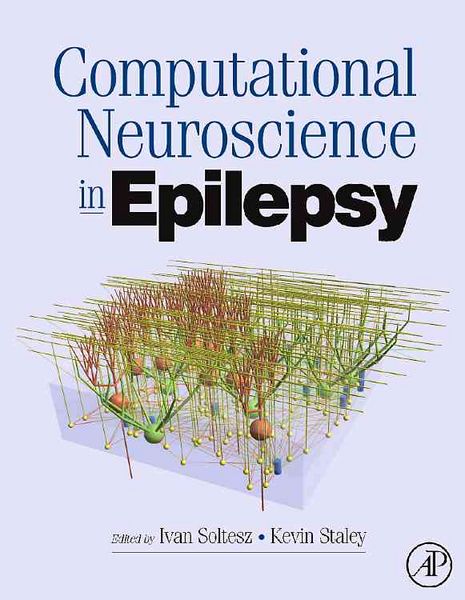
Produktbild: Computational Neuroscience in Epilepsy
- 29%

Computational Neuroscience in Epilepsy

29% sparen

128,99 € UVP 183,50 €

inkl. gesetzl. MwSt., Versandkostenfrei

Lieferung nach Hause

Beschreibung

Produktdetails

Einband

Gebundene Ausgabe

Erscheinungsdatum

01.12.2007

Abbildungen

Approx. 250 illustrations

Herausgeber

Ivan Soltesz + weitere

Verlag

Academic Press

Seitenzahl

624

Maße (L/B/H)

28,8/22,3/2,8 cm

Gewicht

1582 g

Sprache

Englisch

ISBN

978-0-12-373649-9

Beschreibung

Produktdetails

Einband

Gebundene Ausgabe

Erscheinungsdatum

01.12.2007

Abbildungen

Approx. 250 illustrations

Herausgeber

Verlag

Academic Press

Seitenzahl

624

Maße (L/B/H)

28,8/22,3/2,8 cm

Gewicht

1582 g

Sprache

Englisch

ISBN

978-0-12-373649-9

Herstelleradresse

Libri GmbH
Europaallee 1
36244 Bad Hersfeld
DE

Email: gpsr@libri.de

Noch keine Bewertungen vorhanden

Verfassen Sie die erste Bewertung zu diesem Artikel

Helfen Sie anderen Kundinnen und Kunden durch Ihre Meinung.

Kundinnen und Kunden meinen

Bewertungen (0)

Die Leseprobe wird geladen.
  • Produktbild: Computational Neuroscience in Epilepsy

  • Contributors

    Foreword

    Rise of the Machines - On the Threshold of a New Era in Epilepsy Research

    Introduction: Applications and Emerging Concepts of Computational

    Neuroscience in Epilepsy Research

    Part I Computational Modeling Techniques and Databases in Epilepsy Research

    1 Simulation of Large Networks: Technique and Progress

    2 The Neuron Simulation Environment in Epilepsy Research

    3 The CoCoDat Database: Systematically Organizing and Selecting Quantitative Data on Single Neurons and Microcircuitry

    4 Validating Models of Epilepsy

    5 Using NeuroConstruct to Develop and Modify Biologically Detailed 3D Neuronal Network Models in Health and Disease

    6 Computational Neuroanatomy of the Rat Hippocampus: Implications and Applications to Epilepsy

    Part II Epilepsy and Altered Network Topology

    7 Modeling Circuit Alterations in Epilepsy: A Focus on Mossy Cell Loss and Mossy Fiber Sprouting in the Dentate Gyrus

    8 Functional Consequences of Transformed Network Topology in Hippocampal Sclerosis

    9 Multiple-Scale Hierarchical Connectivity of Cortical Networks Limits the Spread of Activity

    Part III Destabilization of Neuronal Networks

    10 Computer Simulations of Sodium Channel Mutations that Cause Generalized Epilepsy with Febrile Seizures Plus

    11 Gain Modulation and Stability in Neural Networks

    12 Neocortical Epileptiform Activity in Neuronal Models with Biophysically Realistic Ion Channels

    13 Corticothalamic Feedback: A Key to Explain Absence Seizures

    14 Mechanisms of Graded Persistent Activity: Implications for Epilepsy

    15 Small Networks, Large Networks, Experiment and Theory - Can We Bring Them Together with Oscillations, Heterogeneity and Inhibition?

    Part IV Homeostasis and Epilepsy

    16 Stability and Plasticity in Neuronal and Network Dynamics

    17 Homeostatic Plasticity and Post-Traumatic Epileptogenesis

    Part V Mechanisms of Synchronization

    18 Synchronization in Hybrid Neuronal Networks

    19 Complex Synaptic Dynamics of GABAergic Networks of the Hippocampus

    20 Experimental and Theoretical Analyses of Synchrony in Feedforward Networks

    21 Modulation of Synchrony by Interneurons: Insights from Attentional Modulation of Responses in the Visual Cortex

    Part VI Interictal to Ictal Transitions

    22 Cellular and Network Mechanisms of Oscillations Preceding and Perhaps Initiating Epileptic Discharges

    23 Transition to Ictal Activity in Temporal Lobe Epilepsy: Insights from Macroscopic Models

    24 Unified Modeling and Analysis of Primary Generalized Seizures

    25 A Neuronal Network Model of Corticothalamic Oscillations: The Emergence of Epileptiform Absence Seizures

    26 Extracellular Potassium Dynamics and Epileptogenesis

    27 Slow Waves Associated with Seizure Activity

    Part VII Seizure Dynamics

    28 Dynamics of Epileptic Seizures during Evolution and Propagation

    29 Are Correlation Dimension and Lyapunov Exponents Useful Tools for Prediction of Epileptic Seizures?

    30 Towards a Dynamics of Seizure Mechanics

    Part VIII Towards Computer-Aided Therapy

    31 Principles and Practice of Computer-Aided Drug Design as Applied to the Discovery of Antiepileptic Agents

    32 Computation Applied to Clinical Epilepsy and Antiepileptic Devices

    33 Microelectrode-based Epilepsy Therapy: A Hybrid Neural Prosthesis Incorporating Seizure Prediction and Intervention with Biomimetic Maintenance of Normal Hippocampal Function

    Index