Gutscheinbedingungen

**Gültig vom 24.08.2026 bis 26.08.2026 | Gültig für nicht preisgebundene fremdsprachige Bücher | Einzelne Artikel können ausgeschlossen sein | Online auf www.bücher.de einlösbar | Click & Collect nur mit Online-Zahlung (Paypal/Kreditkarte) vorab | Nicht kombinierbar mit anderen Gutscheinen oder Preisaktionen | Nur einmal pro Einkauf einlösbar | Gutschein wird auf max. 500€ Bestellwert angerechnet | Keine Barauszahlung | Nicht gültig für Versandkosten und Services

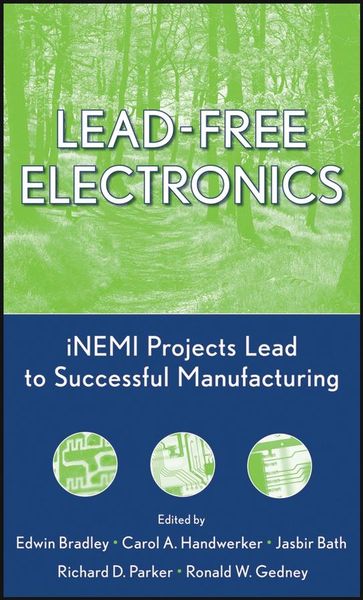
Produktbild: Lead-Free Electronics

Lead-Free Electronics iNEMI Projects Lead to Successful Manufacturing

176,99 €

inkl. gesetzl. MwSt., Versandkostenfrei


Beschreibung

Produktdetails

Einband

Gebundene Ausgabe

Erscheinungsdatum

01.09.2007

Abbildungen

Charts: 7 B&W, 0 Color; Photos: 115 B&W, 0 Color; Drawings: 0 B&W, 0 Color; Graphs: 140 B&W, 0 Color

Verlag

John Wiley & Sons Inc

Seitenzahl

472

Maße (L/B/H)

23,6/16,1/2,9 cm

Gewicht

803 g

Sprache

Englisch

ISBN

978-0-471-44887-7

Beschreibung

Produktdetails

Einband

Gebundene Ausgabe

Erscheinungsdatum

01.09.2007

Abbildungen

Charts: 7 B&W, 0 Color; Photos: 115 B&W, 0 Color; Drawings: 0 B&W, 0 Color; Graphs: 140 B&W, 0 Color

Verlag

John Wiley & Sons Inc

Seitenzahl

472

Maße (L/B/H)

23,6/16,1/2,9 cm

Gewicht

803 g

Sprache

Englisch

ISBN

978-0-471-44887-7

Noch keine Bewertungen vorhanden

Verfassen Sie die erste Bewertung zu diesem Artikel

Helfen Sie anderen Kundinnen und Kunden durch Ihre Meinung.

Kundinnen und Kunden meinen

Bewertungen (0)

  • Produktbild: Lead-Free Electronics
  • Preface (Ronald W. Gedney).
    Contributors.

    Introduction (Jasbir Bath and Carol A. Handwerker).

    Lead-Free Assembly Project.

    Alloy Group.

    Process Group.

    Component Group.

    Reliability Group.

    Follow-On Projects/Work.

    1. Alloy Selection (Carol A. Handwerker, Ursula Kattner, Kilwon Moon, Jasbir Bath, Edwin Bradley, and Polina Snugovsky).

    1.1. Introduction.

    1.2. Lead-Free Alloys Considered by iNEMI in 1999 as Replacements for Tin-Lead Eutectic Solder.

    1.3. Fundamental Properties of Lead-Free Solder Alloys Affecting Manufacturing and Reliability.

    1.4. R&D Issues Remaining in Lead-Free Solder Implementation.

    1.5. Summary.

    References.

    2. Review and Analysis of Lead-Free Solder Material Properties (Jean-Paul Clech).

    2.1. Introduction.

    2.2. Tin-Lead Properties and Models.

    2.3. Tin-Silver Properties and Creep Data.

    2.4. Tin-Silver-Copper Properties and Creep Data.

    2.5. Alloy Comparisons.

    2.6. General Conclusions/Recommendations.

    Appendix A: Tin-Silver Creep Data.

    Appendix B: Tin-Silver-Copper Creep Data.

    Acknowledgments.

    References.

    3. Lead-Free Solder Paste Technology (Ning-Cheng Lee).

    3.1. Introduction.

    3.2. Materials.

    3.3. Rheology.

    3.4. Applications.

    3.5. Reflow Soldering.

    3.6. Microstructures of Reflowed Joints.

    3.7. Challenges of Lead-Free Reflow Soldering.

    3.8. Summary.

    References.

    4. Impact of Elevated Reflow Temperatures on Component Performance (Richard D. Parker, Jack M CCullen, Nick Lycoudes, and R. J. Arvikar).

    4.1. Introduction to Component "Lead-Free" Issues.

    4.2. Moisture/Reflow Impact on Packaged Integrated Circuits.

    4.3. Impact of Increased Solder Peak Reflow Temperatures on Moisture Sensitivity Level Ratings.

    4.4. Impact of Increased Solder Peak Reflow Temperatures.

    4.5. Observations on Profiling for the Lead-Free Reflow Processes.

    4.6. IC Package Improvement Options for Better Package MSL at Higher Lead-Free Solder Reflow Temperatures.

    4.7. Frequency Control Products.

    4.8. "Lead-Free" Cost Impact on Components.

    4.9. Packaging Identification of Lead-free Packaged ICs.

    4.10. Conclusions.

    Acknowledgments.

    References.

    5. Lead-Free Assembly Reliability-General (Edwin Bradley).

    5.1. Introduction.

    5.2. Basic Physical Properties of Solder.

    5.3. Creep Deformation.

    5.4. Thermal Fatigue.

    5.5. Creep Rupture.

    5.6. Isothermal (Mechanical) Fatigue.

    5.7. Out-of-Plane Bending.

    5.8. Impact/Shock Loading.

    5.9. Effect of Rework on Reliability.

    5.10. High-Temperature Operating Life (HTOL).

    5.11. Electrochemical Migration.

    5.12. Tin Whiskering.

    5.13. Tin Pest.

    5.14. Summary.

    Acknowledgments.

    References.

    6. Lead-Free Assembly Reliability: iNEMI Evaluation and Results (Elizabeth Benedetto and John Sohn).

    6.1. Reliability Team Goals.

    6.2. Reliability Test Matrix.

    6.3. Component-Paste-Board Finish Combinations.

    6.4. Components.

    6.5. Test Vehicles.

    6.6. Pre-Test/Post-Assembly Information.

    6.7. CTE Determination: Component and Boards.

    6.8. Thermal Cycling Conditions.

    6.9. Failure Criteria.

    6.10. Thermal Cycle Relative Performance.

    6.11. Failure Data, Analysis Packages.

    6.12. Weibull Analyses.

    6.13. Post-Cycling Failure Analysis.

    6.14. Bend Testing.

    6.15. Electrochemical Migration Testing [36, 37].

    6.16. iNEMI Team Conclusions.

    6.17. Overall Summary, Conclusions.

    6.18. ASTM Test Methods.

    References.

    7. Tin Whiskers: Mitigation Strategies and Testing (Heidi L. Reynolds, C. J. Lee, and Joe Smetana).

    7.1. Introduction.

    7.2. Mitigation Strategies.

    7.3. Tin Whisker Test Development.

    7.4. Summary.

    Acknowledgments.

    References.

    8. Lead-Free Reflow and Rework (Jasbir Bath).

    8.1. Introduction.

    8.2. Printability of Lead-Free Solder Pastes.

    8.3. Soak Versus Ramp Temperature Profiles.

    8.4. Effect of Peak Temperature Versus Reflow Performance.

    8.5. Effect of Reflow Atmospher