Beschreibung
Produktdetails
Einband
Gebundene Ausgabe
Erscheinungsdatum
31.12.2003
Abbildungen
mit Abbildung
Verlag
Stanford University PressSeitenzahl
472
Maße (L/B/H)
26,5/18,9/3,5 cm
Gewicht
1030 g
Übersetzt von
Daniel C. Matt
Sprache
Englisch
ISBN
978-0-8047-4868-1
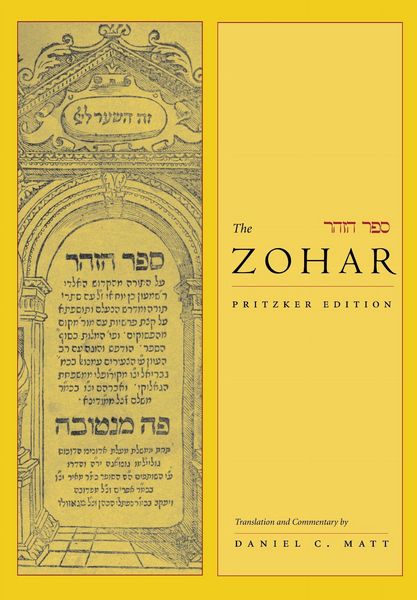
Sefer ha-Zohar, "The Book of Radiance," has amazed and overwhelmed readers ever since it emerged mysteriously in medieval Spain toward the end of the thirteenth century. Written in a unique Aramaic, this masterpiece of Kabbalah exceeds the dimensions of a normal book; it is virtually a body of literature, comprising over twenty discrete sections. The bulk of the Zohar consists of a running commentary on the Torah, from Genesis through Deuteronomy. This translation begins and focuses here in what are projected to be ten volumes. Two subsequent volumes will cover other, shorter sections.
The Zohar's commentary is composed in the form of a mystical novel. The hero is Rabbi Shim'on son of Yohai, a saintly disciple of Rabbi Akiva who lived in the second century in the land of Israel. In the Zohar, Rabbi Shim'on and his companions wander through the hills of Galilee, discovering and sharing secrets of Torah.
On one level, biblical figures such as Abraham and Sarah are the main characters, and the mystical companions interpret their words, actions, and personalities. On a deeper level, the text of the Bible is simply the starting point, a springboard for the imagination. For example, when God commands Abraham, Lekh lekha, Go forth... to the land that I will show you (Genesis 12:1), Rabbi El'azar ignores idiomatic usage and insists on reading the words more literally than they were intended, hyperliterally: Lekh lekha, Go to yourself! Search deep within to discover your true self.
At times, the companions themselves become the main characters, and we read about their dramatic mystical sessions with Rabbi Shim'on or their adventures on the road, for example, an encounter with a cantankerous old donkey driver who turns out to be a master of wisdom in disguise.
Ultimately, the plot of the Zohar focuses on the ten sefirot, the various stages of God's inner life, aspects of divine personality, both feminine and masculine. By penetrating the literal surface of the Torah, the mystical commentators transform the biblical narrative into a biography of God. The entire Torah is read as one continuous divine name, expressing divine being. Even a seemingly insignificant verse can reveal the inner dynamics of the sefirot-how God feels, responds and acts, how She and He (the divine feminine and masculine) relate intimately with each other and with the world.
Noch keine Bewertungen vorhanden
Verfassen Sie die erste Bewertung zu diesem Artikel
Helfen Sie anderen Kundinnen und Kunden durch Ihre Meinung.
Kurze Frage zu unserer Seite
Vielen Dank für dein Feedback
Wir nutzen dein Feedback, um unsere Produktseiten zu verbessern. Bitte habe Verständnis, dass wir dir keine Rückmeldung geben können. Falls du Kontakt mit uns aufnehmen möchtest, kannst du dich aber gerne an unseren Kund*innenservice wenden.
zum Kundenservice