Gutscheinbedingungen

**Gültig vom 20.07.2026 bis 22.07.2026 | Gültig für nicht preisgebundene fremdsprachige Bücher | Einzelne Artikel können ausgeschlossen sein | Nicht kombinierbar mit anderen Gutscheinen oder Preisaktionen | Nur einmal pro Einkauf einlösbar | Gutschein wird auf max. 500€ Bestellwert angerechnet | Keine Barauszahlung | Nicht gültig für Versandkosten und Services

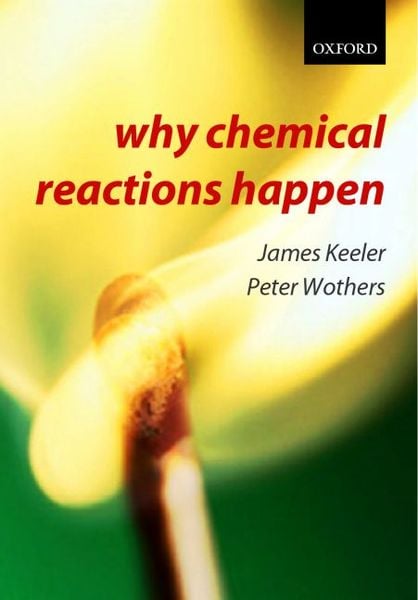
Produktbild: Why Chemical Reactions Happen

Why Chemical Reactions Happen

83,99 €

inkl. gesetzl. MwSt., Versandkostenfrei

Lieferung nach Hause

Beschreibung

Produktdetails

Einband

Taschenbuch

Erscheinungsdatum

05.06.2003

Verlag

Oxford University Press

Seitenzahl

256

Maße (L/B/H)

24,6/19/1,7 cm

Gewicht

500 g

Sprache

Englisch

ISBN

978-0-19-924973-2

Beschreibung

Rezension

"I feel that Peter and James have done a tremendous job of explaining chemical reactions using perspectives that are not used in traditional text books. They explain reactions in terms of bonding theories and orbitals rather than solely using kinetics and equilibrium. The author's use of visual representations throughout the book increases the comprehension of the material covered in the text. I look forward to using this textbook in my organic chemistry courses." (Physical Sciences Educational Reviews 2004.)

Produktdetails

Einband

Taschenbuch

Erscheinungsdatum

05.06.2003

Verlag

Oxford University Press

Seitenzahl

256

Maße (L/B/H)

24,6/19/1,7 cm

Gewicht

500 g

Sprache

Englisch

ISBN

978-0-19-924973-2

Herstelleradresse

Libri GmbH
Europaallee 1
36244 Bad Hersfeld
DE

Email: GPSR Kontakt

Noch keine Bewertungen vorhanden

Verfassen Sie die erste Bewertung zu diesem Artikel

Helfen Sie anderen Kundinnen und Kunden durch Ihre Meinung.

Kundinnen und Kunden meinen

Bewertungen (0)

  • Produktbild: Why Chemical Reactions Happen
    • 1: What this book is about and who should read it

    • 2: What makes a reaction go?

    • 3: Ionic interactions

    • 4: Electrons in atoms

    • 5: Electrons in simple molecules

    • 6: Electrons in larger molecules

    • 7: Reactions

    • 8: Equilibrium

    • 9: Rates of reaction

    • 10: Bonding in extended systems - conjugation

    • 11: Substitution and elimination reactions

    • 12: The effects of the solvent

    • 13: Leaving groups

    • 14: Competing reactions